Crypto investors often discover Morpho in two different ways. Some find it as a lending protocol with markets, vaults, and crypto-backed loans. Others find it as MORPHO, the tradable token behind one of DeFi’s most important credit networks. That overlap is why searches for morpho coin, morpho token, morpho token price, and morpho crypto price are growing together.
The key is understanding the difference between the protocol and the token. Morpho is the DeFi lending infrastructure. MORPHO is the governance token connected to that infrastructure. The token can move in price like any crypto asset, but its long-term relevance depends on governance, protocol adoption, incentives, liquidity, token supply, market sentiment, and the growth of Morpho-based lending.
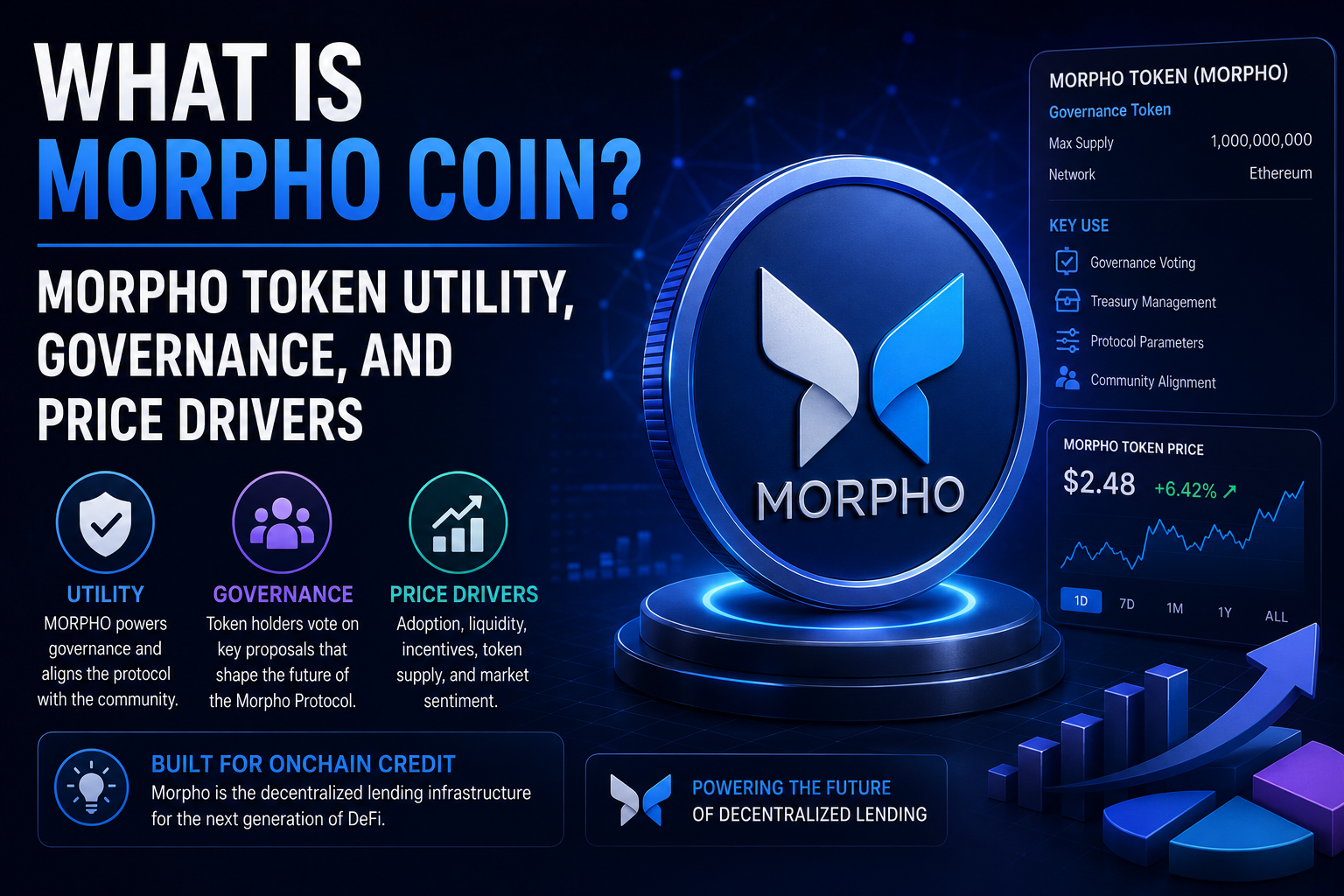
Morpho coin usually refers to the MORPHO token, the governance token of the Morpho Protocol. MORPHO gives holders voting power in Morpho governance, while its market price is influenced by protocol adoption, lending activity, token supply, exchange liquidity, governance decisions, incentives, and broader crypto market conditions.
This guide explains what Morpho coin is, how the Morpho token works, what governance can and cannot do, what drives the morpho token price, how to evaluate the morpho crypto price without chasing hype, and how Dynamo Finance helps users engage with Morpho-based lending markets and vaults from a risk-aware interface.
Key Takeaways
- Morpho coin is the common search term many users use for the MORPHO token, which is the governance token of the Morpho Protocol.
- MORPHO is primarily a governance asset, not a claim on guaranteed revenue, dividends, or fixed yield.
- The morpho token price can be influenced by protocol growth, lending demand, vault adoption, exchange liquidity, token unlocks, incentives, governance decisions, and broader crypto market cycles.
- Users do not need to buy MORPHO just to supply, borrow, or use Morpho-based lending markets, but the token matters for governance and ecosystem incentives.
- Dynamo Finance gives users a non-custodial way to explore Morpho markets, vaults, rewards, risk ratings, Safety Margin, Liquidation Risk views, and governance participation.
What Is Morpho Coin?
Morpho coin is the informal name many investors use for MORPHO, the Morpho Protocol’s governance token. The official ticker is MORPHO. It is not a separate coin with its own Layer 1 blockchain; it is a token connected to Morpho’s DeFi lending ecosystem.
Morpho itself is a decentralized lending protocol designed for onchain credit. Users and applications can supply assets, borrow against collateral, create isolated lending markets, and use vaults that allocate liquidity across markets. Morpho’s official site describes it as an open credit network connecting lenders and borrowers to lending opportunities worldwide at the infrastructure layer.
The MORPHO token sits above that protocol layer as the governance asset. Holders can participate in governance decisions that shape the Morpho network. The token also plays a role in incentives and community alignment across the ecosystem.
That means “morpho coin” is best understood as a market-facing shorthand. When analyzing it seriously, use the official name: MORPHO token.
Morpho Coin vs. Morpho Protocol
Beginners often confuse the token with the protocol. They are related, but they are not the same thing.
| Category | Morpho Protocol | MORPHO Token |
|---|---|---|
| Primary role | DeFi lending infrastructure for supplying, borrowing, markets, and vaults | Governance token used for voting power and ecosystem coordination |
| User action | Supply assets, borrow against collateral, deposit into vaults, or build lending products | Hold, trade, delegate, vote, or participate in governance depending on eligibility and tools |
| Value driver | Liquidity, lending demand, integrations, vault adoption, and market quality | Governance relevance, supply dynamics, demand, incentives, market liquidity, and investor expectations |
| Risk type | Smart contract, oracle, liquidation, liquidity, collateral, vault, and governance risk | Price volatility, token unlocks, governance risk, liquidity risk, and market sentiment |
| Need to use lending? | Users interact with protocol markets and vaults | Buying MORPHO is not required just to lend or borrow through compatible interfaces |
This distinction is central to evaluating the token. A protocol can grow while its token price remains volatile. A token can rally because of sentiment while protocol fundamentals remain unchanged. Serious investors evaluate both layers separately.
What Is the Morpho Token Used For?
The MORPHO token is used for governance. Morpho’s token materials describe MORPHO as the protocol’s governance token, with voting power determined by the number of MORPHO tokens held or delegated. Readers can review the official MORPHO token overview for the protocol’s token-specific details.
Governance is important because it helps coordinate decisions across the Morpho network. Token holders can vote on changes or improvements within the scope of Morpho governance. This makes the token a mechanism for protocol stewardship, not just a speculative asset.
However, users should avoid overclaiming MORPHO utility. Holding the token does not automatically produce lending yield. It does not guarantee protocol revenue distribution. It does not eliminate the need to evaluate markets, vaults, or borrowing risk.
The strongest way to understand MORPHO is as governance-aligned exposure to the growth and direction of the Morpho ecosystem.
What Can Morpho Governance Actually Do?
Morpho governance is intentionally limited in scope because the core protocol contracts are designed to be immutable. This matters for users who care about decentralization and risk. Governance can influence key areas, but it does not mean token holders can arbitrarily rewrite every rule of every market.
According to Morpho’s governance materials, governance powers include control over MORPHO tokens in the governance treasury, ownership of the upgradeable MORPHO token contract, activating and adjusting the fee switch within defined limits, whitelisting new LLTVs and interest-rate models, managing certain protocol licensing records, and controlling morpho.eth ENS resources. The official Morpho governance overview outlines those powers in more detail.
This governance scope is one of the most important parts of token analysis. A token with unlimited governance power may create different risks from a token tied to a protocol with immutable core contracts and limited governance levers.
For MORPHO holders, governance power is meaningful but not infinite. The token can influence protocol-level decisions, incentive direction, treasury usage, fee-switch policy, and ecosystem coordination. It should not be analyzed as a simple cash-flow token unless governance later approves mechanisms that clearly create such a relationship.
Legacy MORPHO and Wrapped MORPHO
MORPHO has an important token-history detail: there is a legacy MORPHO token and a wrapped MORPHO token. The original token was deployed as an immutable contract and lacked onchain vote accounting functionality. Morpho governance voted to create a wrapper so legacy MORPHO could be converted 1:1 into wrapped MORPHO with vote-tracking functionality.
This matters because users may encounter references to legacy MORPHO, wrapped MORPHO, and transferable MORPHO. Morpho’s token materials state that legacy MORPHO can be wrapped 1:1, and that wrapped MORPHO is the transferable version intended for external integrations.
Token holders should be careful when interacting with exchanges, wallets, or DeFi apps. Always confirm the token contract and make sure the wallet or exchange supports the correct version.
For most market participants, the practical takeaway is simple: use official sources when verifying the MORPHO token address, and do not assume every asset labeled “Morpho” is the correct transferable token.
MORPHO Token Supply and Distribution
MORPHO has a maximum supply of 1,000,000,000 tokens. The token distribution includes allocations to Morpho governance, users and launch pools, the Morpho Association, reserve contributors, strategic partners, founders, and early contributors.
Distribution matters because token supply affects market structure. Tokens that are locked today may become circulating supply later. Future emissions, treasury usage, incentive programs, contributor vesting, or governance-directed allocations can influence supply-demand balance.
Morpho’s token overview states that governance controls a large share of tokens and can vote on how those tokens are used. It also states that the governance continues distributing MORPHO as rewards. This makes governance especially important for investors because future token distribution can affect both ecosystem growth and market supply.
When evaluating morpho coin, look beyond today’s circulating supply. Study maximum supply, unlocked supply, expected vesting, treasury reserves, reward emissions, and how governance could deploy tokens over time.
How to Read the Morpho Token Price
The morpho token price is the market price of MORPHO across exchanges and liquidity venues. It changes continuously based on trading activity, supply, demand, sentiment, liquidity, and news.
Live price trackers such as CoinGecko’s MORPHO page aggregate market data across exchanges and usually display the current price, 24-hour trading volume, circulating supply, market capitalization, fully diluted valuation, exchange pairs, and protocol-related metrics.
Investors should avoid treating any article as a live price feed. Crypto prices move too quickly. Use a trusted price tracker for the current morpho token price and use research articles for context.
The more useful question is not “What is the price right now?” It is “What factors could make the market reprice MORPHO over time?”
Morpho Token Price vs. Morpho Crypto Price
Searchers often use “morpho token price” and “morpho crypto price” to mean the same thing: the live market price of MORPHO. In practice, both phrases refer to the same tradable asset.
Where confusion appears is around the word “Morpho.” It can refer to the protocol, the network, the app, the token, or the broader ecosystem. A news headline about Morpho TVL may not mean the token price changed. A chart showing MORPHO price does not necessarily show the health of every Morpho lending market.
For clarity, use these terms carefully:
- Morpho Protocol: The underlying lending infrastructure.
- MORPHO token: The governance token.
- Morpho coin: Informal search term for MORPHO token.
- Morpho token price: The current market price of MORPHO.
- Morpho crypto price: Another search phrase for the same token price.
Clear terminology helps investors avoid mixing protocol fundamentals with token market behavior.
What Drives the Morpho Token Price?
No single factor controls the morpho token price. Like most crypto assets, MORPHO trades based on a mix of fundamentals, narratives, liquidity, token supply, governance expectations, and market-wide risk appetite.
Important price drivers include:
- Protocol adoption: Growth in deposits, active loans, vault usage, integrations, and developer activity can improve market perception.
- Governance value: The more important Morpho governance becomes, the more investors may value MORPHO’s voting power.
- Token supply: Unlocks, emissions, treasury deployments, and circulating supply growth can affect price pressure.
- Exchange liquidity: More trading venues and deeper order books can change accessibility and volatility.
- Incentives: MORPHO emissions can attract users but may also increase token supply over time.
- Protocol fees: Governance can influence fee-switch settings within protocol limits, though this should not be assumed to create automatic holder yield.
- Integrations: Embedded lending products and institutional usage can increase attention on Morpho infrastructure.
- Market cycle: Bitcoin, Ethereum, DeFi sentiment, rates, regulation, and liquidity conditions can all affect token pricing.
These drivers do not move in isolation. Strong protocol growth can coincide with heavy unlocks. A new integration can boost sentiment while broader market conditions weaken. A rising price can attract liquidity, but it can also increase speculative risk.
Protocol Adoption as a Price Driver
Morpho’s long-term token story depends heavily on protocol adoption. More deposits, more active loans, more vaults, more integrations, and more builders can all increase the perceived importance of Morpho governance.
Morpho positions itself as open credit infrastructure that businesses can integrate to power lending, earn products, vault curation, and crypto-backed loans. The official Morpho site highlights embedded earn products and crypto-backed loan infrastructure as major use cases.
This matters for MORPHO because governance tokens tend to become more strategically important when the systems they govern become more important. If Morpho becomes a core lending layer for wallets, fintechs, exchanges, vault curators, and DeFi users, the market may assign more value to governance influence.
Still, protocol adoption does not guarantee token appreciation. Investors must also consider token supply, market liquidity, competition, governance design, and whether value accrual mechanisms are clear.
Vault Growth and Lending Demand
Morpho vaults can influence token perception because they make lending easier for users who do not want to pick individual markets manually. Vaults aggregate deposits and allocate capital across selected Morpho markets.
Dynamo’s vault workflow is built around this concept. Vaults hold deposits, curators allocate across lending markets, borrowers pay interest, and vault depositors earn a blended yield. Dynamo also surfaces vault data such as APY, TVL, curator, underlying asset, market allocations, and risk context.
Higher vault adoption can make Morpho more useful as infrastructure. More useful infrastructure can strengthen the overall token narrative. However, vault growth introduces curator, collateral, liquidity, and market risks that users should evaluate carefully.
Users who want to understand how vault strategies connect to token and protocol fundamentals can explore morpho loan markets and vault-based lending opportunities through a more detailed interface.
Governance as a Price Driver
Governance can be a meaningful driver of token value because it gives holders influence over the protocol’s direction. MORPHO holders can participate in votes, delegate tokens, and help decide matters within the protocol’s governance scope.
The market may value governance more when the protocol controls important economic levers, treasury allocations, incentive programs, fee policies, integrations, or risk parameters. It may value governance less if holders see limited economic relevance or low participation.
For MORPHO, governance is especially relevant because the protocol has a defined treasury and limited but important control points, including the fee switch and whitelisting certain protocol parameters. Those powers could affect the future economics of Morpho-based lending.
Investors should avoid assuming governance automatically equals token value. Governance power is an input. The output depends on how decisions are made, whether voters participate, and whether those decisions strengthen the network.
Fee Switch Expectations
One of the most important governance-related topics is the fee switch. Morpho governance has the power to activate and adjust the fee switch, capped at a maximum percentage of interest paid by borrowers.
This can influence token narratives because investors often look for future protocol-fee potential. If a lending network has meaningful borrowing activity, any fee policy can become economically important.
That said, a fee switch is not the same as a dividend. A governance power does not automatically mean token holders receive direct cash flows. Future governance decisions, legal constraints, treasury policy, and protocol design all matter.
A disciplined investor treats the fee switch as an option-like governance lever, not as guaranteed tokenholder income.
Token Unlocks and Supply Pressure
Supply matters. Even strong projects can experience price pressure when locked tokens become liquid or when incentives distribute new tokens into the market.
MORPHO has a fixed maximum supply, but circulating supply can change over time. Strategic partner allocations, founder and contributor vesting, governance reserves, user rewards, and future distribution decisions all affect the market.
When analyzing morpho coin, compare market capitalization and fully diluted valuation. Market cap uses circulating supply. FDV assumes all tokens are in circulation. A large gap between the two can signal future dilution risk.
Unlocks are not always bearish. Tokens can fund ecosystem growth, rewards, contributors, and integrations. The risk appears when new circulating supply grows faster than demand.
Exchange Liquidity and Market Access
Exchange liquidity affects the morpho token price because it determines how easily buyers and sellers can trade. Deeper liquidity can reduce slippage and attract more participants. Thin liquidity can increase volatility.
Centralized exchange listings, decentralized exchange pools, market-maker activity, trading volume, and regional access all influence liquidity. A token can have strong fundamentals and still trade poorly if liquidity is limited.
CoinGecko and other trackers show where MORPHO trades and how much volume appears across venues. Investors should review not only the price, but also trading volume, bid-ask spreads, and market depth when available.
Price without liquidity can be misleading. A thinly traded rally can reverse quickly when larger holders sell.
Incentives and Rewards
MORPHO emissions can attract lenders, borrowers, vault depositors, curators, and ecosystem participants. Incentives can help bootstrap markets and encourage activity, which may strengthen protocol adoption.
The trade-off is supply. Reward campaigns distribute tokens. If recipients sell immediately, incentives can create sell pressure. If rewards attract sticky users and deeper liquidity, they may support long-term growth.
Dynamo’s reward layer matters here because eligible users may earn MORPHO emissions, Dynamo-specific incentives, or extra curator rewards depending on active campaigns and market eligibility. This gives users a practical way to engage with Morpho-based lending activity while also tracking incentive opportunities.
Users who want to lend crypto should separate base lending APY from token rewards. Base yield comes from borrower interest. Rewards may change over time.
Integrations and Distribution
Distribution can be a major value driver for DeFi infrastructure tokens. When a protocol is integrated into consumer apps, exchanges, wallets, fintech products, or institutional systems, it can reach users who may never visit a DeFi-native app directly.
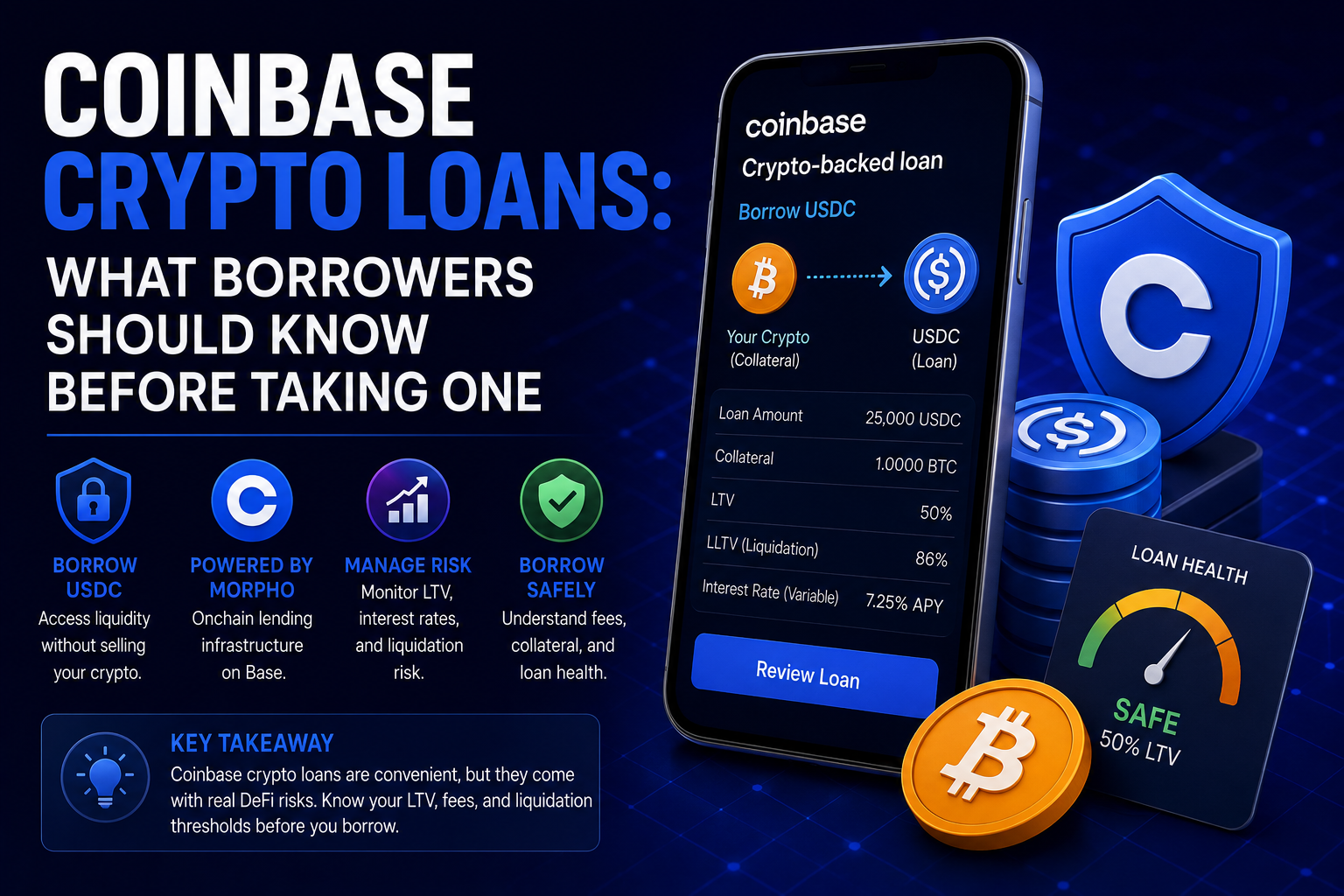
Coinbase’s crypto-backed loans are one example. Coinbase states that eligible users can borrow USDC against crypto collateral and that borrowing is enabled by Morpho’s onchain lending protocol on Base. The public Coinbase crypto-backed loans introduction is a useful source for understanding that embedded loan flow.
Integrations can support token narratives by showing that Morpho infrastructure is useful beyond DeFi-native power users. A protocol that powers lending behind familiar interfaces may attract more deposits, loans, and attention.
Investors still need to separate protocol adoption from token economics. Integrations are positive signals, but they do not automatically define token price.
Morpho Price Drivers vs. Non-Drivers
Not every event that sounds important should be treated as a direct token-price driver. Some developments affect the protocol, some affect users, and others affect token market structure.
| Factor | Likely Relevance to MORPHO Price | What to Watch |
|---|---|---|
| Protocol deposits and active loans | High | Growth quality, utilization, sustainable borrower demand, and vault adoption |
| Governance proposals | High | Fee switch, treasury usage, incentives, parameter whitelisting, and ecosystem funding |
| Token unlocks | High | Unlock size, recipient type, market liquidity, and expected sell pressure |
| New exchange listings | Medium to high | Liquidity, accessibility, volume, and market-maker depth |
| High APY in one vault | Medium | Whether the yield is isolated, sustainable, incentivized, or meaningful at protocol scale |
| Social media hype | Short-term only | Volume quality, leverage, sentiment reversals, and whether fundamentals changed |
The best investors separate signal from noise. A one-day price move is not the same as a durable change in token fundamentals.
How to Evaluate Morpho Coin Before Buying
A disciplined approach starts with the basics. Do not buy a governance token because the protocol sounds important. Understand the token’s role, supply, risks, and potential catalysts first.
- Confirm the correct MORPHO token contract and whether you are dealing with wrapped MORPHO.
- Review maximum supply, circulating supply, vesting, and unlock schedules.
- Understand the token’s governance role and the actual scope of Morpho governance.
- Compare market cap and FDV to understand current valuation and dilution risk.
- Review protocol adoption metrics such as deposits, active loans, vault TVL, and integrations.
- Track governance proposals, fee-switch discussions, and treasury decisions.
- Evaluate exchange liquidity, trading volume, and where MORPHO is listed.
- Separate protocol usage from token value accrual.
- Watch broader DeFi and crypto market conditions.
- Size any position based on risk, not excitement.
This process does not predict the future, but it prevents shallow analysis. Governance tokens require more than chart-watching.
How Morpho Coin Relates to Lending Markets
MORPHO’s token price is not the same as the APY available in a lending market. Lending markets are driven by supply, borrowing demand, utilization, collateral, oracles, and liquidation thresholds.
A user can supply assets or borrow through Morpho-based markets without necessarily buying MORPHO. The token matters for governance and ecosystem incentives, while lending positions depend on market-level mechanics.
Dynamo makes this distinction practical. Its markets are isolated lending pools with one loan asset, one collateral asset, one oracle, and one LLTV. Users can compare supply APY, borrow APY, utilization, available liquidity, collateral, and risk tier before acting.
For users exploring morpho loans, token speculation should not distract from loan safety. Borrowing risk depends on collateral and liquidation mechanics, not whether the token chart looks bullish.
How Dynamo Finance Fits Into the Morpho Ecosystem
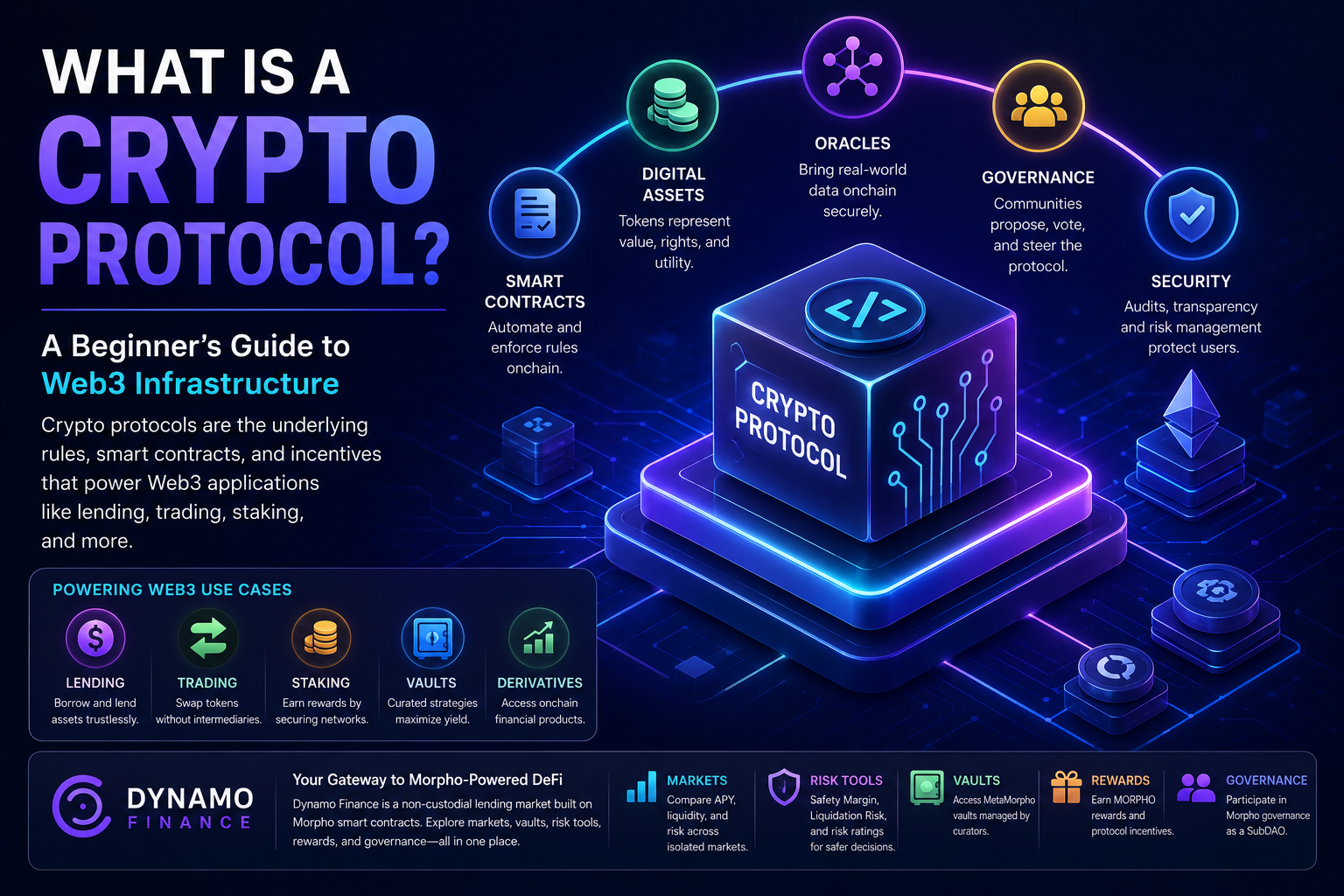
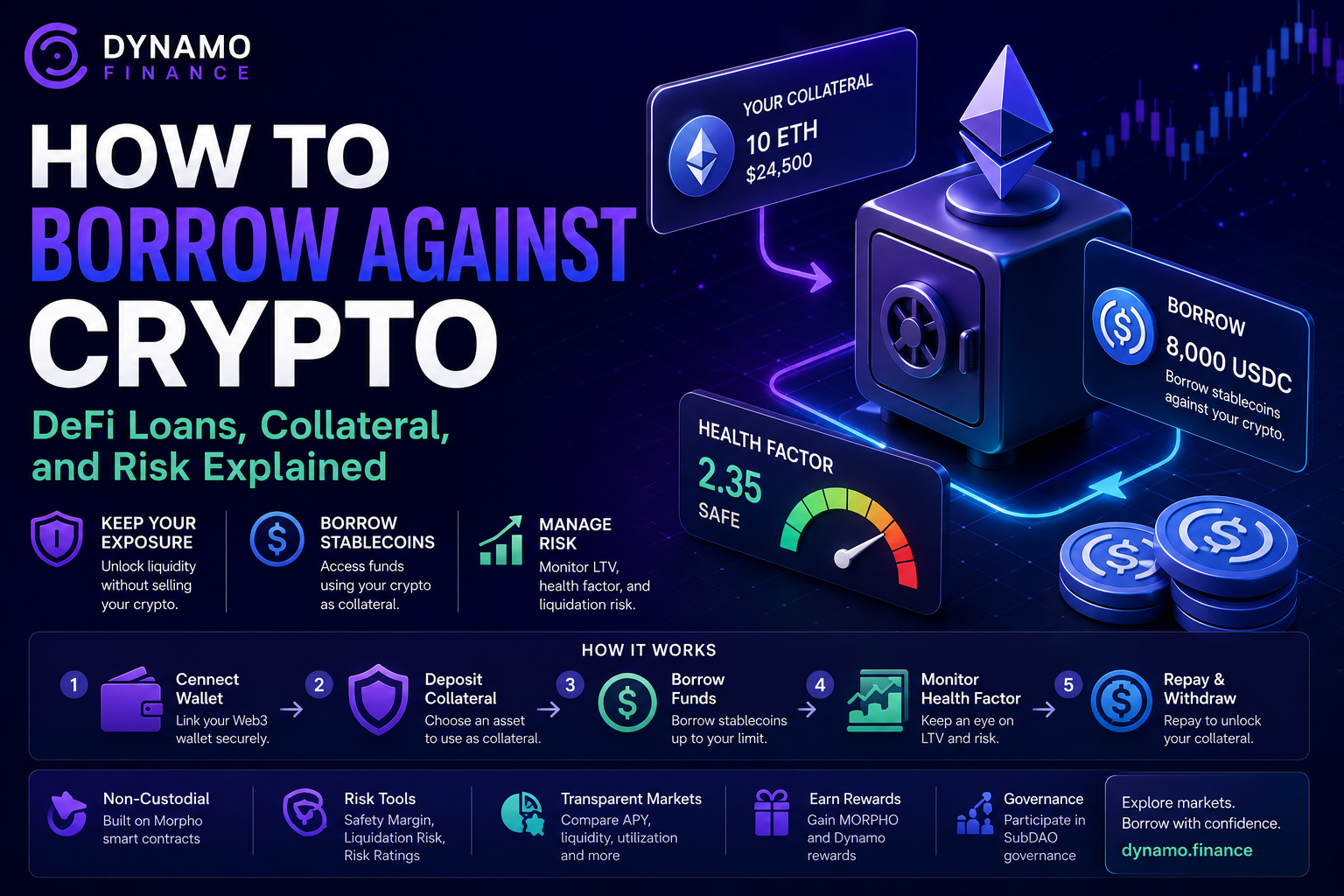
Dynamo Finance is a non-custodial, permissionless Web3 lending market built on Morpho smart contracts. Users can supply assets, borrow against collateral, deposit into vaults, access analytics, earn rewards, and participate in governance from a single interface.
Dynamo does not custody user funds. Assets are held by Morpho smart contracts, while Dynamo adds discovery, analytics, risk tooling, position management, rewards, automation, and SubDAO governance participation.
This matters because MORPHO is a governance token tied to a lending ecosystem. If you are evaluating the token, you should also understand the real lending activity that gives the ecosystem utility. Dynamo helps users move from token narrative to market-level understanding.
Instead of only watching the morpho crypto price, users can study the lending markets, vaults, utilization, rewards, and risk signals that shape Morpho’s practical adoption.
Dynamo Markets and MORPHO Fundamentals
Dynamo markets help users inspect Morpho-based lending activity at the market level. This can be useful for token researchers because protocol fundamentals are easier to understand when you see how real users lend and borrow.
Each market shows the loan asset, collateral asset, supply APY, borrow APY, utilization, available liquidity, and risk-related parameters. A strong lending ecosystem depends on healthy markets, reliable collateral, active borrowers, and enough supplier liquidity.
For MORPHO token analysis, market health matters because governance relevance grows when the underlying credit network is useful. If markets attract users and liquidity, the token narrative may become stronger.
That said, market usage does not guarantee price appreciation. Investors still need to evaluate valuation, supply, unlocks, and governance design.
Dynamo Vaults and MORPHO Incentives
Dynamo vaults are built on the MetaMorpho standard. A vault lets users deposit once while a curator allocates capital across selected Morpho markets.
Vaults can help users access blended yield without choosing every market manually. They also make it easier to understand how curated liquidity supports the broader lending network.
Vault growth can matter for MORPHO because successful vaults may attract deposits, increase protocol usage, support borrower liquidity, and strengthen the role of curators. Incentive programs can further direct attention toward specific markets or vaults.
For users focused on cryptocurrency lending, vaults are more than APY boxes. They are allocation strategies that can influence where capital flows inside the Morpho ecosystem.
Risk Ratings, Safety Margin, and Liquidation Risk
Dynamo’s risk tools are useful for users who want to understand the difference between token investing and protocol usage. The token price may be volatile, but lending and borrowing positions have their own risk metrics.
Dynamo assigns Low, Medium, and High risk tiers to markets and vaults based on objective onchain inputs. These ratings are structural heuristics, not guarantees, but they help users filter opportunities before depositing capital.
Borrowers can use Safety Margin to operate more conservatively than Morpho’s liquidation threshold. Liquidation Risk views show health factor, price-drop tolerance, and liquidation price.
These tools are especially relevant for users considering crypto backed loans. Token price research may explain MORPHO as an asset, but borrower tools help users manage real collateralized debt.
Should You Buy MORPHO or Use the Protocol?
Buying MORPHO and using Morpho-based lending markets are different decisions. A token buyer is taking price risk. A lender or borrower is taking protocol, collateral, rate, liquidity, and liquidation risk.
A user may use Morpho markets without buying the token. Another user may buy MORPHO without lending or borrowing. A more advanced user may do both, but they should treat each activity separately.
Buying the token may appeal to users who believe in Morpho’s long-term governance relevance and ecosystem growth. Using the protocol may appeal to users who want yield, liquidity, or collateralized borrowing.
The strongest strategy starts with clarity. Are you seeking governance exposure, price appreciation, yield, liquidity, or borrowing power? Each goal requires a different risk framework.
Morpho Coin vs. Lending Yield
MORPHO price appreciation and lending yield are not the same return stream. Token price comes from market demand and supply. Lending yield comes from borrowers paying interest in specific markets or vaults.
A user who buys MORPHO can gain or lose based on token price movement. A user who supplies USDC to a market earns a variable APY based on utilization and borrower demand. A vault depositor earns blended yield based on the vault’s allocations.
Rewards can blur the line because lending activity may earn MORPHO incentives. Still, users should separate base lending APY from token rewards and token price exposure.
A high reward rate can be attractive, but it also exposes users to token price volatility if rewards are held rather than sold.
Risks of Holding Morpho Coin
MORPHO carries the same broad risks as other DeFi governance tokens, plus risks specific to Morpho’s ecosystem and token design.
- Price volatility: MORPHO can move sharply with crypto market sentiment.
- Unlock risk: Circulating supply can increase as locked allocations vest or rewards are distributed.
- Governance risk: Poor proposals or low participation can reduce confidence.
- Value accrual uncertainty: Governance utility does not automatically mean direct economic accrual to token holders.
- Liquidity risk: Thin markets can increase slippage and volatility.
- Protocol risk: Bugs, oracle issues, liquidation events, or bad debt in Morpho markets can affect sentiment.
- Competition risk: Aave, Compound, Euler, Spark, and other lending ecosystems compete for liquidity and attention.
- Regulatory risk: Governance tokens, lending protocols, and DeFi incentives can face changing regulatory treatment.
- Market-cycle risk: DeFi tokens often underperform during risk-off periods.
A strong token thesis should account for these risks. Ignoring downside is not conviction; it is incomplete research.
Risks of Using Morpho-Based Lending
Protocol users face different risks from token holders. Lending and borrowing can be useful, but they are not risk-free.
Suppliers face smart contract risk, oracle risk, collateral risk, liquidity risk, market concentration, and vault curator risk. Borrowers face liquidation risk, variable borrow rates, collateral volatility, and user-error risk.
Dynamo’s legal risk materials emphasize that DeFi actions are final onchain, that assets are not insured by Dynamo, and that users can lose capital. This is the right mindset for any DeFi activity.
Before using any market or vault, review the Dynamo Finance DeFi lending docs to understand markets, vaults, interest rates, collateral, liquidations, rewards, risk ratings, Safety Margin, and Liquidation Risk tools.
How to Track Morpho Coin Fundamentals
Token research should combine price data with protocol data. A chart alone is not enough.
- Track live MORPHO price, volume, market cap, FDV, and exchange liquidity.
- Review Morpho deposits, active loans, and TVL through official and third-party dashboards.
- Monitor governance forum discussions and Snapshot votes.
- Watch token unlock schedules and circulating supply changes.
- Follow major integrations, vault launches, and embedded lending products.
- Compare Morpho with competing lending protocols by deposits, loans, fees, integrations, and user growth.
- Study reward campaigns to understand user incentives and potential sell pressure.
- Evaluate whether protocol growth is organic or incentive-driven.
- Review risk events, oracle issues, liquidations, and market stress periods.
- Revisit your thesis after major governance changes.
This framework helps investors avoid reacting only to headlines. Protocol tokens require ongoing monitoring because both market structure and governance can evolve.
How to Think About Morpho Token Price Predictions
Search volume around “morpho token price” often leads users toward price predictions. Most price predictions are not useful because they rely on vague chart patterns, arbitrary multipliers, or unsupported assumptions.
A better approach is scenario analysis. Ask what has to happen for MORPHO to justify a higher valuation. Does the protocol need more deposits? More active loans? More embedded lending integrations? Clearer fee policy? Better liquidity? Lower dilution risk?
Then ask the opposite. What could push MORPHO lower? Token unlocks, declining DeFi sentiment, lower lending demand, weak governance, reduced incentives, smart contract issues, or competition could all pressure price.
Scenario thinking is more honest than pretending to know a future price. It keeps the focus on drivers, not guesses.
Practical Example: Evaluating MORPHO After a Price Rally
Imagine MORPHO rallies sharply after a major integration announcement. A beginner might buy immediately because the news sounds bullish. A more disciplined investor asks whether the integration changes protocol fundamentals.
Did deposits increase? Are active loans growing? Is the integration producing real borrower demand? Are vaults receiving sticky capital? Did trading volume rise with deep liquidity, or was the rally thin?
The investor should also check supply. If a large unlock is approaching, the new demand may need to absorb additional tokens. If liquidity is shallow, price can move quickly in both directions.
The correct response to a rally is not automatically buying or selling. It is updating the thesis with new information.
Practical Example: Evaluating MORPHO During a Drawdown
Now imagine MORPHO falls while the broader DeFi market sells off. The first question is whether the decline is token-specific or market-wide.
If Morpho deposits, loans, and integrations remain healthy, the drawdown may reflect broader risk-off sentiment. If protocol metrics are also weakening, the market may be pricing in a real deterioration.
Unlocks, governance disputes, incentive reductions, or risk events can also create token-specific pressure. Investors should investigate before assuming the market is wrong.
Drawdowns test thesis quality. If you cannot explain why you own the token beyond “price went up before,” the position may be speculative rather than researched.
Practical Example: Using Dynamo While Researching MORPHO
A user researching MORPHO can also study how Morpho-based markets function through Dynamo. This helps connect token research with real protocol activity.
The user might compare stablecoin lending markets, review utilization, inspect vault allocations, and look at risk ratings. They can see how borrowers pay interest, how suppliers earn APY, and how vault curators allocate capital.
This practical research is useful because governance tokens derive narrative strength from real usage. If you understand how users lend and borrow, you can better evaluate whether the token’s market narrative is grounded in actual activity.
Users who want a guided starting point can begin at Dynamo get started and explore markets, vaults, risk tools, and rewards from there.
Common Mistakes With Morpho Coin
The first mistake is thinking MORPHO is required for every Morpho action. Users can interact with markets and vaults through compatible interfaces without necessarily buying the token.
The second mistake is assuming protocol growth guarantees token price growth. Token supply, valuation, governance design, unlocks, and market liquidity still matter.
The third mistake is ignoring the difference between market cap and FDV. FDV can reveal dilution risk that market cap alone hides.
The fourth mistake is treating governance tokens like yield-bearing assets. Governance power is not the same as a dividend, interest payment, or guaranteed revenue share.
The fifth mistake is buying based only on price predictions. A real thesis should connect protocol adoption, token economics, governance, and risk.
What Experienced Investors Look For
Experienced DeFi investors start with utility and control. They ask what the token governs, what governance can change, and whether those powers matter economically.
They also study supply. Unlock schedules, treasury reserves, emissions, and circulating supply can shape future price behavior as much as protocol growth does.
Protocol metrics come next. Deposits, loans, fees, integrations, vault TVL, user growth, and liquidity quality help determine whether the ecosystem is gaining real traction.
Finally, experienced investors review downside. They ask how the thesis fails, what catalysts could reverse, and whether the current valuation already prices in too much optimism.
How Dynamo Users Can Stay Aligned With Morpho Governance
Dynamo operates as a SubDAO within the Morpho ecosystem and aggregates community voting power to participate in Morpho governance. That gives Dynamo users a way to connect lending activity, rewards, and governance participation more directly.
This matters for users who care about more than APY. Governance can influence protocol direction, ecosystem incentives, risk settings, and community priorities.
Dynamo’s community layer helps users participate in the Morpho ecosystem without needing to analyze every governance process alone. It also makes governance more tangible for users who supply, borrow, or hold vault shares.
For ongoing product, governance, and ecosystem updates, follow Dynamo Finance community updates.
External Resources for Further Research
For token mechanics, start with the official MORPHO token overview. It covers governance utility, wrapped MORPHO, maximum supply, distribution, vesting, transferability, and token-specific FAQs.
For governance scope, review the Morpho governance organization page. It explains the limits and powers of governance, including treasury control, token contract ownership, fee-switch authority, and voting processes.
For live price and market data, use CoinGecko’s MORPHO market page. It is useful for checking current price, volume, market cap, circulating supply, FDV, exchange markets, and related metrics.
For broader protocol context, review Morpho’s official website and the Coinbase resource on crypto-backed loans powered by Morpho to understand how Morpho infrastructure can reach users through embedded lending products.
Final Checklist Before Buying or Using MORPHO
Use this checklist before buying MORPHO, earning MORPHO rewards, or using Morpho-based markets:
- Confirm that you are looking at the correct MORPHO token and contract.
- Understand that MORPHO is a governance token, not guaranteed yield.
- Review maximum supply, circulating supply, vesting, unlocks, and FDV.
- Track Morpho protocol adoption through deposits, active loans, integrations, and vault growth.
- Study governance powers and current proposals.
- Separate MORPHO price risk from lending or borrowing risk.
- Compare token incentives with base lending yield.
- Review market liquidity before entering or exiting a token position.
- Use risk-aware tools when supplying, borrowing, or depositing into vaults.
- Size positions based on downside, not hype.
Conclusion
Morpho coin is best understood as MORPHO, the governance token connected to the Morpho Protocol. It gives holders voting power in a growing DeFi lending ecosystem, but it should not be confused with lending yield, vault APY, or a guaranteed claim on revenue.
The morpho token price can be driven by protocol adoption, governance relevance, token supply, unlocks, incentives, integrations, exchange liquidity, fee-switch expectations, and broader DeFi market sentiment. A serious thesis should evaluate all of these factors rather than relying on price predictions.
Dynamo Finance helps users understand the Morpho ecosystem from the market level. By offering non-custodial access to Morpho-based markets and vaults, plus risk ratings, Safety Margin, Liquidation Risk views, rewards, analytics, and SubDAO governance participation, Dynamo gives users a practical way to connect token research with real DeFi activity.
Explore Dynamo Finance to compare Morpho markets and vaults, review risk data, and build a more disciplined approach to Morpho-based lending, borrowing, rewards, and governance.
FAQ
What is Morpho coin?
Morpho coin usually refers to MORPHO, the governance token of the Morpho Protocol. MORPHO gives holders voting power in Morpho governance and is traded on supported crypto exchanges.
What is the Morpho token used for?
The Morpho token is used for governance. Holders can vote or delegate voting power on governance decisions within the protocol’s defined scope, including treasury usage, token contract matters, fee-switch policy, and certain protocol parameters.
What drives the morpho token price?
The morpho token price can be influenced by protocol growth, deposits, active loans, vault adoption, integrations, governance decisions, fee-switch expectations, token unlocks, rewards, exchange liquidity, and broader crypto market sentiment.
Is MORPHO required to use Morpho lending markets?
No. Users generally do not need to buy MORPHO just to lend, borrow, or use Morpho-based markets through compatible interfaces. MORPHO matters for governance and ecosystem incentives, while lending positions depend on market-level mechanics.
How does Dynamo Finance relate to Morpho coin?
Dynamo Finance is built on Morpho smart contracts and helps users access Morpho-based markets and vaults. It also adds risk ratings, Safety Margin, Liquidation Risk views, rewards, analytics, and SubDAO governance participation, which helps users connect Morpho token research with real protocol activity.