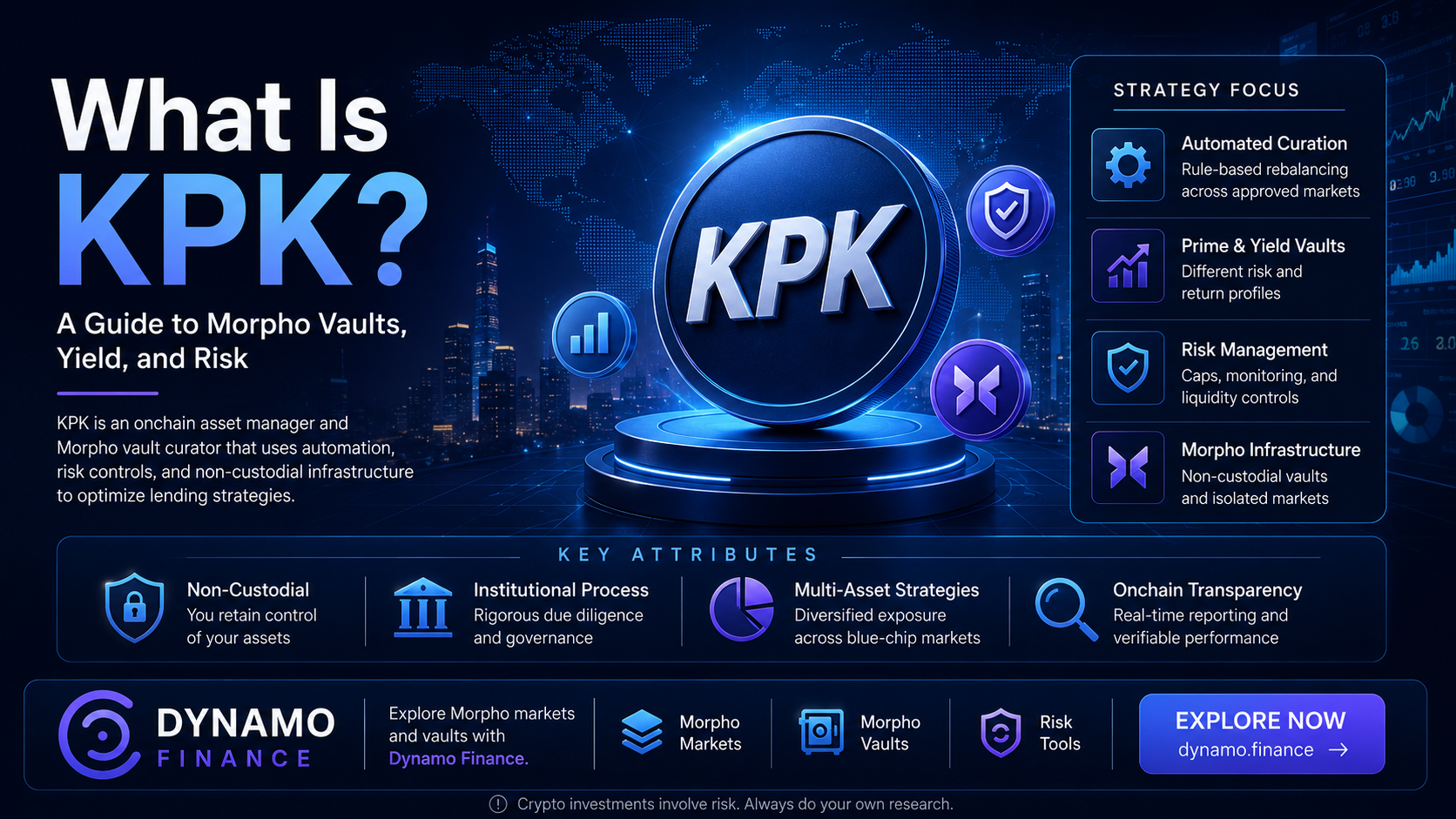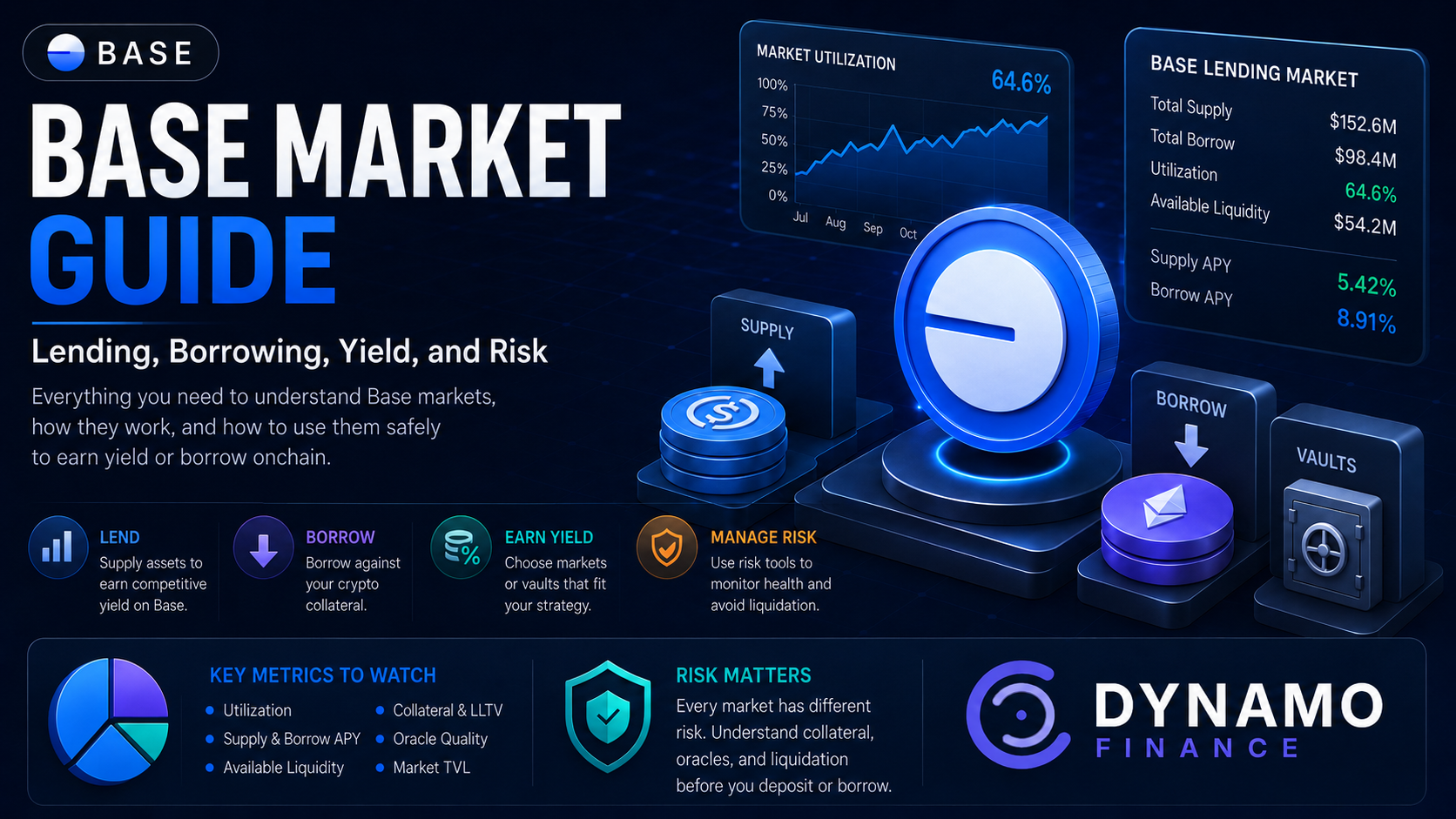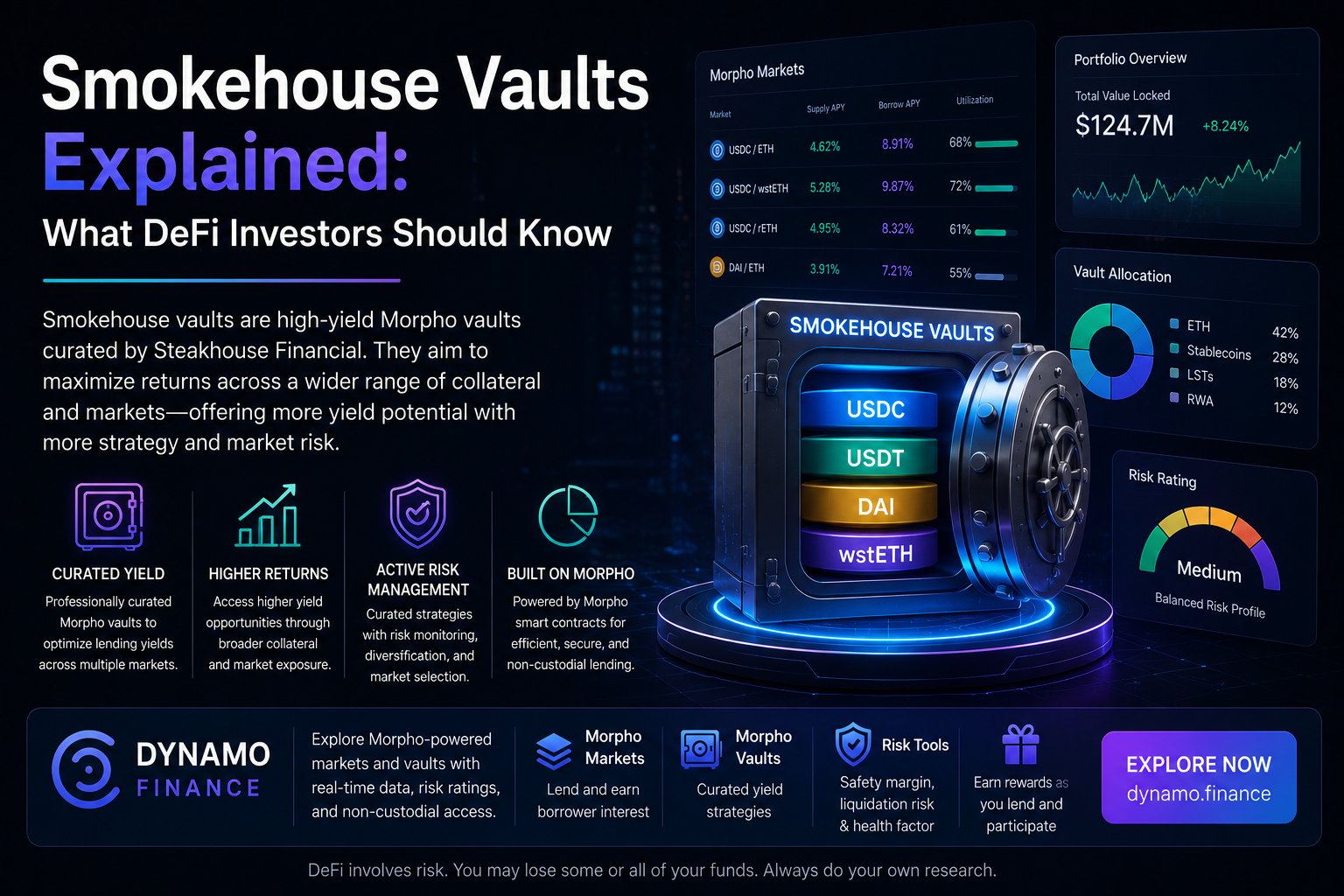
Choosing a DeFi vault used to feel simple: find the highest APY, deposit, and hope the yield stays attractive. Morpho changed that equation by separating lending infrastructure from strategy management. Instead of one large lending pool, users can access isolated markets and curated vaults where independent teams manage capital allocation.
That makes the Morpho Curator role one of the most important concepts for DeFi lenders to understand. A curator is not just a brand name on a vault card. The curator influences which markets receive deposits, how risk is managed, how vault liquidity is allocated, and whether a strategy fits conservative, balanced, or higher-yield users.
A Morpho Curator is an independent team or entity that designs, deploys, and manages Morpho vault strategies. Curators choose which lending markets a vault can allocate to, set risk limits, manage rebalancing, and help depositors access borrower-paid yield without manually selecting every market themselves.
This guide explains what Morpho Curators do, how curator-managed vaults work, which public curator names DeFi investors commonly encounter, what risks to review before depositing, and how Dynamo Finance helps users compare Morpho vaults, markets, yield, rewards, and risk data from one non-custodial interface.
Key Takeaways
- Morpho Curators manage vault strategies, but they do not custody user funds in the same way a traditional asset manager might.
- Morpho vaults are built to allocate deposits across lending markets, while curators define strategy, caps, risk parameters, and allocation logic.
- The curator list changes because Morpho vault creation is permissionless and new teams can launch vaults over time.
- Major publicly referenced Morpho Curators and vault owners have included Steakhouse Financial, Gauntlet, MEV Capital, SparkDAO, Moonwell, RE7 Labs, Seamless, B.Protocol/Relend Network, Yearn, and others.
- Dynamo Finance helps users evaluate vaults with APY, TVL, curator, allocation, risk tiers, rewards, Safety Margin, Liquidation Risk views, and market-level data.
What Is a Morpho Curator?
A Morpho Curator is a team, protocol, risk manager, allocator, or organization that manages a vault strategy on top of Morpho markets. In practice, the curator decides what the vault is trying to do and which markets the vault should use to pursue that goal.
Morpho describes curators as independent teams or entities that design, deploy, and manage onchain vaults. These vaults package diversified portfolios of overcollateralized lending positions into a simpler deposit experience for users. For a deeper protocol-native overview, read Morpho’s Curators Explained.
In plain English, the curator is the strategy manager. A user deposits into a vault, and the curator’s framework determines how that capital gets allocated across approved Morpho markets.
This is different from depositing into a single direct lending market. A direct market gives users precise exposure to one loan asset, one collateral asset, one oracle, and one liquidation threshold. A vault gives users exposure to a curator-managed allocation across multiple markets.
Why Morpho Curators Matter
Morpho’s architecture makes curation important because the protocol is modular. Markets are isolated, and vaults sit above those markets as strategy layers. That creates more flexibility, but it also means users need to evaluate who is managing the vault and how that vault is constructed.
A strong curator can help users avoid the work of constantly comparing markets, monitoring utilization, checking APY changes, and reallocating capital manually. A weak curator can expose users to concentrated markets, aggressive collateral, liquidity stress, or unclear risk decisions.
That is why curator due diligence matters as much as APY. The highest-yielding vault may not be the best vault if the return depends on fragile liquidity, risky collateral, unstable rewards, or poor withdrawal planning.
For users looking at morpho yield, the curator is one of the most important filters. The vault’s headline return only makes sense after you understand who manages the strategy and what markets sit underneath it.
How Morpho Vaults Work
A Morpho vault lets users deposit one underlying asset, such as USDC, WETH, WBTC, or another supported token. The vault then allocates that asset across selected Morpho lending markets according to the curator’s strategy.
Borrowers in those markets pay interest. That interest flows back to the vault and is reflected in the value of the depositor’s vault shares. The user does not need to manually choose every market or rebalance every time rates change.
Morpho’s curation resources describe curator responsibilities such as configuring vault parameters, executing liquidity allocation, managing markets, adjusting caps, setting fees, and maintaining security processes. The official Morpho Curation section is the technical reference for teams creating and managing vaults.
For depositors, the user experience can feel simple. The risk underneath is not simple. A vault’s performance depends on its markets, collateral quality, oracle reliability, utilization, liquidity, fee structure, and curator decisions.
What Curators Actually Control
Curators influence vault behavior through risk and strategy decisions. They are not supposed to freely take user funds, but they can shape where capital is deployed and how the vault responds to market conditions.
In Morpho Vault V2, roles are separated more clearly. The Curator is described as the vault’s chief risk officer and strategist, while the Allocator is responsible for deploying liquidity within the boundaries set by the Curator. Morpho’s Roles and Capabilities page outlines these responsibilities in detail.
Curator powers may include enabling or disabling yield sources, setting risk caps, changing fees, adding allocators, and proposing certain timelocked changes. Safety roles such as sentinels can help react to risk and reduce exposure in emergencies.
For users, this means curator analysis should include both the team and the vault’s operational setup. A recognizable name helps, but role configuration, timelocks, caps, risk process, and transparency matter too.
Morpho Curator vs. Allocator vs. Owner
Several roles can exist in a vault, and beginners often confuse them. The curator may define strategy, but other roles can administer, execute, or respond to risk.
| Role | What It Does | Why Users Should Care |
|---|---|---|
| Owner | Controls high-level administrative authority and can appoint key roles | Owner compromise can affect vault control and role assignment |
| Curator | Defines strategy, sets risk parameters, manages caps, and enables allocation tools | The curator shapes the vault’s risk and yield profile |
| Allocator | Moves liquidity within approved boundaries set by the curator | Allocator execution affects yield, idle liquidity, and withdrawal readiness |
| Sentinel or guardian | Acts as a safety-oriented role that can reduce risk or intervene in emergencies | Risk-mitigation roles can help protect users during market stress |
| Depositor | Supplies capital and receives vault shares | Depositors bear the risk and return of the strategy |
This structure helps separate responsibilities. It also creates a checklist for users. Before depositing, review who controls the vault, who curates it, who allocates capital, whether changes are timelocked, and whether emergency controls exist.
The Morpho Curator List: Important Context Before You Use It
No static article can provide a permanently complete list of all Morpho Curators. Morpho vault creation is permissionless, and new vault managers can appear over time. Some curators may manage large public vaults, while others may manage smaller, experimental, private, or newly launched strategies.
The most reliable live source is the current Morpho or Dynamo interface, where users can inspect vaults, curator names, assets, APYs, TVL, allocations, and risk data. Public governance posts, curator dashboards, vault pages, and analytics dashboards can also help cross-check the landscape.
The list below focuses on publicly referenced Morpho Curators, vault owners, or vault managers that have appeared in Morpho ecosystem materials, public vault pages, or governance discussions. It should be treated as a research starting point, not a final endorsement or an immutable directory.
Always verify the live vault, curator, chain, asset, allocation, and risk tier before depositing. Curators can change strategies, launch new vaults, wind down old ones, or adjust allocations over time.
Morpho Curator List: Publicly Referenced Vault Managers and Owners
The following Morpho Curators and vault owners are commonly referenced across public Morpho ecosystem resources, vault pages, and governance discussions. Some are large risk-management firms; others are DeFi protocols, asset managers, allocator teams, or specialized yield strategists.
| Curator or Vault Owner | What Investors Should Review | Typical Research Angle |
|---|---|---|
| Steakhouse Financial | Stablecoin strategy design, vault allocation, fee structure, market exposure, and risk controls | Often associated with large stablecoin-focused Morpho vault activity |
| Gauntlet | Risk methodology, Prime/Core vault categories, collateral selection, and market caps | Known for quantitative risk management and published Morpho vault curation methodology |
| MEV Capital | Yield orientation, market selection, liquidity management, and concentration risk | Often evaluated by users seeking higher-yield vault exposure |
| SparkDAO | Stablecoin ecosystem alignment, vault size, liquidity, and governance context | Relevant for users tracking Sky/Spark-connected stablecoin liquidity |
| Moonwell | Base ecosystem exposure, vault strategy, incentives, liquidity, and user distribution | Relevant for users focused on Base DeFi and lending markets |
| RE7 Labs | Asset selection, ETH-related vaults, market diversity, and risk-adjusted yield | Often evaluated by users comparing WETH and DeFi-native strategies |
| Seamless | Base-native lending integration, market depth, vault allocation, and rewards | Relevant for users exploring Base lending and embedded DeFi markets |
| B.Protocol / Relend Network | Risk curation, vault architecture, collateral exposure, and liquidity strategy | Relevant for users studying risk-managed lending infrastructure |
| Block Analitica / B.Protocol | Risk analytics, stablecoin collateral, governance history, and market constraints | Useful for users who prioritize parameter review and risk research |
| Yearn | Vault tiering, strategy type, allocation rules, and risk appetite | Relevant for users familiar with Yearn-style vault management |
| Hyperithm | Institutional profile, vault asset choice, strategy transparency, and liquidity | Relevant for users comparing crypto asset-management style curators |
| Alphaping | Vault size, market exposure, strategy positioning, and risk history | Useful for users tracking emerging curator participation |
| Apostro | Strategy specialization, vault allocation, collateral type, and market history | Relevant for users reviewing smaller or specialized vault managers |
| Hakutora | Vault growth, asset focus, risk controls, and market allocation quality | Relevant for users comparing newer or mid-sized curator strategies |
| 9Summits | Vault availability, strategy notes, market mix, and live TVL | Useful for users tracking broader curator participation |
| SwissBorg | Distribution model, vault assets, user access, and strategy transparency | Relevant for users comparing consumer-facing crypto yield products |
| K3 Capital | Vault strategy, supported assets, market exposure, and risk controls | Relevant for users tracking newer Morpho vault managers |
| Clearstar | Vault size, asset selection, allocation transparency, and risk tier | Useful for users evaluating smaller strategies |
| SingularV | Live vault data, allocation, liquidity, and strategy positioning | Relevant for users reviewing emerging vault owners |
| Edge Capital UltraYield | Yield target, vault concentration, collateral exposure, and liquidity risk | Relevant for users comparing higher-yield strategy branding |
| Ouroboros Capital | Vault activity, market allocation, risk tier, and live liquidity | Useful for users tracking long-tail curator participation |
| LlamaRisk | Risk methodology, historical participation, vault exposure, and transparency | Relevant for users who prioritize independent risk analysis |
| LeadBlock | Historical vault ownership, current live activity, and allocation data | Useful for users checking earlier Morpho curator participation |
Public Morpho governance posts around the Morpho Olympics curator incentive program included many of these names when reporting vault owner supply thresholds over multiple assessment periods. That program also clarified that “curator” can refer broadly to the team administering a vault and more narrowly to a role in MetaMorpho code. The full governance discussion is available in the Morpho Olympics curator rewards thread.
How to Read a Morpho Curator List Without Getting Misled
A curator list is useful, but it can also create false confidence. A known curator name does not automatically make every vault safe. A smaller curator is not automatically bad. A vault with high TVL is not automatically low risk.
Curators can manage multiple vaults with different risk profiles. One vault may focus on blue-chip collateral and conservative stablecoin lending. Another vault from the same curator may pursue higher APY with more specialized collateral.
Strategy labels matter. A vault described as “prime,” “core,” “high yield,” “blue chip,” or “quality” may imply a risk profile, but users should still verify the actual market allocation. Branding should never replace allocation review.
When comparing Morpho Curators, start with the vault, not just the curator. The live vault data tells you what your funds would actually be exposed to.
What the Best Morpho Curators Tend to Have in Common
Strong Morpho Curators usually share several qualities. They explain their strategy, maintain transparent allocations, manage risk caps carefully, and respond to changing market conditions without chasing yield blindly.
A good curator should understand collateral quality, oracle risk, liquidity depth, borrower demand, utilization, and withdrawal behavior. They should also disclose fees clearly and avoid hiding risk behind APY-focused marketing.
Operational maturity matters. A curator using multisigs, timelocks, allocator boundaries, emergency roles, and clear monitoring processes is easier to trust than a curator with vague controls.
For users seeking best stablecoin yield, the best curator is not simply the one with the highest advertised APY. It is the one whose process, markets, risk controls, and liquidity profile match the user’s capital needs.
How Dynamo Finance Helps Users Compare Morpho Curators
Dynamo Finance is a non-custodial, permissionless Web3 lending market built on Morpho smart contracts. It gives users access to markets, vaults, borrowing, lending, risk analytics, rewards, and governance participation from one interface.
For curator research, Dynamo is useful because it surfaces the key vault data users need before depositing. Users can compare curator, APY, TVL, underlying asset, market allocations, and risk-related data instead of relying only on curator reputation.
Dynamo vaults are built on the MetaMorpho standard, meaning funds are held in vault smart contracts rather than by Dynamo or the curator. The platform helps users see current allocations, market weights, and performance context in the interface.
Users researching morpho markets can also move below the vault layer and inspect the actual isolated lending markets where vaults allocate capital.
Dynamo Vaults: Curator Data in a User-Friendly Workflow
Dynamo vaults let users deposit once while the curator manages allocation across lending markets. This is the core reason vaults exist: they simplify market selection and rebalancing for users who want yield without manually rotating capital.
Dynamo’s vault view helps users compare active MetaMorpho vaults by curator, APY, TVL, underlying asset, and current market allocations. That matters because a vault’s APY is a blended rate across underlying market allocations, not a fixed promise.
Users should sort by TVL to identify more established vaults, then compare curator, APY, risk tier, allocation diversity, and fees. A vault concentrated in one market can behave very differently from a vault spread across several markets.
DeFi investors can review current opportunities on Dynamo vaults and compare how different curators structure their lending strategies.
Dynamo Risk Ratings for Curator Evaluation
Dynamo assigns Low, Medium, and High risk tiers to markets and vaults based on objective onchain inputs. For vaults, the framework considers total supplied value, market exposure, and how long the vault has been live.
This is helpful when comparing Morpho Curators because it shifts attention away from headline APY. A vault with a higher APY and a High risk tier should be evaluated differently from a lower-yield vault with a Low risk tier.
Risk ratings are not guarantees. They do not eliminate smart contract risk, oracle risk, collateral risk, or liquidity risk. They are a structured starting point for better research.
For users seeking USDC yield, risk tiers can help identify whether a vault’s return appears aligned with the underlying risk profile.
Curator Strategy Types: Conservative, Balanced, and Higher Yield
Not all curators pursue the same type of strategy. Some focus on conservative markets with liquid collateral and lower expected bad-debt risk. Others aim for higher yields by allocating to markets with stronger borrower demand, higher utilization, or more specialized collateral.
A conservative vault may offer lower APY but prioritize liquidity and robust collateral. A balanced vault may blend established markets with selective higher-yield opportunities. A higher-yield vault may accept more volatility, concentration, or collateral complexity.
Gauntlet’s public Morpho vault methodology offers one example of how a curator can categorize vaults by risk level. Gauntlet describes Prime vaults as primarily allocating to blue-chip markets while seeking risk-adjusted yield, and Core vaults as offering exposure to markets that may carry incrementally more risk. See Gauntlet’s Morpho vault curation methodology.
The lesson is simple: compare vaults within the right strategy category. A conservative stablecoin vault should not be judged by the same APY expectations as a higher-yield experimental strategy.
How Curators Generate Yield
Curators do not create yield out of thin air. In Morpho vaults, yield usually comes from borrower-paid interest in the underlying markets. The vault allocates capital to markets, borrowers pay interest, and depositors earn a share of that interest through vault share appreciation.
Additional rewards may also appear. Morpho emissions, Dynamo-specific incentives, or third-party curator rewards can increase the total return for eligible users. These rewards can be useful, but they are different from base lending yield.
A vault’s APY can change as utilization changes, as borrowers repay, as new suppliers enter, or as the curator reallocates. Users should assume vault APY is variable unless a product clearly states otherwise.
For users comparing cryptocurrency lending strategies, the source of yield matters more than the headline number. Borrower interest, token incentives, and curator rewards have different durability and risks.
Curator Fees: What Users Should Check
Morpho Curators may charge management fees, performance fees, or other vault-level fees depending on the vault configuration. Fee structures can vary by curator and vault.
Fees matter because they reduce depositor returns. A high-performing curator may justify higher fees if the strategy is differentiated, transparent, and consistently risk-aware. A generic strategy with high fees may be less attractive.
Users should review fees on the live vault detail page before depositing. Also check whether APY is shown before or after fees, and whether rewards are included in the displayed return.
Net yield is what matters. A vault with a high gross APY but high fees and unstable rewards may underperform a more transparent, lower-fee alternative.
Curator Risk: What Can Go Wrong?
Curator risk is the risk that the vault manager makes poor allocation decisions, sets aggressive caps, relies on weak markets, misjudges liquidity, or fails to react quickly enough during stress.
Risk is different from smart contract risk. Even if the code works correctly, a poor strategy can still expose depositors to bad markets or weak collateral. Conversely, a strong curator cannot eliminate protocol or oracle risk entirely.
Operational compromise is another risk. If a curator key, owner role, or allocator role is compromised, vault behavior may be affected depending on permissions, timelocks, and safety roles.
This is why role design matters. A serious vault should have thoughtful controls around who can change strategy, who can allocate capital, and how users can react to pending changes.
Market Risk Under the Curator Layer
A vault is only as strong as its underlying markets. Every Morpho market has its own loan asset, collateral asset, oracle, interest-rate model, and liquidation loan-to-value threshold.
If a vault allocates heavily to one market, depositors inherit that market’s risk. If the collateral becomes volatile, if the oracle fails, or if utilization becomes extreme, the vault’s performance and liquidity can be affected.
Dynamo’s market pages help users inspect supply APY, borrow APY, utilization, available liquidity, collateral, loan asset, oracle, LLTV, and verification status. This is useful because vault allocation should be checked at the market level.
Users who want to borrow crypto or supply to vaults should understand both sides: borrowers create yield, and suppliers rely on collateral and liquidation mechanics for protection.
Liquidity Risk in Curated Vaults
Liquidity risk appears when too much of the vault’s capital is borrowed in underlying markets. A vault may show strong APY, but if markets are highly utilized, immediate withdrawals can be constrained.
This does not necessarily mean the vault is failing. Lending capital is meant to be borrowed. The issue is whether users understand the trade-off between yield and exit liquidity.
A curator should manage liquidity so withdrawals remain practical under normal conditions. During stress, however, users may still face delays if borrowers have not repaid and new suppliers are not entering.
Before depositing, review available liquidity in the vault’s underlying markets. A vault with diversified allocations and healthy liquidity can be easier to exit than a vault concentrated in high-utilization markets.
Oracle and Collateral Risk
Oracles price collateral. Collateral protects lenders. If either layer fails, a lending market can become dangerous.
Curators should evaluate oracle reliability, collateral liquidity, liquidation pathways, and market depth before allocating capital. Users should check whether the vault relies on familiar collateral or more specialized assets that require advanced understanding.
A stablecoin vault is not automatically low risk if the markets it allocates to accept risky collateral. The supplied asset may be USDC, but the lender’s protection comes from the collateral posted by borrowers.
This is why vault allocation transparency is essential. You cannot understand a vault by looking at deposit asset and APY alone.
How to Evaluate a Morpho Curator Before Depositing
Use a repeatable checklist before trusting any curator-managed vault. The goal is not to find a perfect strategy; it is to understand the trade-off.
- Identify the curator and confirm the vault through a trusted interface.
- Review the vault’s underlying asset, APY, TVL, fees, chain, and live history.
- Inspect current market allocations and concentration levels.
- Review each underlying market’s loan asset, collateral asset, oracle, LLTV, utilization, and available liquidity.
- Check the vault’s risk tier and whether its APY matches that risk category.
- Look for strategy documentation, methodology, governance posts, or public risk explanations.
- Separate base lending yield from MORPHO emissions, Dynamo incentives, or curator rewards.
- Check withdrawal liquidity and understand what happens if utilization rises.
- Start with a smaller position if the curator or strategy is new to you.
- Monitor allocations after depositing because vault strategies can change over time.
This process is more reliable than sorting by APY. The best curator for your portfolio is the one whose strategy you can understand, monitor, and size responsibly.
How to Compare Morpho Curators by Asset
Different users care about different assets. A USDC depositor may care most about stablecoin yield and collateral safety. A WETH depositor may compare vault yield against staking or liquid staking alternatives. A WBTC holder may care about BTC-denominated lending and borrower demand.
When comparing curators, start with the deposit asset. Then compare vaults that use the same underlying asset. This avoids comparing apples to oranges.
For example, a USDC vault and a WETH vault may both be curated by strong teams, but they expose users to different loan assets, collateral markets, rates, rewards, and liquidity behavior.
Users focused on earn yield on usdc strategies should compare USDC vaults against other USDC vaults, then review risk tier, curator, allocation, and fees.
How to Compare Morpho Curators by Risk Profile
Risk profile is often more important than asset choice. Two USDC vaults can behave very differently if one allocates to conservative markets and the other pursues higher utilization or specialized collateral.
A conservative user should prioritize market diversity, stable collateral, reasonable utilization, strong curator history, and low or medium risk tiers. A more aggressive user may accept concentration or higher-risk markets in exchange for higher APY.
The key is intentionality. Do not accidentally enter a higher-risk vault because the APY was appealing. Know the risk profile before depositing.
Dynamo’s risk framework helps users filter vaults and markets by Low, Medium, and High risk tiers, making curator comparison more practical for beginners and experienced users alike.
How to Compare Morpho Curators by Track Record
Track record can be useful, but it should be interpreted carefully. A curator with long live history and large TVL has seen more market conditions than a new curator with limited deposits. That can be a positive signal.
However, past performance does not guarantee future performance. A curator can change strategy. Market conditions can change. A large vault can become crowded and see yield compress.
Track record should be reviewed alongside current allocation, liquidity, risk tier, fee structure, and public methodology. A known curator with a risky vault still requires analysis.
In DeFi, trust should be earned repeatedly through transparency, not assumed permanently from reputation.
How Morpho Curators Affect Borrowers
Curators are usually discussed from the depositor side, but borrowers are affected too. Vaults supply liquidity into lending markets. If curators allocate more capital to a market, borrowers may find more available liquidity and potentially more competitive rates.
If curators withdraw or reallocate away from a market, liquidity can tighten and borrowing costs can rise. That is why borrower conditions can change as vault allocations move.
Users considering decentralized lending should understand that lending markets are two-sided. Suppliers and vaults provide capital; borrowers create demand and pay interest.
A borrower should monitor market utilization and available liquidity after opening a position, not just when borrowing begins.
How Morpho Curators Affect Rewards
Curator-managed vaults may offer multiple reward streams. Morpho emissions can apply to eligible markets. Dynamo-specific incentives may target selected vaults. Third-party curator rewards can also appear on top of vault yield.
Rewards can improve total return, but they should not be treated as permanent. Incentive campaigns can end, token prices can move, and eligibility can change.
Dynamo’s rewards layer helps users understand whether a yield opportunity includes base lending APY, MORPHO emissions, Dynamo incentives, or curator rewards. This makes total-return comparison more transparent.
Always separate organic borrower-paid yield from temporary rewards. A vault that depends entirely on incentives may be less durable than a vault with strong underlying borrower demand.
Curator Listicle: How to Think About the Major Names
Below is a practical, investor-focused way to think about major Morpho Curators and vault owners. This is not an endorsement of any vault. It is a guide to what questions each type of curator should trigger.
Steakhouse Financial
Steakhouse Financial is one of the most visible names in the Morpho curator landscape. Users often associate Steakhouse with stablecoin-oriented vault activity and large-scale vault management.
When reviewing a Steakhouse vault, focus on stablecoin exposure, collateral selection, allocation concentration, fees, and whether the vault is designed for conservative or higher-yield users.
Gauntlet
Gauntlet is known for risk modeling and has published its Morpho vault curation methodology. Its approach highlights risk categories, market allocation strategy, collateral constraints, and risk-adjusted yield.
When reviewing a Gauntlet vault, compare whether it is positioned as a more conservative Prime strategy or a higher-yield Core-style strategy, then inspect the live allocations.
MEV Capital
MEV Capital has appeared as a major public vault owner in Morpho ecosystem reporting. Users often evaluate MEV Capital strategies through the lens of yield, market selection, and active allocation.
When reviewing an MEV Capital vault, pay close attention to underlying collateral, market utilization, and whether higher APY comes with higher liquidity or concentration risk.
SparkDAO
SparkDAO is relevant because of its role in the broader Sky and Spark ecosystem. Public Morpho governance reporting has referenced SparkDAO among notable vault owners.
When reviewing Spark-related vaults, users should understand the stablecoin ecosystem context, vault asset, incentives, and how liquidity flows through the underlying markets.
Moonwell
Moonwell is closely associated with Base and onchain lending. Its presence in Morpho curator-related discussions makes it relevant for users focused on Base DeFi liquidity.
When reviewing Moonwell-related vaults or markets, compare chain-specific liquidity, incentives, market depth, and how the strategy fits within Base lending activity.
RE7 Labs
RE7 Labs has been referenced among major Morpho vault owners and is known in DeFi for research-driven allocation strategies. Some users track RE7 vaults for ETH-related and DeFi-native opportunities.
When reviewing RE7 vaults, focus on asset selection, market diversity, collateral type, and whether the strategy targets conservative yield or higher-return DeFi exposure.
Seamless
Seamless appears in public Morpho curator and vault-owner data and is relevant for users watching Base-native lending growth.
When reviewing Seamless vaults, look at network, asset, live TVL, reward profile, market utilization, and how vault liquidity supports borrower demand.
B.Protocol and Relend Network
B.Protocol and Relend Network have appeared in public Morpho curator reporting. Users may evaluate them through the lens of DeFi risk infrastructure, allocation design, and vault market exposure.
When reviewing these vaults, inspect risk limits, market caps, collateral selection, and whether the strategy has diversified exposure across multiple markets.
Yearn
Yearn is one of DeFi’s best-known vault brands. Yearn-related Morpho vault discussions have described tiered risk approaches, including safer, moderate, and higher-risk vault categories.
When reviewing Yearn-curated Morpho vaults, compare the tier, asset, APY, market allocation, and how the strategy differs from traditional Yearn vault products.
Hyperithm, Apostro, Alphaping, Hakutora, and Others
Several additional teams have appeared in public Morpho curator and vault-owner reporting, including Hyperithm, Apostro, Alphaping, Hakutora, 9Summits, SwissBorg, K3 Capital, Clearstar, SingularV, Edge Capital UltraYield, Ouroboros Capital, LlamaRisk, and LeadBlock.
These names should be researched through live vault data. Check whether the vault is active, how much capital it manages, what asset it uses, whether the strategy is growing, and what markets sit underneath it.
How to Use Dynamo to Review a Curator Step by Step
A practical curator review starts with a vault page, not a social post. Use the interface to inspect the data that affects your capital.
- Open the vault list and filter by the asset you want to deposit.
- Compare vaults by curator, APY, TVL, and risk tier.
- Open the vault detail page and review current market allocations.
- Check whether the vault is diversified or concentrated in one or two markets.
- Inspect the underlying markets for collateral, oracle, utilization, available liquidity, and LLTV.
- Review whether rewards are included and whether they are temporary.
- Check fees and decide whether the curator’s process justifies them.
- Start small if the vault or curator is new to you.
- Monitor allocations after depositing because strategy can change.
- Use the Dynamo Finance docs to understand vaults, markets, interest rates, rewards, risk ratings, and position management before scaling.
This workflow helps users move from “which curator is famous?” to “which vault fits my risk tolerance?” That is the question that matters.
Common Mistakes When Choosing a Morpho Curator
The first mistake is chasing the highest APY. High APY may reflect borrower demand, but it can also reflect high utilization, thinner liquidity, riskier collateral, temporary incentives, or market stress.
The second mistake is assuming a known curator means every vault is low risk. Curators can run multiple strategies with different risk levels.
The third mistake is ignoring allocation. A vault’s curator name matters, but the underlying markets determine the actual exposure.
The fourth mistake is ignoring withdrawal liquidity. A vault may have no formal lockup, but withdrawals can still depend on liquidity in the underlying markets.
The fifth mistake is failing to monitor after deposit. Curators can rebalance, market utilization can change, rewards can end, and APY can move.
What Experienced DeFi Investors Look For
Experienced DeFi investors start with the curator’s process. They ask how the curator selects markets, sets caps, evaluates collateral, handles oracle risk, and plans for liquidity stress.
They also review the vault’s live allocation. A curator’s public reputation is less important than the markets currently holding depositor funds.
Risk-adjusted yield matters more than headline yield. A moderate APY from a transparent, diversified, liquid vault may be more attractive than a higher APY from a concentrated strategy with fragile collateral.
Experienced users also check incentives. If a vault’s yield is heavily reward-driven, they ask what happens when rewards decline.
Why Curators Are Central to Morpho’s Growth
Curators help Morpho scale because they turn raw lending infrastructure into usable strategies. Instead of every user manually choosing isolated markets, curators package market allocations into vaults.
This creates a more flexible DeFi lending ecosystem. Risk-focused teams can build conservative vaults. Yield-focused teams can build higher-return strategies. Protocols can curate liquidity for their own ecosystems. Fintechs and applications can integrate vaults into user-facing products.
Morpho’s curator model also creates competition. Curators compete on yield, safety, transparency, fees, distribution, and trust. That competition can benefit users when it leads to better strategies and clearer disclosures.
The trade-off is complexity. Users need tools like Dynamo to compare curators, markets, vaults, APYs, and risk metrics in one place.
External Resources for Morpho Curator Research
For curator fundamentals, start with Morpho’s Curators Explained. It explains the curator role, how curators relate to vaults, and why vault curation differs from traditional asset management.
For technical curation operations, review Morpho Curation and Roles and Capabilities. These resources explain curator responsibilities, vault role design, allocators, owners, sentinels, and risk controls.
For public curator incentive history and vault-owner names, review the Morpho Olympics curator rewards thread. An example of a curator publishing its own process, read Gauntlet’s Morpho vault curation methodology.
For ongoing Dynamo product, market, vault, and governance updates, follow Dynamo Finance updates.
Final Checklist Before Depositing Into a Curated Morpho Vault
Use this checklist before choosing a Morpho Curator or depositing into a vault:
- Verify the live vault and curator through a trusted interface.
- Confirm the deposit asset, chain, APY, TVL, and fee structure.
- Review current allocation across underlying Morpho markets.
- Check whether the vault is diversified or concentrated.
- Inspect underlying market collateral, oracle, LLTV, utilization, and available liquidity.
- Compare the vault’s risk tier with its yield.
- Understand which rewards are base yield and which are temporary incentives.
- Review the curator’s methodology, public history, and role setup when available.
- Start with a position size that matches your confidence and monitoring ability.
- Re-check the vault periodically because allocations, APY, rewards, and risk can change.
Conclusion
Morpho Curators are central to how Morpho vaults work. They turn isolated lending markets into user-friendly strategies by managing allocation, risk parameters, market selection, and rebalancing. That can make DeFi lending easier, but it also means users must evaluate the curator and the vault together.
A good Morpho Curator list is not just a directory of names. It is a starting point for due diligence. Steakhouse Financial, Gauntlet, MEV Capital, SparkDAO, Moonwell, RE7 Labs, Seamless, B.Protocol/Relend Network, Yearn, and other publicly referenced curators may appear across the ecosystem, but each live vault still needs its own review.
Dynamo Finance helps make that review more practical. With Morpho-based markets, vaults, curator data, APY, TVL, allocations, risk ratings, rewards, Safety Margin, Liquidation Risk views, and non-custodial access, Dynamo gives lenders and yield seekers a clearer way to compare curator-managed opportunities.
Explore Dynamo Finance to compare Morpho Curators, inspect vault allocations, review risk data, and build a more disciplined approach to DeFi lending and onchain yield.
FAQ
What is a Morpho Curator?
A Morpho Curator is an independent team or entity that manages a Morpho vault strategy. The curator defines allocation strategy, risk parameters, market exposure, and rebalancing logic for the vault.
Are Morpho Curators part of Morpho?
Morpho Curators are independent teams or entities. They build and manage vault strategies on top of Morpho infrastructure, but they are not automatically part of Morpho itself.
Who are the major Morpho Curators?
Publicly referenced Morpho Curators and vault owners have included Steakhouse Financial, Gauntlet, MEV Capital, SparkDAO, Moonwell, RE7 Labs, Seamless, B.Protocol/Relend Network, Yearn, Hyperithm, Apostro, Alphaping, Hakutora, and others. The live curator list can change over time because vault creation is permissionless.
How do Morpho Curators make money?
Morpho Curators may earn management fees, performance fees, or other vault-level fees depending on the vault configuration. Some may also receive ecosystem incentives or participate in reward programs if eligible.
How does Dynamo Finance help compare Morpho Curators?
Dynamo Finance helps users compare Morpho Curators by showing vault APY, TVL, curator name, underlying asset, market allocations, risk tiers, rewards, and market-level data. Users can also explore Morpho-based markets, vaults, Safety Margin, and Liquidation Risk tools from one non-custodial interface.