Stablecoin vaults can make DeFi lending look deceptively simple. A user deposits USDC, sees an annual percentage yield, and expects the balance to grow. What is less obvious is where that money goes, which collateral supports the loans, who controls the allocation strategy, and what could prevent depositors from recovering their full principal.
Waterline sits in this important middle layer of the Morpho ecosystem. It curates vaults connected to projects such as Reservoir and infiniFi, giving depositors a single USDC position that can allocate across selected ecosystem lending markets.
Waterline is a DeFi vault curator that manages how deposited assets are allocated across approved Morpho lending markets. It is not a new blockchain, stablecoin, or lending protocol. Its role is to select markets, manage exposure limits, rebalance liquidity, and oversee the risk profile of the vaults carrying the Waterline name.
This guide explains what Waterline does, how its Reservoir and infiniFi strategies work, where their returns come from, and which risks deserve the most attention. It also shows how Dynamo Finance can help users compare vaults, inspect underlying markets, and make better-informed onchain lending decisions.
Key Takeaways
- Waterline is a Morpho vault curator rather than a standalone lending protocol or deposit-taking company.
- Its public vault lineup includes ecosystem-specific strategies connected to Reservoir and infiniFi, primarily using USDC as the deposit asset.
- Returns can combine interest paid by Morpho borrowers with temporary incentive rewards, so the displayed APY may change quickly.
- Depositors face more than USDC risk: collateral quality, ecosystem tokens, oracles, liquidity, smart contracts, curator decisions, and reward programs all matter.
- Dynamo provides a non-custodial interface for comparing vault data with individual Morpho markets and reviewing risk indicators before depositing.
What Is Waterline in DeFi?
Waterline is an onchain risk curator associated with a group of Morpho vaults on Ethereum. A curator builds a vault strategy by deciding which isolated lending markets can receive deposits, how much exposure each market may hold, and when liquidity should be reallocated.
This role differs from that of Morpho itself. Morpho supplies the underlying smart contracts and permissionless lending infrastructure. Waterline makes portfolio-level decisions for specific vaults deployed on top of that infrastructure.
The distinction is important because depositors are not making an unsecured loan to Waterline. Their assets are held in vault and lending-market smart contracts. Waterline controls permitted strategy actions within the relevant contract architecture, but the curator is not supposed to take custody of the assets in the way a centralized lender would.
Morpho describes curators as independent entities that design and manage onchain portfolios rather than members of the base protocol. These curators compete on strategy design, risk management, transparency, and performance. Morpho’s overview of vault curators provides useful background on this model.
What a Waterline Curator Strategy Can Control
Depending on the vault version and assigned permissions, a curator can influence several important variables:
- Which Morpho markets are eligible to receive vault assets
- How much liquidity may be allocated to each market
- How concentrated the vault may become in one collateral type
- When capital should be rebalanced between approved markets
- Whether exposure should be reduced after liquidity or collateral conditions deteriorate
- Which operational addresses may carry out allocation instructions
- What management or performance fees apply at the vault level
The curator cannot remove the economic risks embedded in an approved market. A professionally managed allocation can still suffer from a bad oracle, failed liquidation, collateral depeg, smart-contract exploit, or sudden shortage of withdrawal liquidity.
Why the Name Waterline Can Be Confusing
The word “Waterline” has many unrelated meanings outside crypto. Within the Morpho ecosystem, the relevant use refers to the curator name displayed on specific vault listings.
Users may also encounter older URLs, legacy vault contracts, or pages whose slugs still contain another curator-related name. The visible vault name, curator address, contract version, and Ethereum address should therefore be checked individually rather than inferred from a URL alone.
At the time of review in July 2026, public Morpho listings identified Waterline as the curator for Reservoir and infiniFi-branded vaults, including newer and legacy contracts. Live deposits, APYs, allocations, and supported versions remain subject to change.
How Waterline Fits Into the Morpho Stack
Understanding Waterline requires separating the different layers involved in a vault deposit.
Morpho operates at the infrastructure layer. It supports isolated lending markets in which suppliers provide a loan asset, borrowers post a designated collateral asset, and interest rates adjust according to utilization.
A vault sits above those individual markets. It accepts one deposit asset and distributes that asset across markets selected by its curator.
Waterline occupies the curation layer. Reservoir or infiniFi supplies the ecosystem context and related assets, while an interface such as Dynamo helps users discover and interact with the resulting positions.
| Layer | Primary Function | What the User Relies On |
|---|---|---|
| Morpho | Provides immutable lending-market and vault infrastructure | Smart-contract logic, market isolation, accounting, and liquidation mechanics |
| Waterline | Curates eligible markets and manages vault allocations | Market selection, exposure limits, monitoring, and rebalancing decisions |
| Reservoir or infiniFi | Provides ecosystem assets, collateral structures, incentives, or related financial products | Token design, redemption systems, reserves, liquidity, and protocol security |
| Dynamo Finance | Provides a non-custodial interface, analytics, risk tools, and direct market access | Accurate data presentation and transaction routing to Morpho contracts |
A failure at any relevant layer can affect the depositor. Morpho market isolation may restrict the blast radius of one bad market, but a Waterline vault allocated to that market would still be exposed.
Waterline Vaults Explained
Waterline’s public presence currently centers on ecosystem-specific strategies rather than a broad “all-purpose” stablecoin vault. The two most visible examples are Waterline Reservoir USDC and Waterline infiniFi USDC.
Both accept USDC and use Morpho vault infrastructure, but they do not represent identical economic exposure. Each strategy is connected to a different ecosystem, collateral set, incentive structure, and risk profile.
Waterline Reservoir USDC
The Waterline Reservoir USDC vault is designed to allocate USDC lending liquidity to selected markets associated with the Reservoir ecosystem. Its public description focuses on optimizing USDC yield against a range of Reservoir-related collateral assets.
Reservoir is built around rUSD, an onchain stablecoin, as well as yield-bearing and term-based products. Its balance-sheet and token architecture create opportunities for Morpho markets, but they also introduce dependencies beyond ordinary ETH- or BTC-backed lending.
Depositors should examine which Reservoir assets currently secure loans, how those assets maintain their expected value, and whether sufficient secondary-market liquidity exists for liquidations. The Reservoir protocol overview describes rUSD, its related savings assets, and the wider ecosystem.
The live Waterline Reservoir USDC vault should be used to verify current allocations, contract details, fees, and yield conditions. Rates and incentive campaigns can move significantly after an article is published.
Waterline infiniFi USDC
The Waterline infiniFi USDC vault allocates USDC across approved lending markets connected to the infiniFi ecosystem. Public descriptions indicate that its mandate covers a range of infiniFi-related collateral opportunities rather than one permanent market.
infiniFi lets users deposit stablecoins and receive ecosystem tokens representing different liquidity preferences. Its design includes liquid and time-committed positions, with capital allocated across underlying yield strategies.
This structure means a Waterline depositor may be indirectly exposed to several dependencies: the value and redemption mechanics of infiniFi assets, liquidity between those assets and USDC, underlying strategy performance, oracle construction, and the ability to liquidate collateral during stress.
The infiniFi protocol resources cover the roles of iUSD, staked positions, locked positions, and redemption mechanics. Some redemptions can depend on available reserves and may enter a queue when immediate liquidity is insufficient.
Users can confirm the latest state through the Waterline infiniFi USDC vault. Live data sources have shown its yield split between base lending income and additional rewards, but both components are variable.
Waterline Reservoir rUSD and Other Contracts
Public listings have also included a Waterline Reservoir rUSD vault and earlier versions of ecosystem vaults. These positions should not be treated as interchangeable with the newer USDC strategies.
A USDC vault exposes the depositor to USDC as the vault asset while lending against approved collateral. An rUSD vault uses rUSD as the deposited and lent asset, adding direct exposure to the rUSD peg, reserve model, redemption pathway, and market liquidity.
Multiple contracts can also differ in vault standard, timelock, eligible markets, fees, and available liquidity. Before depositing, verify the complete contract address rather than relying on a similar name or token symbol.
Waterline Reservoir vs. Waterline infiniFi
| Feature | Waterline Reservoir USDC | Waterline infiniFi USDC |
|---|---|---|
| Primary deposit asset | USDC | USDC |
| Network | Ethereum | Ethereum |
| Ecosystem focus | Reservoir-related lending markets | infiniFi-related lending markets |
| Strategy objective | Optimize USDC lending yield across approved Reservoir ecosystem collateral | Optimize USDC lending yield across approved infiniFi ecosystem collateral |
| Potential extra yield | May include Reservoir ecosystem incentives when active | May include infiniFi-related incentives when active |
| Key additional dependencies | rUSD ecosystem, Reservoir assets, reserve structure, redemption liquidity, and DAM incentives | iUSD ecosystem, token seniority, strategy liquidity, redemption queues, and reward distribution |
| Best suited to | Users who understand Reservoir’s stablecoin and collateral model | Users who understand infiniFi’s liquidity and token architecture |
Neither vault is automatically safer because it currently has a lower or higher APY. The relevant question is whether the depositor understands the markets producing that return and considers the compensation adequate for the risks involved.
How Waterline Vaults Generate Yield
A Waterline vault does not manufacture yield internally. Returns come from economic activity in its underlying lending markets and, when available, incentive programs.
- A depositor supplies USDC. The user approves the relevant vault contract and deposits USDC through a compatible interface.
- The vault issues shares. Vault shares represent the user’s proportional claim on the pooled assets and future returns.
- Waterline allocates liquidity. The strategy distributes USDC among approved Morpho markets within the relevant caps and permissions.
- Borrowers post collateral. Borrowers provide the collateral required by a particular isolated market before drawing USDC.
- Borrowers pay interest. Their interest payments accrue to suppliers, including the Waterline vault.
- Incentives may add returns. Ecosystem rewards can supplement base lending income while a campaign remains active.
- The vault rebalances. Available liquidity can be moved between eligible markets as rates, risks, and utilization change.
- Share value increases. Net income retained by the vault raises the amount of underlying assets represented by each share.
Base APY
Base APY generally reflects interest paid by borrowers. It is driven by real demand for USDC liquidity in the approved markets.
When borrowing demand rises relative to supply, utilization usually increases and rates may move higher. A repayment wave or sudden influx of deposits can lower utilization and reduce the supply return.
Reward APY
Reward APY comes from token distributions or other incentive campaigns. Reservoir-linked vaults, for example, have displayed DAM rewards during active programs, while infiniFi-related strategies may use different incentive assets or structures.
Rewards can materially increase the headline APY without increasing the base interest paid by borrowers. Their value depends on emission schedules, token prices, eligibility rules, and the continued availability of the campaign.
An investor should therefore separate base yield from reward yield. A vault earning 4% from borrowers and 4% from incentives has a different sustainability profile from one earning 8% entirely through borrowing demand.
Blended Vault APY
If the vault allocates to multiple markets, its APY becomes a weighted blend of those markets. Idle USDC, fees, different utilization levels, and incentive rates all affect the result.
Suppose 50% of a vault earns 5%, 30% earns 8%, and 20% remains temporarily idle. Before fees and rewards, the rough blended rate would be 4.9%, not 8%.
That estimate will change as the curator rebalances. Displayed APY is best understood as an annualized snapshot or recent-rate estimate, not a guaranteed one-year return.
Why Utilization Matters
Utilization measures how much supplied liquidity borrowers are currently using. If a market has $10 million of USDC supplied and $8 million borrowed, utilization equals 80%.
Higher utilization often raises rates because available capital is becoming scarce. It can also make withdrawals harder because much of the supplied USDC is outstanding as loans.
A curator must balance yield against liquidity. Allocating heavily to a nearly full market may improve short-term APY while reducing the vault’s ability to process large redemptions promptly.
Dynamo’s market data can help users compare utilization across morpho markets rather than judging a vault solely by its blended return. Interest rates on Dynamo and Morpho are derived from the same underlying onchain positions and utilization data.
Waterline Is a Curator, Not a Guarantee
Professional curation reduces the amount of manual work required from depositors. It does not transfer all responsibility away from them.
Waterline chooses eligible markets and manages allocations, but it cannot guarantee that collateral will remain liquid, an oracle will update correctly, or an external ecosystem will avoid losses. Curator skill is one part of the risk stack rather than a substitute for due diligence.
The most useful way to assess Waterline is to examine three dimensions:
- Strategy mandate: Which ecosystems and collateral categories can the vault use?
- Current portfolio: Where is the vault’s capital actually allocated today?
- Operational record: How has the curator managed caps, liquidity, incidents, and changing market conditions?
A vault can have a sensible mandate but a concentrated current portfolio. Alternatively, a diversified allocation may still rely on several assets whose risks originate from the same underlying protocol.
How Waterline Relates to Dynamo Finance
Waterline and Dynamo serve different roles.
Waterline curates selected vault strategies. Dynamo is a non-custodial interface and feature layer built around Morpho’s smart contracts. Users can discover lending markets, compare vaults, supply loan assets, borrow against collateral, and monitor positions without transferring custody to Dynamo.
Every compatible market or vault accessed through Dynamo continues to exist on Morpho’s onchain infrastructure. A position is not locked to the Dynamo frontend, so the same wallet can view and manage the underlying position through another compatible interface.
What Dynamo Adds
Dynamo combines the underlying market data with additional comparison and risk-management tools. Available functionality includes market and vault filtering, allocation visibility, projected earnings, position monitoring, and risk classifications based on observable onchain variables.
Its vault interface can surface:
- Deposit asset and supported network
- Current annualized yield
- Total value supplied
- Curator identity
- Underlying market allocations
- Allocation-level APY contributions
- Management and performance fees
- Vault and market risk indicators
Dynamo also allows direct deposits into individual markets, which gives advanced users more control over exactly where their capital sits. This creates a useful alternative to managed morpho vaults when a user has completed their own collateral and oracle analysis.
Dynamo’s Risk Framework
Dynamo assigns Low, Medium, or High classifications to markets and vaults using onchain variables. Market assessments consider LLTV, TVL, and how long a market has been active, while vault analysis also considers size, age, and exposure to underlying markets.
These ratings are screening tools rather than safety guarantees. They do not fully capture stablecoin reserves, governance risk, external protocol dependencies, token-redemption mechanics, or an undiscovered smart-contract vulnerability.
Users can explore these variables through Dynamo’s compare live lending markets page before deciding whether a curated vault or direct market is more appropriate.
Waterline Vault vs. Direct Market Supply
| Consideration | Waterline-Curated Vault | Direct Morpho Market |
|---|---|---|
| Market selection | Handled by Waterline within the strategy mandate | Chosen entirely by the user |
| Rebalancing | Managed through the vault’s allocation process | User must withdraw and redeploy manually |
| Exposure | Can change as Waterline adjusts allocations | Remains tied to the selected market until the user acts |
| Diversification | May allocate across several approved markets | Each deposit targets one isolated market |
| Curator risk | Present | Not present in the same form |
| Vault fees | Management or performance fees may apply | No curator-level vault fee |
| Research burden | Reduced, but not eliminated | Higher because the user evaluates each parameter directly |
Direct supply may suit users who understand a specific collateral pair and want to control their allocation. A Waterline vault may suit users who prefer delegated monitoring and rebalancing within a defined ecosystem strategy.
Dynamo supports both approaches. Investors can lend crypto through selected markets or use a compatible curated vault, depending on how much allocation control they want.
Major Risks of Waterline Vaults
1. Smart-Contract Risk
A Waterline position can depend on Morpho contracts, vault contracts, USDC, collateral tokens, oracle contracts, and external ecosystem protocols. A vulnerability in any critical component can cause losses or interrupt withdrawals.
Audits and formal verification reduce risk but cannot prove that every integration is secure under all conditions. Newer vault versions and newer collateral assets may also have less production history.
2. Curator and Allocation Risk
Waterline determines which eligible markets receive liquidity and how concentrated the strategy becomes. Poor market selection, slow risk reduction, an operational error, or overly aggressive caps could expose depositors to avoidable losses.
Onchain transparency makes these decisions visible, but transparency only helps users who monitor the portfolio. A deposit made under one allocation can remain active after the vault changes its market weights.
3. Ecosystem Concentration Risk
Waterline’s named strategies are tied to specific ecosystems. Several approved markets may appear diversified while depending on the same stablecoin, reserve system, governance process, or redemption mechanism.
For example, multiple Reservoir-related collateral assets can share exposure to rUSD or Reservoir’s balance sheet. Several infiniFi assets may rely on the same underlying strategy engine or redemption reserves.
4. USDC Risk
The main Waterline vaults discussed here use USDC as their deposit asset. USDC aims to maintain a one-dollar value, but holders remain exposed to issuer, reserve, banking, redemption, regulatory, and secondary-market risks.
A temporary USDC depeg can affect vault accounting, borrower behavior, and liquidity even when the underlying loans remain overcollateralized.
5. Collateral Risk
Borrowers secure their USDC loans with assets accepted by each market. Those assets must retain enough value and market liquidity to cover the debt.
Yield-bearing tokens and ecosystem receipt assets can behave differently from ordinary spot assets during stress. Their price may depend on redemption rights, reserves, maturity dates, external strategies, or confidence in an issuing protocol.
6. Oracle Risk
Morpho markets use price oracles to determine the value of collateral relative to the loan asset. An inaccurate or delayed oracle can trigger improper liquidations or allow an undercollateralized loan to remain open.
Specialized ecosystem tokens may require custom pricing logic. Users should understand whether the oracle references a market price, exchange rate, redemption value, or combination of inputs.
7. Liquidation and Bad-Debt Risk
When a borrower crosses a market’s liquidation threshold, a liquidator can repay debt and claim collateral. The process protects suppliers only if the collateral can be valued and sold quickly enough.
Bad debt can occur after an extreme price gap, oracle failure, insufficient liquidator participation, or collapse in collateral liquidity. Vault depositors bear the economic effect of unrecovered debt in markets to which the vault is allocated.
8. Withdrawal-Liquidity Risk
No mandatory lock-up does not guarantee immediate redemption in every scenario. If borrowers are using most of the USDC, the vault may lack enough idle liquidity to process a large withdrawal.
Liquidity can return when borrowers repay, new suppliers enter, or the vault reallocates from another market. During a systemic stress event, those sources may not become available as quickly as depositors expect.
9. Reward Risk
Temporary token incentives can raise the headline APY. The value of those rewards may fall, emissions may end, or eligibility rules may change.
Incentives can also attract short-term capital that leaves when rewards decline. Rapid inflows and outflows may alter utilization, allocation efficiency, and withdrawal liquidity.
10. Vault-Version Risk
Users may encounter multiple Waterline contracts with similar names. One could be a newer vault standard, another a legacy strategy, and another a vault using a different deposit asset.
Never assume that a similarly named contract has the same allocations, fees, permissions, or timelock. Contract verification is part of the investment decision, not a technical afterthought.
11. Regulatory and Interface Risk
Rules governing stablecoins, DeFi interfaces, sanctions screening, and digital-asset services can change. A frontend may restrict access even when the underlying smart contracts remain deployed.
Users must also consider tax treatment and local legal requirements. Onchain accessibility does not guarantee that a product is legally available in every jurisdiction.
A Practical Waterline Due-Diligence Checklist
- Verify the complete contract address. Match the address across the interface, Morpho listing, and trusted project channels.
- Confirm the vault version. Determine whether the position uses a current or legacy vault architecture.
- Check the deposit asset. Distinguish clearly between USDC, rUSD, and any similarly named vault-share token.
- Confirm Waterline as curator. Review the curator and operational role addresses displayed for the vault.
- Read the strategy description. Identify whether the vault targets Reservoir, infiniFi, or another ecosystem.
- Review current allocations. Focus on where capital is deployed now, not only the markets the vault could theoretically use.
- Inspect the largest collateral exposures. Understand token design, redemption rights, liquidity, and external dependencies.
- Evaluate oracle construction. Determine what price the oracle reports and how it behaves during market dislocations.
- Check utilization and idle liquidity. High utilization may improve APY but can increase withdrawal friction.
- Separate base and reward APY. Estimate the return that might remain if incentive emissions ended.
- Review fees. Confirm management, performance, deposit, and any other applicable charges in the live interface.
- Examine concentration. Look for several markets that share one ecosystem or economic dependency.
- Check pending changes. Review timelocked market additions, cap modifications, and role updates.
- Size the position conservatively. Do not treat a curated stablecoin vault as an insured cash account.
The Dynamo Finance DeFi lending docs provide further explanations of markets, vaults, utilization, collateral, liquidations, wallet permissions, and fee mechanics.
How to Evaluate Waterline APY
The highest displayed rate is not necessarily the strongest opportunity. APY should be decomposed into its economic sources and compared with possible loss severity.
Start by asking five questions:
- How much return comes from borrower interest?
- How much comes from token incentives?
- Which collateral assets make borrowers willing to pay that rate?
- How liquid would those assets be during a broad sell-off?
- Could the depositor exit if utilization remained elevated?
A Waterline vault showing 9% total APY might derive 5% from lending and 4% from rewards. If the reward campaign ends, the sustainable rate could move closer to the base component.
Another vault earning 6% entirely from borrowing demand might offer a lower headline figure but a more durable return source. Neither is automatically better; the second simply depends less on incentives.
People searching for ways to earn yield on usdc should compare these components rather than treating all USDC APYs as economically equivalent.
Fees and Net Returns
Morpho vaults can charge performance and management fees. The performance fee takes a portion of generated yield, while the management fee generally accrues against assets under management.
Rates vary by vault and curator. A live vault detail page should be treated as the authoritative transaction-time source because settings can change.
Suppose a position earns 8% before fees and the vault applies a 10% performance fee. Ignoring other costs, the depositor would retain roughly 7.2% after that fee.
A management fee would reduce the outcome further. Ethereum network costs also matter for smaller positions because approvals, deposits, and withdrawals each require transactions.
Dynamo displays applicable vault-level fee information and explains how these charges affect returns. Vault fees are paid from yield or assets under management rather than as an undisclosed offchain bill.
Waterline Vaults vs. Yield Farming
Waterline vaults may be grouped broadly with DeFi yield strategies, but they are not identical to traditional liquidity-pool farming.
In a lending vault, the primary return comes from borrowers paying interest. In an automated-market-maker pool, returns usually come from trading fees and token incentives, with liquidity providers also facing impermanent loss.
Waterline depositors generally hold vault shares representing a USDC lending portfolio rather than a two-token trading position. They still face smart-contract, collateral, oracle, bad-debt, stablecoin, and liquidity risks.
Users researching yield farming should therefore classify each opportunity by its actual return source instead of using the term for every onchain APY.
Waterline Vaults vs. a Crypto Savings Account
A Waterline vault can resemble a savings product because a depositor supplies USDC and sees an APY. The legal and economic structure is fundamentally different.
There is no conventional bank balance, deposit guarantee, or promise that Waterline will repay a fixed amount. The user owns vault shares whose value depends on the underlying lending portfolio.
Borrower interest may generate a relatively steady return during normal conditions, but losses can occur if collateral and liquidation mechanisms fail. Immediate withdrawal also depends on market liquidity.
That distinction should affect position sizing. DeFi stablecoin exposure belongs in a risk portfolio and should not automatically replace emergency cash.
Who Might Consider a Waterline Vault?
A Waterline strategy may appeal to a user who already holds USDC and wants exposure to lending demand associated with Reservoir or infiniFi. It can reduce the operational burden of selecting and rebalancing individual markets.
The strongest candidate understands the relevant ecosystem assets and is willing to monitor allocation changes. Familiarity with stablecoin pegs, receipt tokens, oracles, and liquidity conditions is more important than simply recognizing the USDC deposit symbol.
Crypto-native investors may also use Waterline as a specialized allocation alongside broader vaults. Concentrating an entire stablecoin portfolio in one ecosystem-specific strategy would create a different risk profile from using it as a smaller satellite position.
Who Should Avoid Waterline Vaults?
Waterline vaults may be inappropriate for users who need insured principal, fixed returns, or guaranteed immediate access. They are also unsuitable for anyone unwilling to research the underlying ecosystem.
A beginner who sees USDC and assumes the complete position has the same risk as holding USDC in a wallet may underestimate the strategy. Once USDC enters a vault, the depositor becomes exposed to loans, collateral, contracts, and curator decisions.
Users who cannot tolerate contract loss or withdrawal delays should not chase a higher APY. The same warning applies to anyone seeking a fully hands-off form of crypto lending without accepting the need for ongoing monitoring.
Practical Waterline Allocation Examples
Example 1: A Conservative USDC Holder
A user has $20,000 in USDC and is interested in the Waterline Reservoir strategy. The headline yield looks competitive, but the user has never researched rUSD or Reservoir’s related assets.
Instead of depositing immediately, they review the vault’s largest allocations, Reservoir’s reserve model, oracle sources, and available liquidation liquidity. They begin with a small amount and retain the majority of their USDC elsewhere.
Example 2: An infiniFi User
Another investor already understands iUSD, staked iUSD, locked positions, and infiniFi’s redemption process. The Waterline infiniFi vault gives them supplier-side exposure to borrowing demand involving that ecosystem.
They separate base APY from rewards and decide whether the incremental rate compensates for infiniFi-specific token and redemption risks. Familiarity improves analysis but does not make the position risk-free.
Example 3: A Direct-Market Lender
An advanced user likes one underlying Waterline market but does not want exposure to the curator’s full ecosystem mandate. They supply USDC directly to that isolated market instead.
This choice gives them precise collateral and oracle exposure. It also requires them to monitor utilization and move their capital manually when rates or risks change.
Example 4: A Borrower Rather Than a Lender
A user wants liquidity against a Bitcoin-linked asset rather than a return on USDC. A Waterline vault is not the direct product for that objective because the vault represents the supplier side.
The borrower can use Dynamo to examine BTC lending and borrowing markets, compare LLTV settings, and calculate the price decline that could trigger liquidation.
Dynamo Tools for Borrowers
Waterline analysis primarily concerns suppliers, but the same markets contain borrowers whose positions generate the interest.
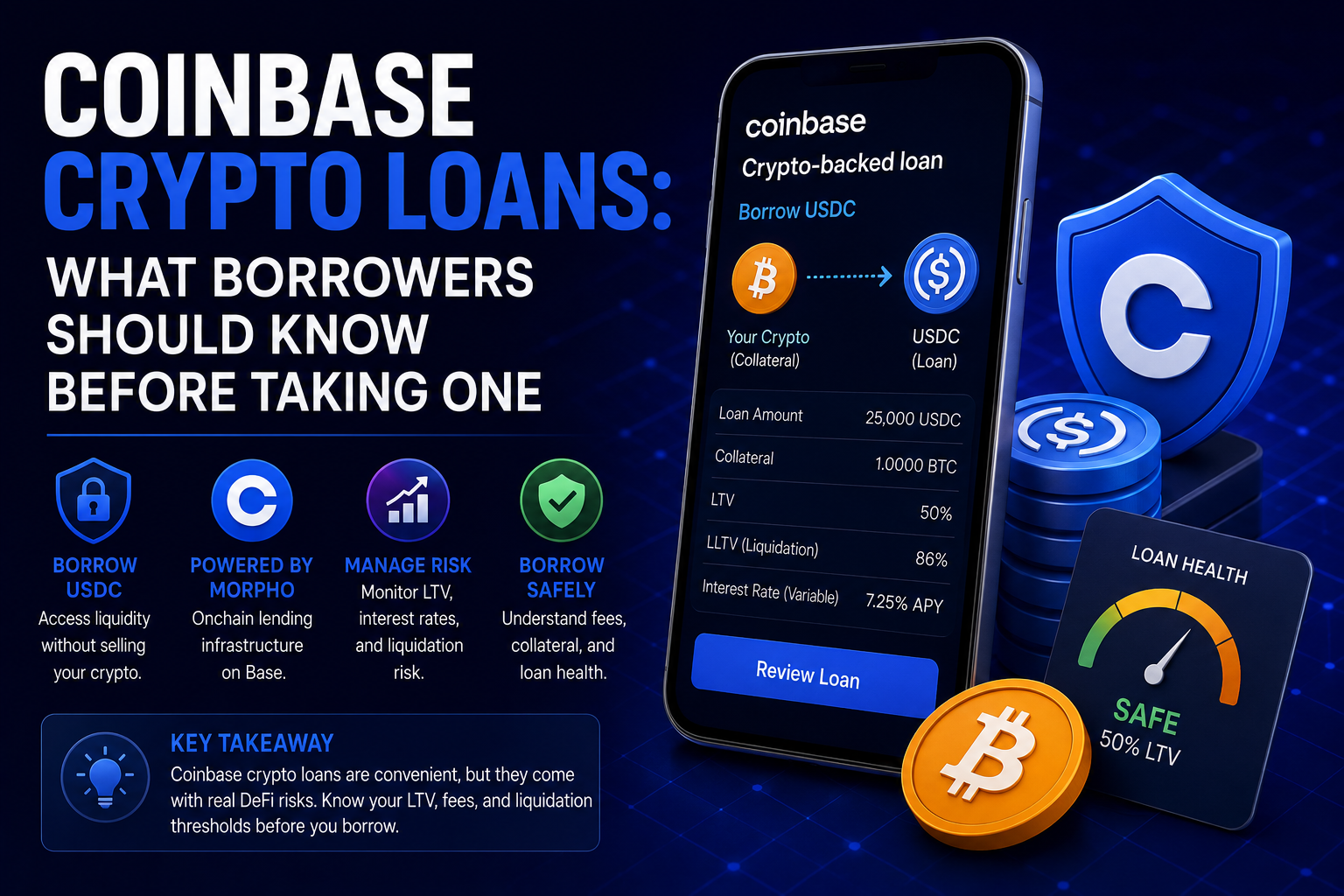
Dynamo’s Safety Margin feature lets borrowers select a more conservative effective loan-to-value level below the market’s fixed liquidation threshold. This creates a user-chosen buffer without changing Morpho’s underlying LLTV.
The Liquidation Risk view displays health factor, liquidation price, and how far collateral can fall before the position becomes eligible for liquidation. These metrics help borrowers understand the consequences of taking a morpho crypto loan.
Responsible borrower behavior can support market health, but supplier protection ultimately depends on collateral value, liquidator execution, and market design. A safety tool used by one borrower cannot eliminate system-wide risk.
How to Research Waterline on Dynamo
- Open Dynamo and connect a compatible wallet, or browse public data without committing capital.
- Navigate to the vault listings and search for the relevant deposit asset or curator.
- Confirm that the vault name, network, version, and contract address match the intended strategy.
- Review APY, TVL, fees, and the current allocation breakdown.
- Open each major underlying market and inspect its collateral, oracle, LLTV, utilization, and available liquidity.
- Compare the Waterline vault with direct market supply and vaults managed by other curators.
- Approve only the required token and deposit an amount consistent with the identified risks.
- Monitor future allocation changes, reward campaigns, and liquidity conditions after depositing.
Dynamo requires a Web3 wallet rather than a traditional account, email address, or custodial deposit. Users approve transactions in their own wallet, and the resulting position remains on Morpho’s smart-contract infrastructure.
Anyone ready to compare Waterline with alternative strategies can use Dynamo to evaluate both managed vaults and direct supply opportunities before signing a transaction.
Can Waterline Deliver Low-Risk Crypto Yield?
“Low risk” is always relative in DeFi. A diversified USDC vault may have lower price volatility than holding an unhedged altcoin, but it introduces credit-like and infrastructure risks that are not visible in the USDC price alone.
Waterline may reduce some risks through market selection, caps, and active allocation. It cannot turn ecosystem collateral into insured collateral or guarantee successful liquidations.
Investors looking for the safest possible outcome should prioritize understandable collateral, deep liquidity, conservative concentration, reliable oracles, proven contracts, sustainable base yield, and a position size that assumes losses remain possible.
No interface, curator, or risk label can identify the universally safest crypto yield. Risk depends on the complete strategy and the user’s own liquidity needs.
Waterline’s Role in the Growth of Curated DeFi
Waterline reflects a broader change in decentralized lending. Base protocols increasingly provide neutral infrastructure while independent curators specialize in portfolio construction and risk management.
This model lets ecosystems create dedicated liquidity strategies without building a complete lending protocol from scratch. Reservoir and infiniFi can develop their own assets and borrowing demand, while Waterline curates relevant Morpho markets.
The arrangement improves flexibility but creates a layered risk chain. Depositors must understand the base protocol, curator, ecosystem, collateral, oracle, and incentive structure.
Interfaces such as Dynamo can make that complexity easier to inspect. By presenting vault allocations beside individual market data, Dynamo helps users test a strategy’s headline narrative against its actual onchain exposure.
Final Thoughts on Waterline
Waterline is best understood as an ecosystem-focused Morpho vault curator. Its Reservoir and infiniFi strategies give USDC holders a managed way to supply liquidity across selected markets connected to those protocols.
The convenience is meaningful. Depositors do not need to monitor and rebalance every market manually, while current allocations remain visible onchain.
The risks are equally meaningful. Waterline vault shares expose users to borrower demand, collateral quality, ecosystem tokens, stablecoin pegs, smart contracts, oracles, liquidations, liquidity, curator decisions, and temporary incentives.
Use Dynamo to look below the blended APY. Compare Waterline with other curators, open the underlying markets, review the fee and risk data, and verify the contract before approving a deposit.
Explore current opportunities through Dynamo and Follow Dynamo Finance on X for product and ecosystem updates.
Frequently Asked Questions
What is Waterline in crypto?
Waterline is a DeFi vault curator that manages allocation strategies for selected Morpho vaults. Its role includes choosing eligible lending markets, managing exposure limits, and reallocating liquidity within each vault’s mandate.
What is the Waterline Reservoir USDC vault?
Waterline Reservoir USDC is an Ethereum-based Morpho vault that supplies USDC to approved markets associated with the Reservoir ecosystem. Its return can include borrower interest and temporary ecosystem incentives.
How does the Waterline infiniFi USDC vault earn yield?
The vault allocates USDC to selected Morpho markets linked to infiniFi assets. Borrower interest generates base yield, while additional reward programs may supplement the displayed APY when active.
Are Waterline vaults safe?
No DeFi vault is risk-free. Waterline depositors face smart-contract, curator, collateral, oracle, stablecoin, liquidation, liquidity, ecosystem, and incentive risks. Professional curation can improve oversight but cannot guarantee principal.
How can I compare Waterline vaults on Dynamo Finance?
Open Dynamo’s vault and market interfaces, locate the relevant Waterline strategy, and review its contract address, APY, TVL, fees, allocations, collateral, oracle, LLTV, utilization, and liquidity before depositing