
Crypto investing is no longer limited to buying spot tokens and hoping the market goes up. The industry now includes institutional asset managers, quantitative strategies, tokenized investment products, lending vaults, market-neutral yield, and DeFi-native borrowing tools. That is why more investors are looking at hyperithm and trying to understand what the company actually does in digital assets.
The short answer is that Hyperithm sits closer to crypto asset management than to a retail trading app. It works at the professional end of the market, where portfolio construction, algorithmic trading, market-neutral strategies, venture investing, compliance, and institutional client needs matter.
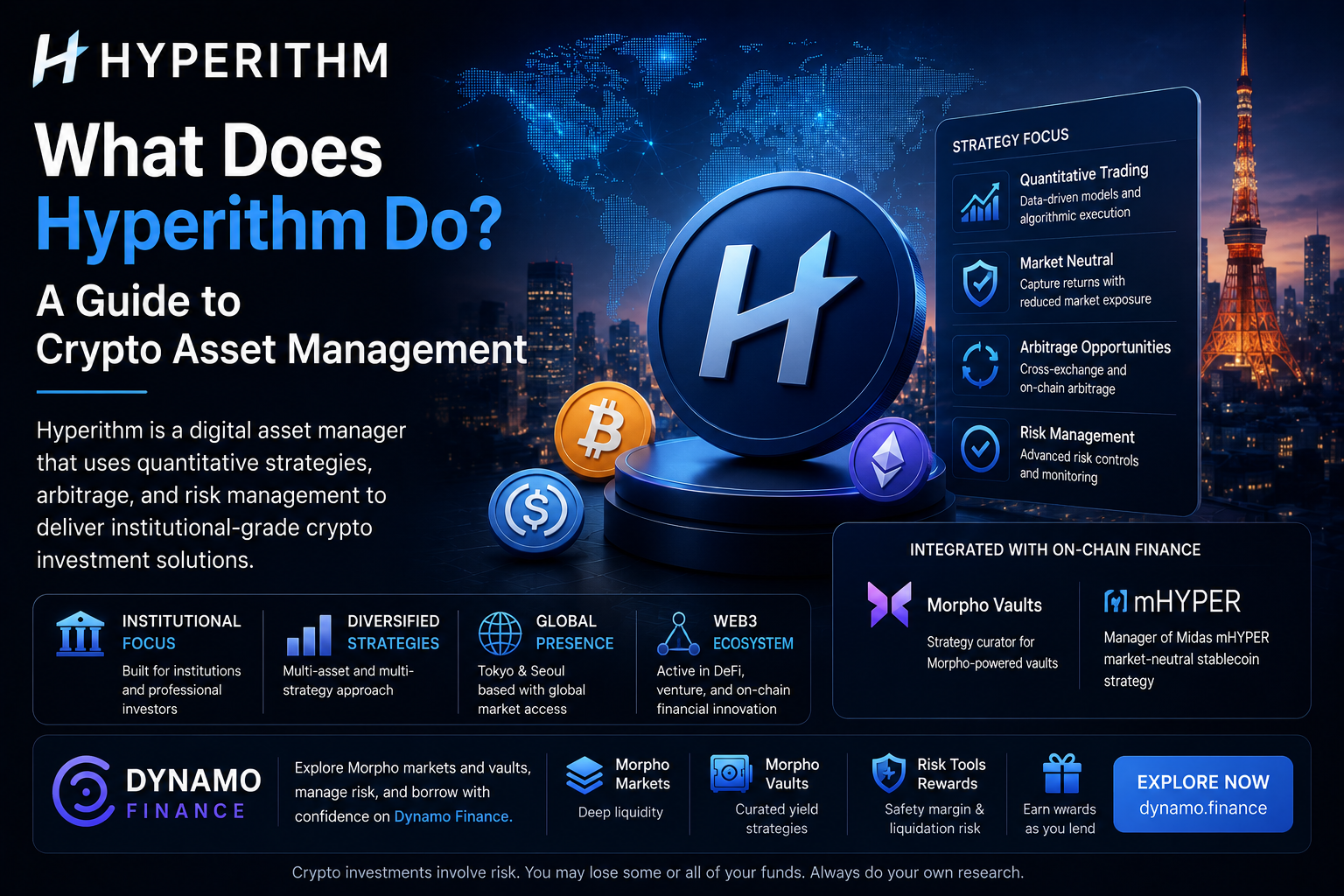
Hyperithm is a digital asset manager based in Tokyo and Seoul that focuses on quantitative trading, diversified arbitrage, venture investments, and institutional crypto strategies. In DeFi, Hyperithm is also relevant because it has appeared as a curator or strategy manager in Morpho vaults and tokenized yield products such as Midas mHYPER.
This guide explains what Hyperithm does, why it matters for DeFi investors, how crypto asset management differs from self-directed yield farming, how Hyperithm-style strategies connect to Morpho and tokenized yield, and how investors can compare those opportunities with market and vault data through Dynamo Finance.
Key Takeaways
- Hyperithm is a professional digital asset manager focused on institutional crypto strategies, quantitative trading, arbitrage, venture investing, and risk management.
- Hyperithm is relevant to DeFi users because its name appears in Morpho vault curation and Midas mHYPER, a tokenized market-neutral stablecoin strategy managed by Hyperithm.
- Crypto asset management is different from simple yield farming because it involves portfolio rules, risk limits, monitoring, execution systems, and strategy governance.
- Morpho vaults and tokenized yield products can make professional strategies more accessible, but they still carry smart contract, liquidity, oracle, strategy, manager, and regulatory risks.
- Dynamo Finance helps users evaluate Morpho-based markets and vaults with risk ratings, liquidation-risk views, safety-margin tools, market data, and a non-custodial workflow.
What Is Hyperithm?
Hyperithm is a crypto-focused asset management company serving institutional investors and high-net-worth clients. It describes itself as a digital asset gateway for institutions, with business lines that include quantitative trading, market-neutral strategies, venture investment, and regulated digital asset operations in Asia.
The company was founded in January 2018 and is based around Tokyo and Seoul. Its public materials describe an investment approach that uses algorithmic trading, diversified arbitrage strategies, and risk management to pursue returns while managing digital asset market risk. Readers can review the company’s own overview at Hyperithm.
For beginners, the easiest way to understand Hyperithm is to compare it with a professional investment manager rather than a crypto exchange. An exchange gives users a place to buy and sell assets. A wallet stores assets. A lending protocol runs smart contracts. An asset manager designs and executes strategies.
That distinction matters because crypto asset management is not just about finding a high APY. It is about building repeatable investment processes, controlling downside, managing liquidity, and choosing strategies that fit a specific risk profile.
What Does Hyperithm Do in Crypto?
Hyperithm’s work can be grouped into several broad categories: digital asset management, quantitative trading, arbitrage strategies, venture investing, and DeFi strategy participation. Each category serves a different role in the crypto market.
On the asset management side, Hyperithm focuses on strategies for professional clients rather than casual retail users. These strategies can involve market-neutral trading, cross-exchange arbitrage, funding-rate opportunities, options, event-driven strategies, and DeFi yield opportunities.
On the venture side, Hyperithm invests in Web3 projects across areas such as infrastructure, Layer 1 and Layer 2 networks, DeFi, gaming, applications, and emerging managers. This makes the company both an investor in crypto networks and a participant in the institutional digital asset market.
In DeFi, Hyperithm is especially relevant because its name appears in Morpho-based vault products and Midas tokenized investment strategies. That means DeFi investors may encounter Hyperithm not by opening a private institutional account, but by seeing Hyperithm as a curator, strategy manager, or risk manager behind an onchain yield product.
Crypto Asset Management Explained
Crypto asset management is the professional management of digital asset portfolios, strategies, or funds. It can include directional exposure to crypto assets, market-neutral trading, yield strategies, venture investments, staking, liquidity provisioning, derivatives, or tokenized products.
In traditional finance, asset managers build portfolios for clients based on return targets, liquidity needs, risk tolerance, and investment mandates. In crypto, the same concept applies, but the tools are different. Markets run 24/7, settlement is onchain, collateral can move quickly, and smart contracts can automate lending, borrowing, or liquidation.
A crypto asset manager may use quantitative models, automated execution systems, research teams, custody solutions, compliance checks, and risk dashboards to manage positions. The goal is not always to beat Bitcoin or Ethereum directionally. Some strategies aim to reduce directional exposure and capture spreads, funding rates, arbitrage, or lending yield.
This is why Hyperithm matters to DeFi investors. It represents the professionalization of crypto yield. The market is moving from informal yield farming into more structured strategies that can be integrated into vaults, tokenized products, and institutional workflows.
Hyperithm vs. a Retail DeFi App
A retail DeFi app is usually designed for direct user interaction. You connect a wallet, choose a market or vault, sign a transaction, and manage your own position. Hyperithm operates more like an asset manager that designs or manages strategies behind the scenes.
| Category | Hyperithm | Retail DeFi App |
|---|---|---|
| Primary role | Digital asset manager and strategy operator | User-facing interface for transactions |
| Main users | Institutions, professional investors, and strategy partners | Wallet users, DeFi investors, borrowers, and yield seekers |
| Core activity | Portfolio management, quant trading, arbitrage, venture investing, and vault or product strategy | Supplying, borrowing, staking, swapping, depositing into vaults, or managing positions |
| Risk focus | Strategy risk, execution risk, liquidity, counterparty exposure, portfolio limits, and operational controls | Smart contract risk, market selection, liquidation risk, wallet security, and user error |
| Example connection to DeFi | Curating or managing strategies that may be tokenized or routed into vault products | Helping users discover and interact with markets or vaults directly |
The difference is important because a user may see a Hyperithm-related product inside a DeFi environment and assume it works like a basic lending pool. It may not. It may involve managed strategy exposure, tokenized certificates, vault allocation rules, and more complex liquidity assumptions.
How Hyperithm Uses Quantitative and Market-Neutral Strategies
Hyperithm’s public materials emphasize algorithmic and high-frequency trading, diversified arbitrage, and market-neutral approaches. These terms can sound complex, but the basic idea is straightforward: the manager seeks returns from market inefficiencies rather than relying only on crypto prices going up.
Market-neutral strategies try to reduce exposure to broad market direction. For example, a strategy might hold offsetting long and short positions, capture funding-rate spreads, trade price differences between venues, or participate in stablecoin yield opportunities while hedging major directional risk.
That does not mean market-neutral strategies are risk-free. They can still lose money if spreads compress, liquidity disappears, exchanges fail, collateral moves unexpectedly, hedges break, funding rates reverse, or execution systems underperform.
For DeFi users, the key lesson is that “market-neutral” is a strategy objective, not a guarantee. A strategy can aim to reduce directional risk while still carrying liquidity, counterparty, smart contract, operational, and model risks.
Hyperithm and Venture Investment
Hyperithm also invests in Web3 companies and protocols. This part of the business is different from trading or vault management. Venture investing focuses on early-stage or growth-stage exposure to projects that may become important infrastructure, applications, networks, or service providers.
Venture exposure can give an asset manager insight into emerging sectors such as DeFi, infrastructure, gaming, data, wallets, scaling systems, and tokenization. It can also create strategic relationships across the ecosystem.
For everyday investors, the venture side is useful context because it shows that Hyperithm is not only a trading shop. It participates more broadly in the digital asset economy, from portfolio strategies to Web3 ecosystem development.
However, venture investing is not the same as liquid DeFi yield. Venture positions are typically illiquid, long-term, and highly risky. Users should not assume that a company’s venture portfolio translates directly into safety or yield for a vault or tokenized product.
Hyperithm and Morpho Vaults
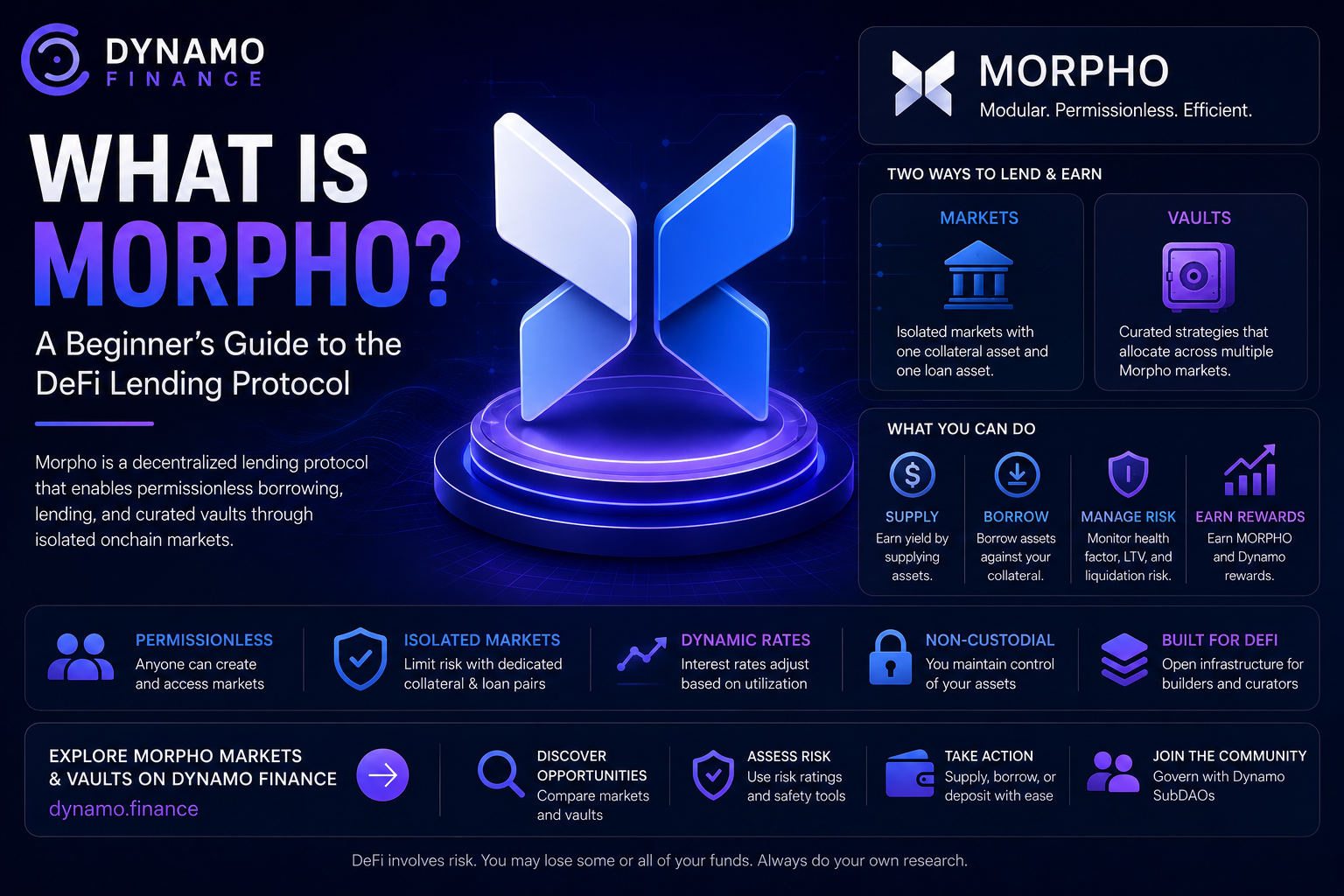
Morpho is one of the major DeFi lending infrastructures where Hyperithm’s name appears. Morpho enables lending markets and vaults, allowing curators to allocate capital across markets with specific collateral, loan assets, oracles, and risk parameters.
A Morpho vault accepts a deposit asset, such as USDC or USDT, and allocates it into underlying lending markets. The curator is responsible for selecting markets, setting allocation logic, and responding to market conditions. In this model, the curator’s judgment matters because depositors depend on the strategy beneath the vault.
Hyperithm-curated vaults have appeared across Morpho-related interfaces, including vaults that aim to capture yield from specific market opportunities while applying risk controls. Morpho’s own application pages have listed Hyperithm vaults such as USDC Apex and USDT Core, each with its own description, underlying asset, and strategy focus.
This is where the morpho vault ecosystem becomes important for DeFi users. A vault can make lending easier, but it also introduces curator risk. Users need to know who manages the strategy, what markets it uses, how diversified it is, and how the vault behaves when utilization or liquidity changes.
How Morpho Vaults Work in Plain English
A Morpho vault is a managed lending strategy. Instead of asking the user to pick individual lending markets manually, the vault pools deposits and deploys capital across selected markets.
The process typically works like this:
- A user deposits a supported asset, such as USDC, into a vault.
- The vault issues shares representing the user’s proportional ownership.
- The curator allocates the pooled capital across selected lending markets.
- Borrowers in those markets post collateral and pay interest to borrow the supplied asset.
- The vault earns interest from the underlying markets and reflects that yield in the share value.
- The curator or allocator may rebalance as rates, liquidity, and risk conditions change.
- The user can redeem vault shares subject to vault mechanics and available liquidity in the underlying markets.
This structure is attractive because it simplifies market selection. It can also improve diversification if the vault allocates across multiple markets. But users should not confuse simplicity with safety.
A vault can be exposed to oracle risk, collateral risk, liquidity risk, smart contract risk, curator risk, and concentration risk. A strong curator process can help manage these risks, but it cannot eliminate them.
Hyperithm and Midas mHYPER
Hyperithm is also connected to Midas mHYPER, a tokenized investment strategy. Ledger’s March 2026 Midas integration described mHYPER as a strategy structured to track a set of market-neutral stablecoin strategies deployed across leading onchain markets and ecosystems, managed and monitored by Hyperithm.
This is an important development because it shows how crypto asset management can move into tokenized products. Instead of a strategy being accessible only through a private fund structure, a tokenized product can represent exposure onchain, subject to eligibility rules, jurisdictional restrictions, product terms, and DeFi integration design.
Midas describes itself as a platform for composable onchain investment products. In that model, strategy managers can turn institutional strategies into compliant tokens, often called mTokens. Ledger’s overview of tokenized investment strategies with Midas gives a useful summary of mHYPER and its relationship to Hyperithm.
For investors, the core idea is that Hyperithm may appear not only as a vault curator, but also as the manager behind tokenized strategy exposure. That can be powerful, but it requires a different risk checklist than a simple lending deposit.
What Is Tokenized Yield?
Tokenized yield means an investment strategy is represented by an onchain token. The token may track a reference portfolio, accrue yield into its price, or represent a claim on assets according to a product’s legal and technical structure.
For example, a tokenized market-neutral stablecoin strategy might accept USDC and issue a token whose value changes as the underlying strategy generates gains or losses. Users hold the token in a wallet, and the token may be redeemable through the issuer’s process.
This differs from a stablecoin. A stablecoin is designed to maintain a target price, usually near one dollar. A tokenized yield product may have a net asset value that changes based on strategy performance. It is not necessarily pegged to one dollar.
It also differs from a basic lending vault. A lending vault earns yield from borrowers in underlying markets. A tokenized strategy may involve market-neutral trading, basis strategies, liquidation arbitrage, carry trades, lending, or other managed exposures.
Why Hyperithm Matters for DeFi Investors
Hyperithm matters because it sits at the intersection of professional asset management and onchain finance. As more institutional strategies move into vaults and tokenized products, DeFi users will increasingly encounter names like Hyperithm, Gauntlet, Steakhouse, Midas, Re7, MEV Capital, and others.
This changes how investors should evaluate yield. In early DeFi, many users focused on protocol APY and token incentives. In the next phase, investors also need to evaluate curator quality, strategy mandate, portfolio transparency, redemption mechanics, liquidity depth, and manager risk.
That does not mean every user needs to become a quantitative trader. It means users should understand what role each participant plays. Morpho may provide lending infrastructure. Hyperithm may curate or manage strategy exposure. Midas may tokenize strategy access. Dynamo may help users compare markets, vaults, and risk signals.
When the stack becomes more specialized, due diligence becomes more important. The user’s job is to understand which layer creates the return and which layer carries the risk.
Where Dynamo Finance Fits
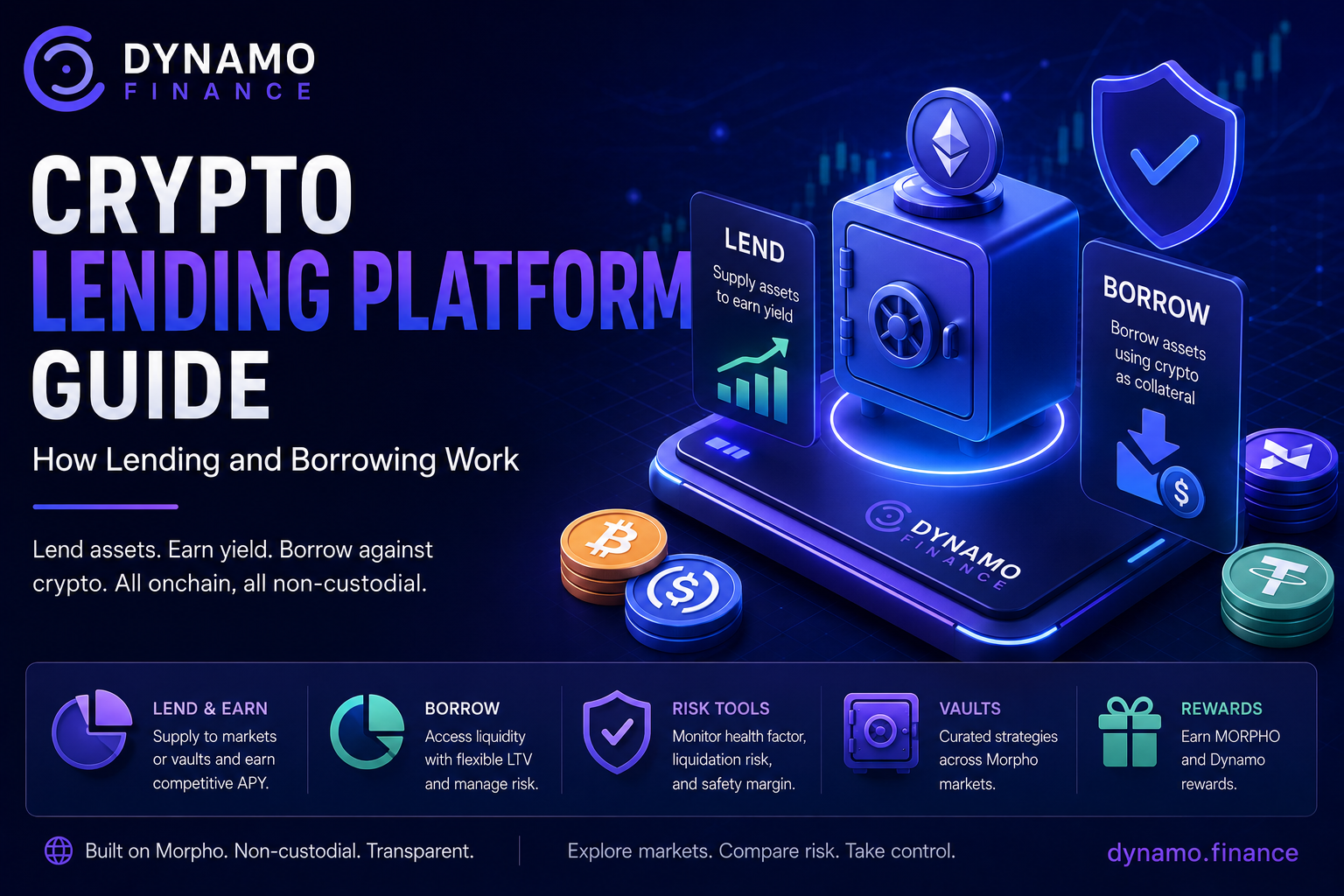
Dynamo Finance is a non-custodial, permissionless Web3 lending market built on Morpho smart contracts. Users can supply assets, borrow against collateral, deposit into vaults, evaluate risk, earn rewards, and participate in governance from one interface.
This matters for anyone researching professional DeFi strategies because Dynamo gives users a way to inspect Morpho-based opportunities more directly. Instead of looking only at a headline APY, users can compare market parameters, vault allocation, risk tiers, available liquidity, utilization, and liquidation data.
Dynamo does not custody user funds. Assets are held by Morpho smart contracts, while Dynamo adds a user-facing layer for discovery, risk analytics, position management, rewards, and governance participation.
For users comparing Hyperithm-style asset management with DeFi-native opportunities, Dynamo provides a practical way to explore morpho crypto lending markets and vaults before supplying or borrowing.
Dynamo Markets: Direct Lending Exposure
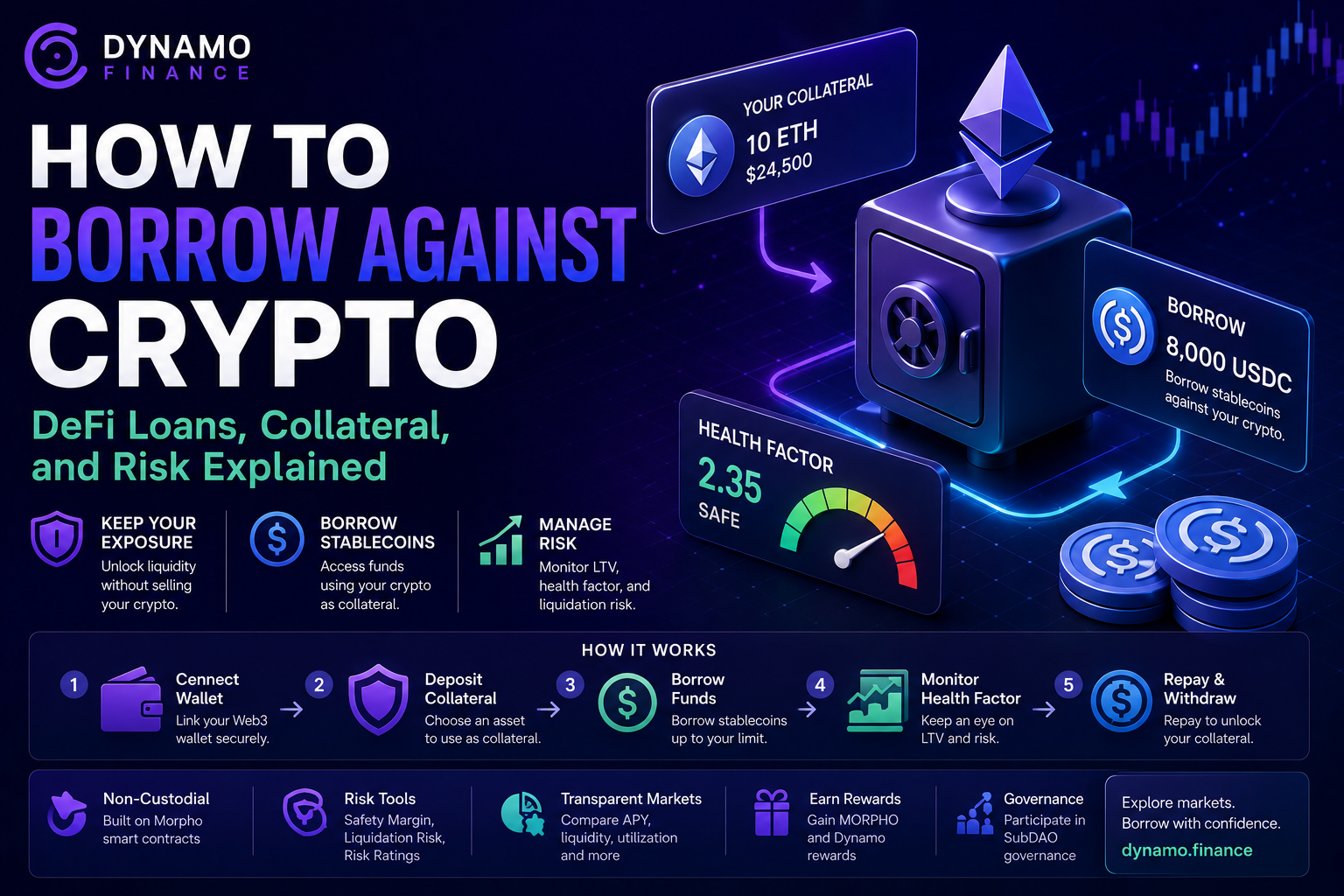
Dynamo markets are isolated lending pools. Each market has one loan asset, one collateral asset, one oracle, one interest-rate model, and one liquidation loan-to-value threshold. This market isolation makes it easier to understand exactly what exposure a user is taking.
When a user supplies the loan asset, they earn interest paid by borrowers. When a user borrows, they post collateral and draw from the loan asset pool. Each market operates independently, so activity in one market does not automatically affect another.
This is valuable for users evaluating crypto loan opportunities. A market’s APY is only one data point. Users should also review utilization, available liquidity, collateral quality, oracle design, LLTV, market age, and total supply.
Direct markets are best suited for users who want control. They can choose exactly where their capital goes, but they must also take responsibility for market selection and ongoing monitoring.
Dynamo Vaults: Curated Yield Through Morpho
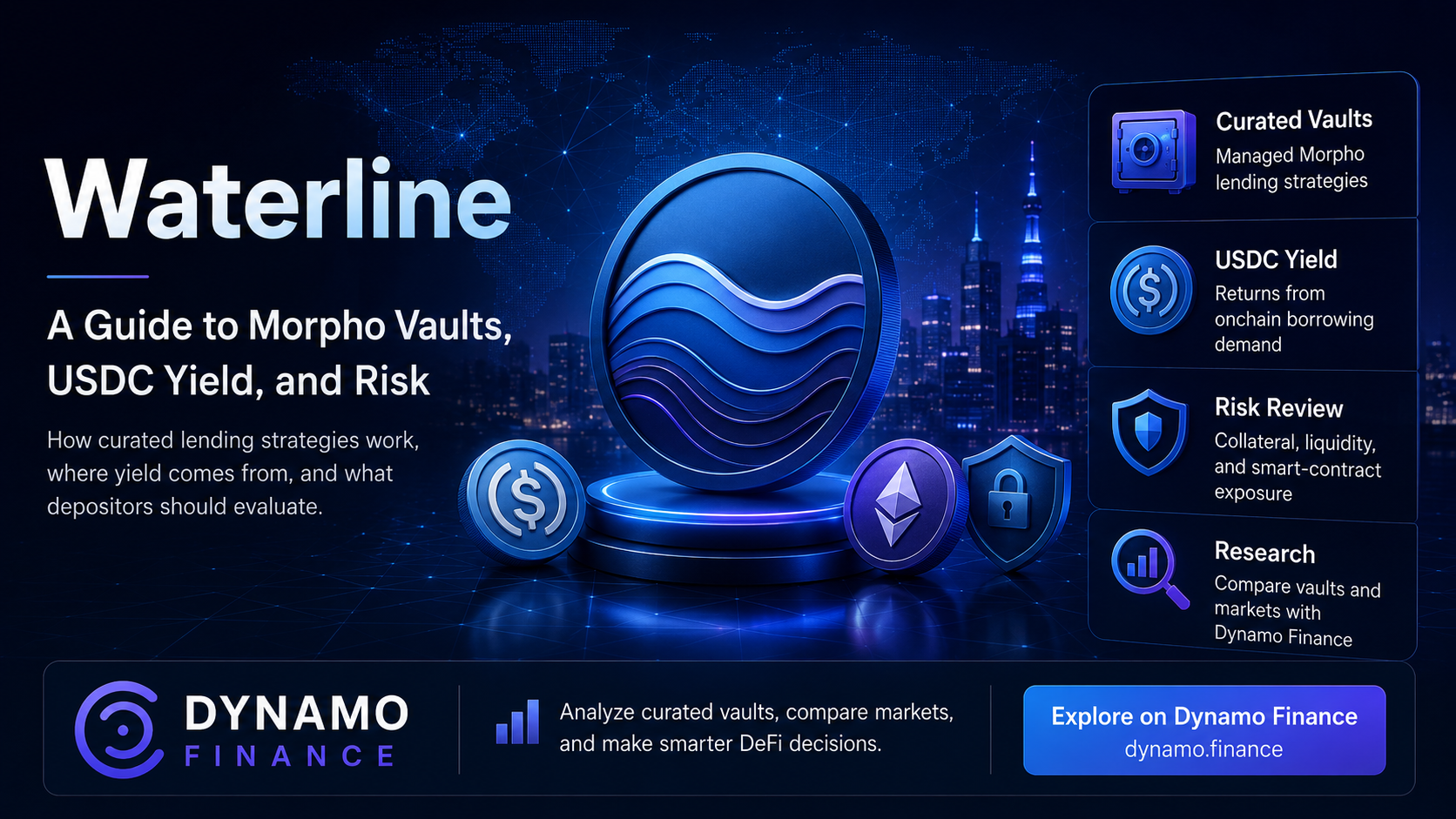
Dynamo vaults are built on the MetaMorpho standard. A vault lets users deposit once while a curator allocates capital across verified lending markets. This can reduce manual work and produce a blended yield from several underlying markets.
Vaults are useful for users who want curated exposure rather than direct market selection. A vault’s APY reflects the performance of the markets where the vault allocates capital. As market rates shift, vault allocations may change.
Users should still evaluate vaults carefully. Important questions include: Who is the curator? How diversified is the vault? How stable is APY? What fees apply? Which markets receive allocations? How much liquidity is available if many users withdraw?
This framework applies whether a vault is curated by a professional manager or a community strategy. The wrapper is not enough. The underlying allocation matters.
Dynamo Risk Ratings, Safety Margin, and Liquidation Views
Dynamo adds risk tools that are especially useful for users moving from passive yield into active DeFi lending and borrowing. Markets and vaults receive Low, Medium, or High risk tiers based on objective onchain inputs such as LLTV, TVL, market exposure, and live history.
For borrowers, Dynamo’s Safety Margin feature creates a synthetic target LTV so users can borrow more conservatively than the underlying liquidation threshold. This helps borrowers avoid taking the maximum possible loan simply because the market allows it.
Dynamo’s Liquidation Risk view shows health factor, price-drop tolerance, and liquidation price for open borrow positions. These metrics are critical because collateralized borrowing can become risky quickly during volatile markets.
Users can explore these tools through the Dynamo risk dashboard. For a broader product overview, the Dynamo Finance protocol guide covers markets, vaults, risk ratings, rewards, fees, and position management.
Hyperithm vs. Dynamo Finance
Hyperithm and Dynamo Finance are not competitors in a narrow sense. They occupy different layers of the crypto market. Hyperithm is a digital asset manager and strategy participant. Dynamo is a non-custodial interface and toolkit for Morpho-based lending markets and vaults.
| Topic | Hyperithm | Dynamo Finance |
|---|---|---|
| Primary role | Digital asset manager, quant strategy operator, venture investor, and DeFi strategy participant | Non-custodial user-facing platform for Morpho markets, vaults, borrowing, lending, risk tools, and rewards |
| Main audience | Institutions, professional investors, strategy partners, and tokenized product users | Crypto-native users, DeFi investors, yield seekers, suppliers, and borrowers |
| Yield mechanism | Managed strategies such as arbitrage, market-neutral stablecoin strategies, vault curation, or tokenized products | Borrower-paid interest in Morpho markets, curated vault yield, and eligible reward streams |
| Risk focus | Strategy risk, manager risk, liquidity, execution, counterparty, compliance, and market conditions | Collateral, oracle, utilization, LLTV, liquidation, vault concentration, and market liquidity |
| Best fit | Users evaluating professional crypto asset management or tokenized strategy exposure | Users who want to compare and manage DeFi lending and borrowing opportunities directly |
The practical takeaway is that investors can learn from both. Hyperithm shows how professional managers approach crypto strategy design. Dynamo gives users tools to apply risk-aware thinking when they supply, borrow, or deposit into vaults.
How to Evaluate a Hyperithm-Related Product
If you encounter a Hyperithm-related vault, tokenized product, or managed strategy, do not stop at the brand name. A strong manager can still operate strategies with different risk levels, and not every product fits every investor.
- Identify the exact product: vault, tokenized certificate, private strategy, or DeFi integration.
- Understand the role Hyperithm plays: curator, manager, risk manager, allocator, or investor.
- Review the strategy objective: market-neutral yield, stablecoin lending, arbitrage, basis trading, venture exposure, or another mandate.
- Check the assets involved: USDC, USDT, ETH, BTC, stablecoins, vault shares, mTokens, or other collateral.
- Review liquidity and exits: instant redemption, standard redemption, vault withdrawal, secondary market liquidity, or lock-up terms.
- Understand the risk stack: smart contracts, oracle data, exchange exposure, bridge exposure, manager discretion, legal structure, and regulation.
- Compare yield with risk: ask whether the expected return compensates for the complexity and downside.
- Start small if accessible and test the full entry and exit workflow before scaling.
This process is useful for Hyperithm-related products, Morpho vaults, Midas mTokens, and any structured DeFi yield strategy.
How to Evaluate a Morpho Vault Curated by Any Manager
Vault curation is becoming one of the most important parts of DeFi. Curators decide which markets receive capital and how a vault responds when conditions change. That makes curator evaluation essential.
Start with the underlying asset. A USDC vault is not automatically low risk just because USDC is familiar. The vault may lend USDC against different collateral assets, each with its own volatility and liquidity profile.
Next, inspect market concentration. A vault spread across many conservative markets may behave differently from a vault concentrated in a small number of aggressive markets. Concentration can increase returns, but it can also increase downside.
Then review fees, APY stability, utilization, withdrawal liquidity, and live history. A vault with a short history may not have been tested during market stress. A high APY may be attractive, but the source of that APY matters.
How to Compare Hyperithm-Style Yield With Direct DeFi Lending
Hyperithm-style strategies and direct DeFi lending both compete for crypto capital, but they generate returns differently. A market-neutral strategy may earn from arbitrage, funding rates, carry, or trading spreads. A lending market earns from borrowers paying interest.
Direct lending can be easier to analyze because the core variables are visible: loan asset, collateral asset, utilization, borrow APY, supply APY, oracle, LLTV, total supply, and available liquidity. The trade-off is that the user must choose markets and monitor conditions.
Managed strategies may abstract more complexity. That can be useful, but it also means the user must evaluate manager process, transparency, strategy rules, redemption rights, and risk controls.
Neither approach is universally better. A user seeking simplicity may prefer a curated vault. A user seeking control may prefer direct markets. A user seeking institutional-style exposure may evaluate tokenized strategies. A borrower needing liquidity may focus on how to borrow against crypto while a lender may focus on lending cryptocurrency safely.
Practical Example: Stablecoin Yield Allocation
Imagine a user holds USDC and wants yield. They have three possible paths: a Hyperithm-related tokenized strategy, a Morpho vault curated by a professional manager, or a direct DeFi lending market through Dynamo.
The tokenized strategy may offer exposure to market-neutral stablecoin strategies. The user should evaluate the issuer, manager, redemption process, NAV methodology, eligibility, and liquidity. The yield may be attractive, but it depends on strategy execution and product structure.
The curated vault may lend USDC across Morpho markets. The user should evaluate curator process, underlying markets, collateral, APY stability, utilization, and fees. The benefit is convenience and potentially diversified allocation.
The direct market route gives maximum control. The user can choose one market based on collateral, liquidity, and risk tier. The downside is that the user must manage selection and monitoring themselves.
Practical Example: Borrowing Against Crypto
Now imagine a user holds ETH and wants stablecoin liquidity without selling. Instead of allocating to a managed strategy, the user may need a collateralized borrow position. This is a different problem with a different tool.
Through a Morpho-based market on Dynamo, a borrower can post collateral and borrow a loan asset. The borrower keeps exposure to the collateral but accepts liquidation risk if collateral falls or debt grows too much.
A disciplined borrower reviews LTV, LLTV, borrow APY, available liquidity, oracle, health factor, and liquidation price. They avoid borrowing at the maximum limit and use a conservative buffer.
This is where Dynamo’s Safety Margin and liquidation-risk tools are useful. A borrower does not need to be an institutional manager to apply institutional discipline. They need clear data, a realistic plan, and a willingness to reduce risk before stress arrives.
Risks of Crypto Asset Management
Professional management can improve process, but it does not eliminate risk. Users should avoid assuming that a managed product is safe simply because an experienced firm is involved.
- Strategy risk: A trading or yield strategy can underperform or lose money.
- Execution risk: Automated or algorithmic systems can fail, lag, or execute poorly during market stress.
- Liquidity risk: A strategy may not be able to exit positions quickly without slippage or delays.
- Counterparty risk: Centralized exchanges, custodians, brokers, or service providers may create dependencies.
- Smart contract risk: DeFi venues and vaults can contain bugs or unexpected behavior.
- Oracle risk: Price feeds can be delayed, inaccurate, or manipulated.
- Manager risk: The strategy depends on the manager’s decisions, controls, and monitoring process.
- Regulatory risk: Product availability, transferability, or redemption can change due to jurisdictional rules.
- User error risk: Using fake sites, wrong networks, unsupported assets, or misunderstood products can cause irreversible losses.
These risks are not reasons to avoid every managed strategy. They are reasons to evaluate each product carefully and size positions based on downside, not marketing yield.
Risks of DeFi Lending and Vaults
DeFi lending has a different risk profile. It can be more transparent than traditional finance, but transparency does not guarantee safety.
Suppliers face market risk, liquidity risk, collateral risk, oracle risk, smart contract risk, and curator risk if they use vaults. Borrowers face liquidation risk, variable borrow rates, collateral volatility, and transaction risk during periods of congestion.
A high APY market may reflect strong borrower demand, but it may also reflect high utilization or elevated risk. A low APY market may be safer, but only if collateral quality, oracle design, and liquidity are sound.
Users should treat vault shares and lending deposits as investment positions. They are not bank deposits. They can change in value, become harder to exit, or expose users to losses during extreme events.
What Beginners Often Misunderstand About Hyperithm
The first misunderstanding is assuming Hyperithm is a retail exchange. It is better understood as a digital asset manager and strategy participant, not a place where most users simply buy spot crypto.
The second misunderstanding is assuming “market-neutral” means risk-free. Market-neutral strategies try to reduce directional exposure, but they can still lose money due to execution, liquidity, funding, counterparty, or smart contract problems.
The third misunderstanding is treating all vaults as the same. Two vaults may both use Morpho, but one may be conservative and diversified while another may pursue higher yields through newer or more specialized collateral.
The fourth misunderstanding is ignoring eligibility. Some managed or tokenized products may not be available to certain users based on jurisdiction, investor status, or compliance requirements.
What Experienced Investors Look For
Experienced investors start with the mechanism. They want to know what creates the return, who controls allocation, what assets sit underneath, how risk is measured, and how exits work.
They also ask whether the yield is sustainable. A strategy based on temporary incentives may not last. A vault based on high utilization may face withdrawal constraints. A market-neutral strategy may perform differently when volatility, funding rates, or liquidity regimes change.
Experienced investors also compare opportunity cost. Supplying USDC to one vault means not supplying it elsewhere. Holding a tokenized strategy means accepting product-specific liquidity and legal terms. Borrowing against crypto means accepting liquidation risk instead of selling or hedging.
The best process is not always the most complex. Often, it is simply asking the right questions before capital is deployed.
How to Build a Risk-First Crypto Yield Strategy
A risk-first strategy starts with your objective. Are you seeking stablecoin yield, market-neutral exposure, collateralized borrowing, venture upside, or simple liquidity management? Different objectives require different tools.
Next, choose the product type. A direct lending market gives control. A vault gives curated allocation. A tokenized strategy gives managed exposure. A borrow position unlocks liquidity. A venture investment targets long-term upside but may be illiquid.
Then review the downside. Ask what could cause loss, delay withdrawals, reduce yield, or trigger liquidation. If you cannot explain the downside in plain English, the position is probably too complex for your current process.
Finally, monitor after entry. Digital asset strategies evolve quickly. Rates, liquidity, collateral values, vault allocations, redemption conditions, and market volatility can all change.
How Dynamo Helps Users Apply Professional Discipline
The main value of Dynamo is not just access. It is context. DeFi users need to understand markets before they supply capital or borrow against collateral.
Dynamo helps users compare market APYs, utilization, available liquidity, collateral, loan assets, risk tiers, and liquidation settings. It also helps vault users inspect curators, allocations, blended APY, and underlying risk exposure.
For borrowers, Dynamo’s position tools encourage safer behavior. Safety Margin helps users avoid borrowing too aggressively. Liquidation Risk views show how much collateral price movement a position can absorb before becoming liquidatable.
Users who want product updates, market context, and community discussions can follow Dynamo Finance updates. The broader lesson is simple: better tools help, but disciplined decisions matter more.
External Resources for Further Research
Readers researching Hyperithm should start with primary sources. The Hyperithm official site provides the clearest overview of the company’s positioning, business lines, strategy categories, and regulatory claims.
For tokenized strategy context, Ledger’s article on Midas tokenized investment strategies explains mHYPER as a market-neutral stablecoin strategy managed by Hyperithm and available through the Ledger Wallet Discover experience for eligible users.
Morpho’s Midas case study explains how tokenized certificates and Morpho vault strategies can connect to onchain liquidity, collateralization, and redemption flows. For company financing context, CoinDesk’s report on Hyperithm’s Series B fundraising describes the firm as a Tokyo-based digital asset management company serving institutional investors and other professional market participants.
Final Checklist Before Using a Managed Crypto Strategy or DeFi Vault
Use this checklist before allocating capital to any managed crypto strategy, tokenized product, vault, or lending market.
- Confirm the official website, app, and contract addresses.
- Identify the product type: fund, tokenized strategy, vault, direct market, or borrow position.
- Understand the yield source: borrower interest, arbitrage, funding rates, incentives, market-neutral trading, or tokenized portfolio performance.
- Review the manager, curator, issuer, custodian, oracle, and protocol dependencies.
- Check fees, liquidity, redemption conditions, lockups, and withdrawal constraints.
- Evaluate smart contract, market, oracle, counterparty, legal, and regulatory risks.
- Start with a small test position where possible.
- Monitor the position after entry and be ready to reduce risk if conditions change.
Conclusion
Hyperithm is important because it represents the professional asset management layer of crypto. The company’s work spans quantitative trading, market-neutral strategies, arbitrage, venture investing, and participation in DeFi strategy infrastructure.
For DeFi investors, the bigger lesson is that yield is becoming more specialized. Returns may come from borrower interest, vault curation, tokenized strategies, market-neutral trading, or institutional product structures. Each source of yield has a different risk profile.
Dynamo Finance helps users bring professional discipline into everyday DeFi lending. By surfacing Morpho-based markets, vaults, risk ratings, safety margins, liquidation-risk views, and rewards, Dynamo gives users a clearer way to compare opportunities before supplying, borrowing, or depositing into vaults.
Explore Dynamo Finance to compare Morpho markets and vaults, review risk data, and build a more informed approach to crypto lending, borrowing, and onchain yield.
FAQ
What is Hyperithm in crypto?
Hyperithm is a digital asset manager based in Tokyo and Seoul. It focuses on crypto asset management, quantitative trading, diversified arbitrage, venture investments, and institutional digital asset strategies.
Is Hyperithm a DeFi protocol?
Hyperithm is not best understood as a base DeFi protocol. It is a digital asset manager and strategy participant that can appear in DeFi through vault curation, tokenized strategy management, and integrations with platforms such as Morpho and Midas.
What is Hyperithm’s connection to Morpho?
Hyperithm has appeared as a curator or strategy participant in Morpho-based vault products. Morpho provides lending and vault infrastructure, while curators such as Hyperithm can manage allocation strategies for specific vaults.
What is mHYPER?
mHYPER is a Midas tokenized investment strategy that gives eligible users exposure to market-neutral stablecoin strategies managed and monitored by Hyperithm. It is a tokenized product, not a risk-free stablecoin.
How does Dynamo Finance relate to Hyperithm?
Dynamo Finance is not Hyperithm. The connection is educational and strategic: Hyperithm represents professional crypto asset management, while Dynamo gives users a non-custodial interface to evaluate Morpho-based lending markets, vaults, risk ratings, and borrowing tools.