
DeFi yield looks simple from the outside: deposit assets, earn APY, borrow against collateral, or allocate into a vault. Under the surface, however, every lending market depends on risk parameters, collateral quality, oracle reliability, liquidity depth, borrower demand, and liquidation mechanics. That is where the search for curators such as Gauntlet crypto usually begins.
Crypto-native users often hear Gauntlet mentioned in the same conversations as Morpho, Aave, Compound, vault curation, parameter optimization, and institutional DeFi. Beginners may see the name attached to yield strategies and wonder whether Gauntlet is a protocol, a risk firm, a vault curator, or a Web3 infrastructure company.
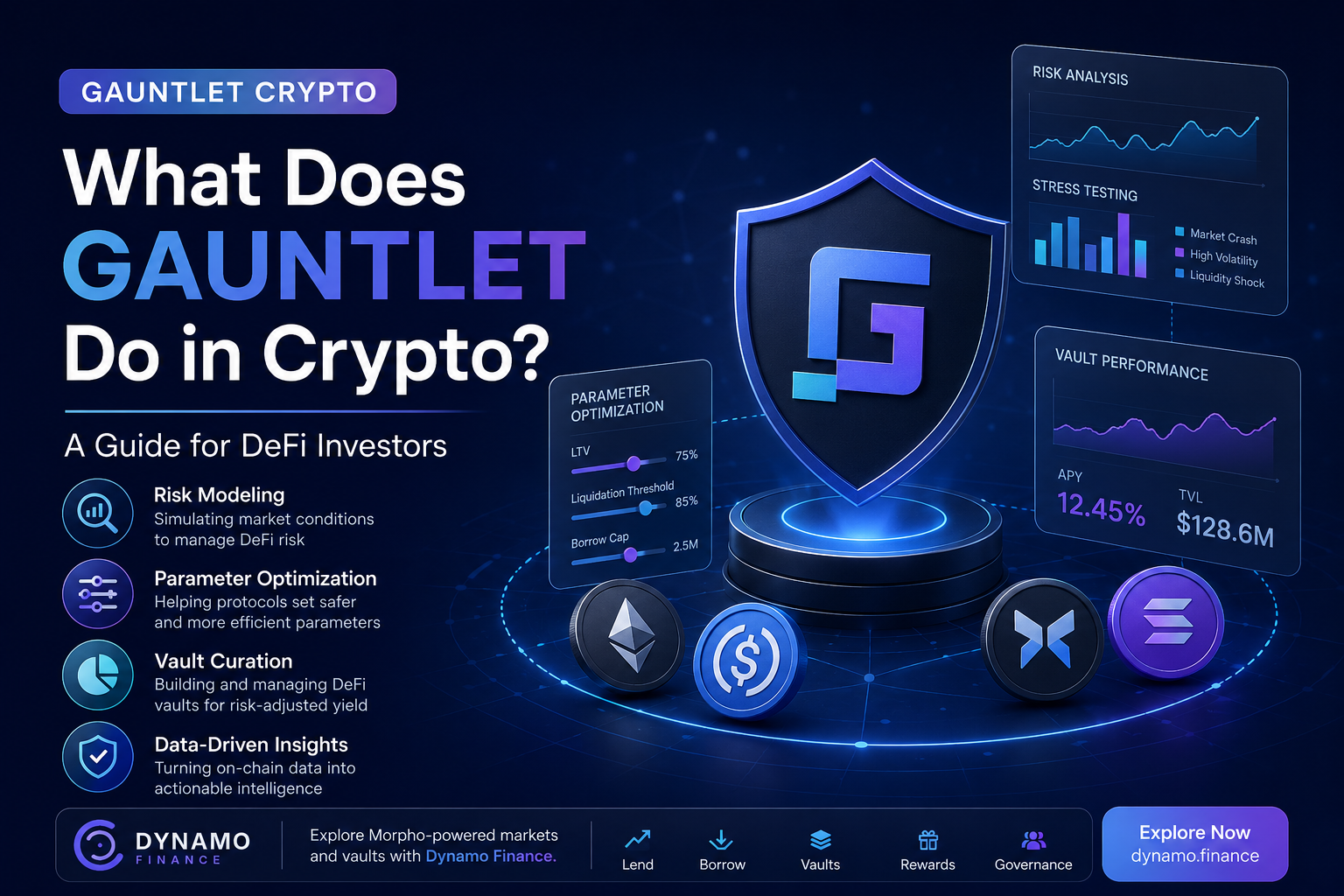
Gauntlet is a crypto risk management, quantitative research, and DeFi vault curation company that uses data analysis, simulation modeling, and market expertise to help protocols, capital allocators, and institutions manage onchain risk and optimize yield strategies.
This guide explains what Gauntlet does in crypto, why it matters for DeFi investors, how the gauntlet company fits into the broader Web3 market structure, and how users can apply similar risk-first thinking when evaluating lending markets and vaults through Dynamo Finance.
Key Takeaways
- Gauntlet is best known for DeFi risk management, quantitative modeling, parameter optimization, and vault curation.
- Gauntlet Web3 work focuses on helping protocols and capital allocators understand market risk, liquidity risk, collateral risk, and incentive design.
- Gauntlet DeFi strategies often involve curated vaults, where capital is allocated across lending markets based on risk-adjusted yield opportunities.
- Dynamo Finance is relevant to this topic because it helps users evaluate Morpho-based markets and vaults with risk ratings, safety-margin concepts, liquidation-risk views, and a non-custodial workflow.
- DeFi investors should not chase APY alone. The better question is whether the yield compensates for the specific risk being taken.
What Is Gauntlet in Crypto?
Gauntlet is a quantitative crypto company focused on risk, incentives, and yield optimization in decentralized finance. It has worked across DeFi as a research and risk partner, and its current public positioning emphasizes onchain yield strategies, institutional integrations, applied research, and curated vaults.
The easiest way to understand Gauntlet is to compare it to a risk and quantitative strategy team in traditional finance. In TradFi, institutions use models to evaluate market shocks, liquidity constraints, portfolio concentration, and loss scenarios. In DeFi, similar work is needed, but the data is onchain, the markets run 24/7, and smart contracts enforce rules automatically.
That makes Gauntlet important because DeFi does not have bank underwriters, credit committees, or centralized risk officers in the traditional sense. Lending protocols depend on parameters such as collateral factors, liquidation thresholds, supply caps, borrow caps, interest-rate curves, vault allocation limits, and oracle assumptions. A change in any of those inputs can affect user safety, protocol solvency, and capital efficiency.
In practical terms, Gauntlet helps answer questions such as: How much collateral should a market accept? How aggressive should liquidation parameters be? How much liquidity can a vault absorb before APY compresses? Which collateral types create unacceptable tail risk? Which incentives drive useful growth rather than mercenary capital?
What Does the Gauntlet Company Actually Do?
The gauntlet company sits at the intersection of DeFi research, risk management, asset curation, and institutional onchain yield. It is not simply a dashboard provider or a consumer wallet. It works on the analytical layer that supports safer, more efficient DeFi markets.
Gauntlet works across lending, restaking, real-world asset yield, vault infrastructure, applied research, and risk dashboards. The company is positioned around onchain yield for financial institutions, applications, exchanges, wallets, asset issuers, capital allocators, builders, and DAOs. Readers can review Gauntlet’s own overview at Gauntlet.
For a DeFi investor, the practical takeaway is not that Gauntlet magically removes risk. It does not. Instead, Gauntlet represents a more professionalized approach to risk selection. The company brings quantitative modeling, market monitoring, parameter design, and operational curation into markets that can otherwise look like a confusing list of APYs.
That same mindset is valuable for everyday DeFi users. Whether you are supplying stablecoins, borrowing against ETH, or depositing into a vault, you should think less like a passive saver and more like a risk allocator.
How Gauntlet Web3 Risk Management Works
Gauntlet Web3 work is often associated with simulation-based modeling, stress testing, market analysis, and economic design. Instead of relying only on historical averages, risk teams model how protocols may behave under volatile conditions.
For example, a lending market can look healthy during calm conditions. Utilization is stable, collateral prices are rising, and liquidations are rare. But a risk model asks what happens when collateral drops 25% in a day, liquidity disappears from secondary markets, borrowing demand changes suddenly, or an oracle update triggers liquidations during congestion.
That kind of modeling matters because DeFi markets are reflexive. Liquidations can push prices lower. Lower prices can trigger more liquidations. High utilization can make withdrawals harder. Incentive programs can attract capital quickly and then lose it just as fast. A protocol that ignores these dynamics may look efficient until stress arrives.
Gauntlet Applied Research involves data analysis, simulation modeling, economic design, protocol optimization, risk mitigation, and growth strategy. That is the kind of work DeFi needs as more institutional capital moves onchain. Readers who want a primary-source view can explore Gauntlet Applied Research.
Why Gauntlet Matters for DeFi Investors
Most DeFi investors do not directly hire a risk modeling company. Still, Gauntlet matters because its work influences how users think about vaults, lending markets, curators, and protocol risk.
A beginner may see a stablecoin vault with a high APY and assume it is similar to a savings account. It is not. The yield usually comes from borrowers paying interest, incentives, or strategies that depend on active market conditions. If the underlying borrowers disappear, collateral weakens, utilization changes, or incentives end, the return profile can change quickly.
Gauntlet’s rise reflects a broader DeFi lesson: yield should be assessed in relation to risk. A 5% APY from a deep market with conservative collateral may be more attractive than a 15% APY from a thin market with volatile collateral and limited liquidity. The higher number is only better if the risk-adjusted return is actually superior.
For users of crypto lending products, this mindset is essential. The goal is not to avoid risk entirely. The goal is to understand the risk, price it correctly, and choose markets or vaults that fit your objectives.
Gauntlet DeFi and the Shift Toward Vault Curation
One of the most important developments is the move from protocol-level risk recommendations into vault curation. A vault curator does not simply publish research. The curator helps decide where deposited capital goes, which markets receive allocations, and how strategy parameters respond to changing market conditions.
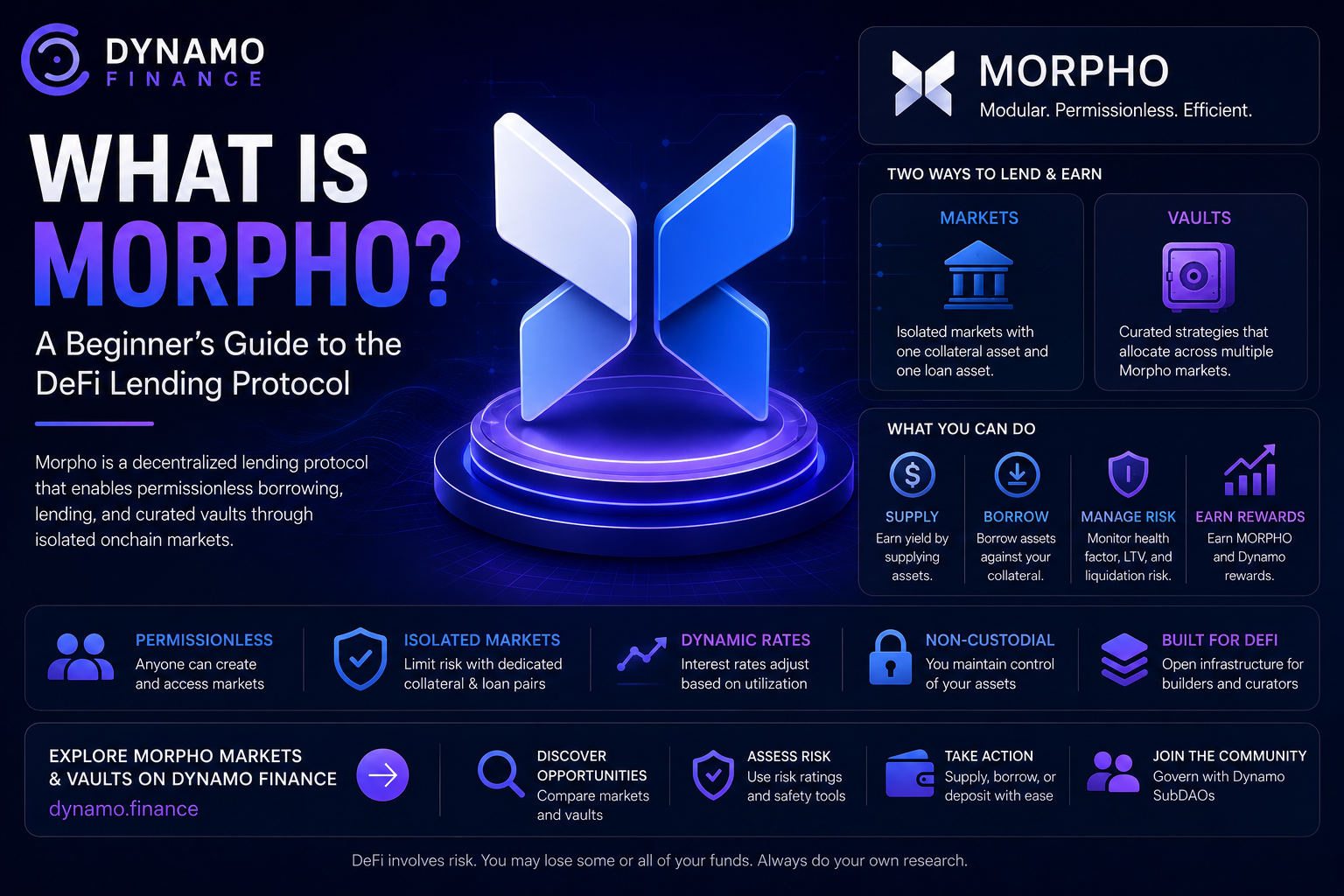
This is especially relevant in the Morpho ecosystem. Morpho’s vault model allows curators to build lending strategies on top of isolated markets. A vault can allocate capital across several underlying markets, giving suppliers a blended yield while reducing the need for manual market selection.
Morpho describes Gauntlet as a risk management and research firm that adopted Morpho infrastructure to launch vault curation strategies. It also highlights the curator’s role in selecting risk-reward opportunities for vault suppliers. You can review that relationship at Morpho’s Gauntlet story.
For users, this helps explain why curator reputation matters. Two vaults may use the same underlying protocol, but their risk can differ dramatically based on market selection, collateral policy, allocation limits, liquidity assumptions, and rebalancing behavior.
How Vault Curation Works in Plain English
A vault is a strategy container. Users deposit an asset, such as a stablecoin, and the vault allocates that asset across lending markets. Borrowers in those markets pay interest. The vault’s suppliers receive yield based on the interest generated by the markets where the vault allocates liquidity.
The curator is responsible for strategy decisions. In a Morpho-style vault, that may include choosing eligible collateral markets, setting allocation caps, reacting to APY changes, and managing exposure to different borrower demand sources.
Here is a simplified process:
- A user deposits an asset into a vault.
- The vault issues shares representing the user’s proportional position.
- The curator allocates vault liquidity across selected lending markets.
- Borrowers pay interest to access that liquidity against collateral.
- The vault earns yield from borrower interest and may adjust allocations as market conditions change.
- The user can later redeem vault shares, subject to available liquidity and the vault’s mechanics.
This design can make DeFi lending easier for users who do not want to choose individual markets manually. It also introduces curator risk. The user is trusting the curator’s methodology, monitoring, and ability to respond to changing conditions.
Gauntlet, Morpho, and Why This Matters for Dynamo Finance Users
Dynamo Finance is a non-custodial, permissionless Web3 lending market built on Morpho smart contracts. It lets users supply assets, borrow against collateral, deposit into vaults, and manage positions from one interface. Dynamo also adds tooling around risk visibility, safety margins, liquidation risk, rewards, and governance participation through its SubDAO model.
This matters for anyone researching Gauntlet because Gauntlet’s role in DeFi shows why market and vault selection are not trivial. A user evaluating a morpho vaults strategy should ask the same kinds of questions a professional curator asks: What is the collateral? What is the liquidity depth? How long has the market been live? What is the oracle? How concentrated is the vault? How much APY comes from sustainable borrower demand versus temporary incentives?
Dynamo helps users inspect Morpho-based opportunities through market and vault workflows rather than forcing them to rely on headline yield. Since Dynamo is built on Morpho smart contracts, the underlying lending infrastructure is Morpho, while Dynamo adds a user-facing layer for discovery, analytics, position management, and risk awareness.
That makes Dynamo a practical place to apply the lessons behind gauntlet crypto. Gauntlet represents risk-aware curation and quantitative discipline. Dynamo gives end users tools to evaluate morpho protocol opportunities with more context before supplying or borrowing.
Gauntlet Crypto vs. Other DeFi Risk Participants
Gauntlet is part of a larger DeFi risk ecosystem. Not every risk participant does the same thing. Some teams audit smart contracts. Some provide oracle infrastructure. Some curate vaults. Some build dashboards. Some analyze governance proposals. Some run liquidation bots. Investors should understand the differences because each role addresses a different category of risk.
| Participant | Main Role | What It Helps With | What It Does Not Eliminate |
|---|---|---|---|
| Gauntlet-style risk and curation firms | Quantitative modeling, parameter analysis, vault curation, market monitoring | Risk-adjusted allocation, incentive design, collateral policy, stress testing | Smart contract bugs, oracle failures, market crashes, user mistakes |
| Smart contract auditors | Review code for vulnerabilities and implementation errors | Technical security, contract logic, exploit prevention | Bad market parameters, poor liquidity, volatile collateral |
| Oracle providers | Supply price feeds for collateral and loan assets | Price reliability, liquidation calculations, collateral valuation | Liquidity risk, governance risk, bad vault strategy |
| Vault curators | Allocate deposits across markets according to a strategy | Market selection, rebalancing, blended yield, diversification | Protocol-level risk, market-wide shocks, withdrawal constraints |
| User-facing platforms | Help users discover, compare, and manage positions | Usability, risk visibility, market data, position monitoring | Investment risk, liquidation risk, losses from poor decisions |
The main lesson is that DeFi safety is layered. No single firm, interface, audit, or dashboard can make a strategy risk-free. Better outcomes come from combining secure infrastructure, good market design, transparent data, careful curation, and disciplined user behavior.
Why Risk Parameters Matter in DeFi Lending
Risk parameters are the invisible rails of DeFi lending. They determine how much users can borrow, how quickly rates change, when positions are liquidated, and how much exposure a vault can take to a specific market.
In a simple lending example, a borrower deposits ETH and borrows USDC. The borrower’s loan-to-value ratio rises if ETH falls or if interest increases the debt balance. If the position crosses the liquidation threshold, liquidators can repay debt and receive collateral at a discount.
That process protects lenders from bad debt, but it creates real risk for borrowers. A borrower who uses too much leverage can lose collateral during volatility. A lender who supplies to a market with thin liquidity or weak collateral can face withdrawal delays or losses if the market breaks.
Risk parameters matter because they determine how much room the system has before stress becomes damage. More aggressive parameters can improve capital efficiency and boost borrowing capacity. More conservative parameters can reduce risk but may lower returns or limit usage.
The Main Risks Gauntlet-Style Models Try to Analyze
Gauntlet-style DeFi analysis focuses on the risks that make onchain markets fragile during stress. These are not theoretical risks. They show up whenever crypto markets move quickly, liquidity fragments, or incentives distort user behavior.
- Market risk: Collateral prices can fall sharply, changing borrower solvency and liquidation conditions.
- Liquidity risk: A market may not have enough available liquidity for withdrawals or efficient liquidations.
- Oracle risk: A stale, manipulated, or poorly designed price feed can distort collateral valuation.
- Utilization risk: High utilization can increase yields but reduce available liquidity and raise borrow costs.
- Concentration risk: A vault or protocol may depend too heavily on one asset, borrower type, or collateral source.
- Incentive risk: Rewards can attract capital that leaves once incentives decline.
- Governance risk: Poor parameter changes can make a market less safe or less competitive.
These risks overlap. For example, a vault concentrated in one collateral type may appear safe until that collateral loses liquidity. If utilization is high at the same time, suppliers may struggle to exit. If the oracle lags, liquidations may be delayed or mispriced.
How Dynamo Finance Helps Users Think About Risk
Dynamo is relevant because it gives DeFi users a more practical workflow for comparing Morpho-based lending opportunities. The platform is non-custodial, meaning user funds are held by Morpho smart contracts rather than by Dynamo as a custodian. Users connect a Web3 wallet and interact with markets and vaults onchain.
Dynamo’s market view helps users compare supply APY, borrow APY, utilization, available liquidity, collateral, loan asset, oracle, LLTV, and other market parameters. This matters because direct market selection gives users control, but it also requires better judgment.
Dynamo’s vault experience helps users evaluate curated strategies built on the MetaMorpho vault standard. A vault can allocate deposits across multiple markets, which can make yield access more convenient. Users still need to review curator, TVL, allocation diversity, APY stability, fees, and underlying market risk.
Dynamo also provides a risk framework with Low, Medium, and High risk tiers for markets and vaults based on objective onchain inputs. The Dynamo risk dashboard is useful for users who want to compare opportunities through risk signals rather than APY alone.
Dynamo Markets: Applying Risk Discipline to Direct Lending
Direct market lending is powerful because it lets users choose exactly where their capital goes. A supplier can decide to lend USDC in one specific market rather than depositing into a broad pooled strategy. That control is valuable, but it requires market-by-market review.
A lending market on Dynamo is dedicated to a single collateral asset and a single loan asset. When users supply the loan asset, they earn interest paid by borrowers. When users borrow, they draw from the loan asset pool against posted collateral. Each market operates independently, which helps isolate risk.
This is where lending and borrowing decisions become more analytical. A conservative lender might choose markets with established collateral, deeper liquidity, and longer live history. A more aggressive lender might accept newer collateral or higher utilization in exchange for potentially higher APY.
Neither approach is automatically right. The right approach depends on position size, risk tolerance, asset preference, time horizon, and whether the user can monitor conditions during volatile periods.
Dynamo Vaults: Applying Curator Thinking to Yield Strategies
Vaults are often easier for beginners because they reduce the burden of choosing individual markets. Instead of selecting a single lending pair, a user deposits into a vault and receives exposure to a curated allocation strategy.
That does not mean vaults are passive bank products. A vault has its own risk profile. It can be diversified or concentrated. It can be conservative or aggressive. It can depend on established markets or newer markets. It may charge fees. Its APY can change as utilization, incentives, and borrower demand change.
This is why the Gauntlet conversation is useful for Dynamo users. Gauntlet’s DeFi work teaches investors to pay attention to curation quality. When evaluating vaults on Dynamo, users should ask who curates the strategy, what assets the vault supports, which markets receive allocations, how much exposure each market has, and whether the yield source is sustainable.
For users who want to lend crypto or are looking for crypto currency loans without manually reallocating across markets, vaults can be useful. For users who want maximum control, direct markets may be better. Many experienced DeFi investors use both.
Practical Example: Evaluating a Stablecoin Vault
Assume a user has USDC and wants DeFi yield. The user sees several vaults with different APYs. A beginner might choose the highest APY. A more experienced investor asks why the APY is high.
The first step is to identify the vault’s underlying markets. Is the vault lending against blue-chip collateral, volatile long-tail assets, real-world asset collateral, liquid staking tokens, or something else? The second step is to check concentration. If one market drives most of the yield, the vault may be more exposed than the headline summary suggests.
The third step is to review utilization and liquidity. A high-utilization market can pay strong yield, but it may have less liquidity available for withdrawals. The fourth step is to understand fees and incentives. If a large share of APY comes from temporary rewards, the return may fall when the campaign ends.
Finally, the user should compare the vault’s risk rating, TVL, live history, and curator information. This mirrors the risk-aware approach that makes gauntlet defi relevant to everyday yield seekers.
Practical Example: Borrowing Against Crypto
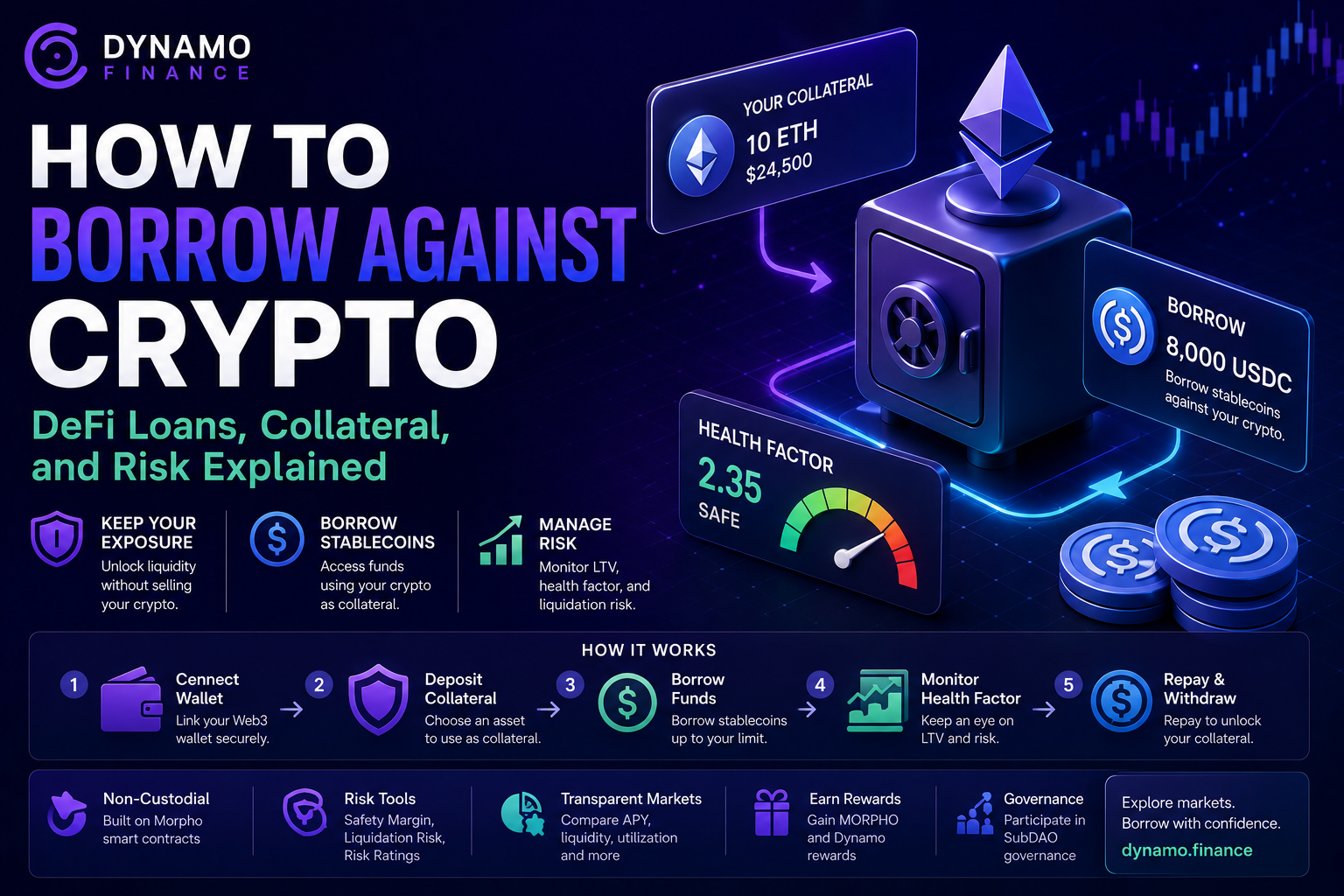
Now assume a user holds ETH and wants stablecoin liquidity without selling. The user may consider a DeFi loan using ETH as collateral. This can be useful, but it introduces liquidation risk.
The borrower should check the loan asset, collateral asset, LLTV, borrow APY, utilization, available liquidity, oracle, and liquidation price. Borrowing close to the liquidation threshold may maximize capital efficiency, but it leaves little room for volatility.
A more conservative borrower uses a safety buffer. Dynamo’s safety-margin concept is designed to help borrowers operate below the underlying liquidation threshold by setting a more conservative effective LTV. That does not remove risk, but it encourages better discipline.
For anyone researching a crypto loan, the takeaway is clear: the loan is only as safe as the collateral buffer, market design, liquidity, oracle reliability, and user monitoring process behind it.
Gauntlet and Morpho Vaults: What Investors Should Understand
Gauntlet’s work with Morpho vault curation is important because Morpho’s architecture lets curators create strategies around isolated lending markets. That creates a modular system where different curators can take different views on collateral, risk, and yield.
Gauntlet’s VaultBook provides information on Gauntlet-curated vaults across Aera, Morpho, Kamino, and Symbiotic, including strategy details, curation methodologies, incentives, fees, and related information. Readers who want to go deeper can review Gauntlet VaultBook.
One lesson from the Morpho vault model is that “curated” does not mean “risk-free.” Curated means someone has made strategy decisions. The quality of those decisions depends on the curator’s process, data, constraints, and execution.
For Dynamo users, that means vault evaluation should include both interface-level data and curator-level judgment. A good interface helps you see what is happening. A good investment process helps you decide whether the exposure belongs in your portfolio.
How to Evaluate Gauntlet-Related DeFi Opportunities
When you see Gauntlet attached to a vault, protocol proposal, risk dashboard, or yield strategy, do not treat the name as a substitute for due diligence. Use it as a signal to look deeper.
- Identify the exact product: Is it a vault, a risk dashboard, a protocol recommendation, a research report, or an integration?
- Check the underlying assets: Stablecoins, ETH, BTC, liquid staking tokens, RWAs, and long-tail assets have different risk profiles.
- Review the source of yield: Borrower interest, incentives, basis trades, restaking points, and RWA yield are not the same.
- Analyze liquidity: Ask whether the strategy can handle large deposits, withdrawals, or market stress.
- Inspect concentration: Look for dependence on one collateral asset, one borrower type, one chain, or one oracle design.
- Understand fees: Performance fees, management fees, gas costs, and incentive structures affect net returns.
- Monitor changes: Curated strategies can evolve as markets move, so the risk profile can change after you deposit.
This process is useful whether you are using a Gauntlet-curated vault, a Dynamo vault, a direct Morpho market, or another defi platform. The core discipline is the same: understand the mechanism before allocating capital.
What Beginners Often Misunderstand About Gauntlet
The first misunderstanding is thinking Gauntlet is a consumer DeFi protocol in the same way as a lending app. Gauntlet is better understood as a risk, research, and curation company whose work may appear through protocols, vaults, integrations, and institutional strategies.
The second misunderstanding is assuming that a Gauntlet-associated strategy cannot lose money. That is not true. Quantitative risk management can improve decision-making, but it cannot remove volatility, smart contract risk, oracle risk, liquidity risk, or systemic market shocks.
The third misunderstanding is treating all vaults as identical. Vaults can have very different exposure even when they use the same base infrastructure. A conservative vault and an aggressive vault may both lend stablecoins, but they may use very different collateral policies.
The fourth misunderstanding is ignoring user responsibility. DeFi tools can show data, but users still decide how much to deposit, how much to borrow, and how closely to monitor positions.
What Experienced Investors Look For
Experienced DeFi investors do not start with APY. They start with the mechanism. They ask where yield comes from, who pays it, what collateral backs it, what happens during stress, and how exits work.
They also distinguish between nominal yield and risk-adjusted yield. A high APY can be rational if the risks are understood and compensated. A low APY can still be unattractive if the underlying risks are hidden or poorly priced.
Experienced users also compare opportunity cost. Supplying stablecoins into one vault means not supplying them into another market. Borrowing against ETH means accepting liquidation risk instead of selling or hedging. Every DeFi action has a trade-off.
This is why platforms that make risk data more visible matter. Dynamo Finance documentation gives users a structured way to learn how Dynamo’s markets, vaults, risk ratings, liquidation views, rewards, fees, and position workflows fit together.
How Gauntlet Connects to the Future of Institutional DeFi
Institutional adoption changes the demands placed on DeFi. Retail users may tolerate rough interfaces and informal risk processes. Institutions need clearer methodologies, better reporting, safer integrations, and strategies that can handle large deposits without breaking market equilibrium.
Gauntlet’s public materials increasingly emphasize institutional onchain yield, self-custodial vault strategies, integrations, and risk-optimized performance. That reflects a broader market trend: DeFi is moving from experimental liquidity mining toward structured onchain credit and yield infrastructure.
This trend also raises the bar for user education. Beginners need to understand the difference between a lending market, a vault, a curator, a protocol, an interface, and a risk dashboard. Crypto-native users need to think beyond token narratives and evaluate market mechanics.
Dynamo fits into this trend by making Morpho-based markets and vaults easier to explore through a non-custodial interface. Users still take risk, but they get better visibility into the parameters that drive that risk.
Risk Management Is Not a Guarantee
Risk management is sometimes misunderstood as a shield. It is not. Good risk management is a process for identifying, measuring, monitoring, and responding to uncertainty.
Even well-modeled markets can suffer from extreme events. Smart contracts can have bugs. Oracles can fail. Liquidity can disappear. Governance decisions can disappoint. Borrowers can react unpredictably. A chain can experience congestion or downtime. A strategy that worked in one market regime can underperform in another.
That is why users should combine platform tools with personal discipline. Position size matters. Diversification matters. Monitoring matters. Understanding your own downside matters.
The safest user is not the one who believes every risk has been solved. The safest user is the one who knows which risks remain and sizes positions accordingly.
How to Start Applying This Framework on Dynamo Finance
Users can apply a Gauntlet-inspired risk framework on Dynamo without needing to build simulation models themselves. The goal is to become more selective and more aware before depositing or borrowing.
Start by choosing whether you want a market or a vault. A market gives direct exposure and control. A vault gives curated allocation and convenience. Then review the asset, APY, TVL, utilization, liquidity, collateral, risk tier, curator, and fees.
For suppliers, focus on the stability of the loan asset, the quality of collateral, the level of utilization, and the likelihood that you can withdraw when needed. For borrowers, focus on LTV, LLTV, liquidation price, borrow APY, and the size of your safety buffer.
Then monitor the position after entry. DeFi positions are dynamic. A market that looked conservative last month may look different after a major price move, new incentive campaign, or change in borrower demand.
Why Follow Dynamo Finance
Dynamo is building around the same core reality that makes Gauntlet relevant: DeFi users need better tools, clearer risk context, and more thoughtful access to onchain lending. The platform brings Morpho-based markets, vaults, risk views, rewards, and governance participation into a single workflow.
Users who want updates can follow Dynamo Finance on X. Social updates are useful for new feature announcements, market context, vault information, and community discussions.
For investors who care about DeFi yield, the best edge is not always a hidden APY. Often, it is a better process. A user who understands risk can survive longer, allocate more intelligently, and avoid many of the mistakes that hurt less-prepared investors.
Conclusion
Gauntlet crypto is a useful topic because it reveals where DeFi is heading. The market is moving beyond simple yield farming into a more mature system of risk modeling, vault curation, institutional integrations, and onchain credit infrastructure.
Gauntlet is not just a name attached to DeFi research. It represents a more disciplined approach to market design, parameter optimization, risk-adjusted yield, and vault strategy. That approach matters whether you are an institution allocating millions or a beginner deciding where to deposit a small stablecoin position.
For Dynamo Finance users, the lesson is practical: do not evaluate lending markets and vaults by APY alone. Look at collateral, liquidity, utilization, curator quality, risk ratings, liquidation mechanics, fees, and position management tools.
Explore Dynamo Finance to compare Morpho-based markets and vaults, review risk data, and build a more disciplined DeFi lending workflow before allocating capital.
FAQ
What is Gauntlet crypto?
Gauntlet refers to Gauntlet’s work in DeFi risk management, quantitative research, protocol optimization, and vault curation. The company helps protocols and capital allocators evaluate onchain risk and design more efficient yield strategies.
Is Gauntlet a DeFi protocol?
Gauntlet is not best understood as a consumer lending protocol. It is a crypto company focused on risk modeling, applied research, vault curation, and institutional onchain yield strategies across the DeFi ecosystem.
What does Gauntlet do for Morpho vaults?
Gauntlet has used Morpho infrastructure to curate vault strategies. In a vault curation role, Gauntlet can help select eligible markets, manage allocation parameters, and target risk-adjusted yield for suppliers.
How does Gauntlet DeFi risk management help investors?
Gauntlet-style risk management helps investors understand market risk, liquidity risk, collateral quality, utilization, incentive design, and vault curation. It does not remove risk, but it can improve how risk is measured and managed.
How is Dynamo Finance related to Gauntlet crypto?
Dynamo Finance is not Gauntlet. The connection is strategic: Gauntlet shows why risk-aware curation matters in DeFi, while Dynamo gives users a practical interface for exploring Morpho-based markets, vaults, risk ratings, safety-margin concepts, and liquidation-risk tools.