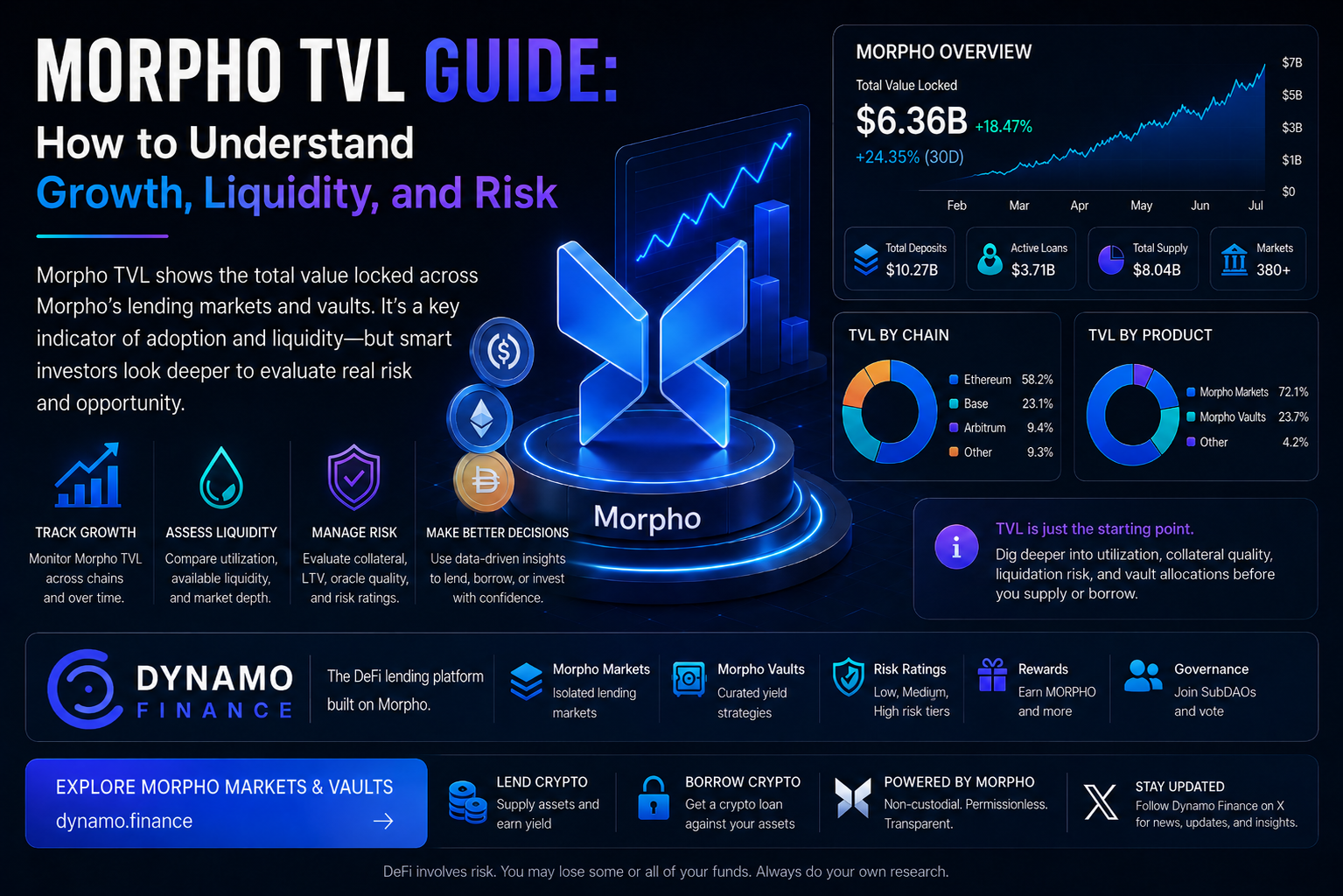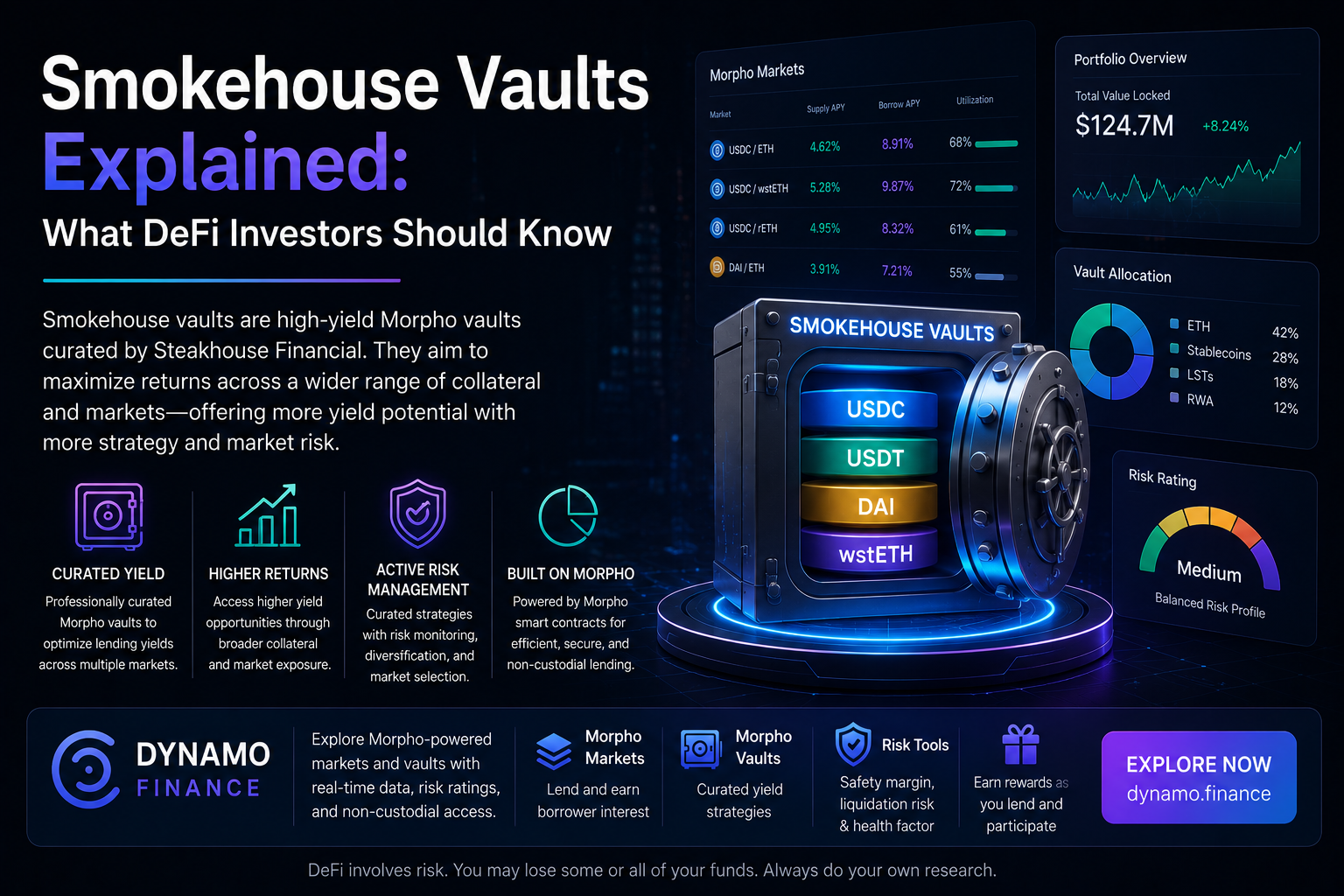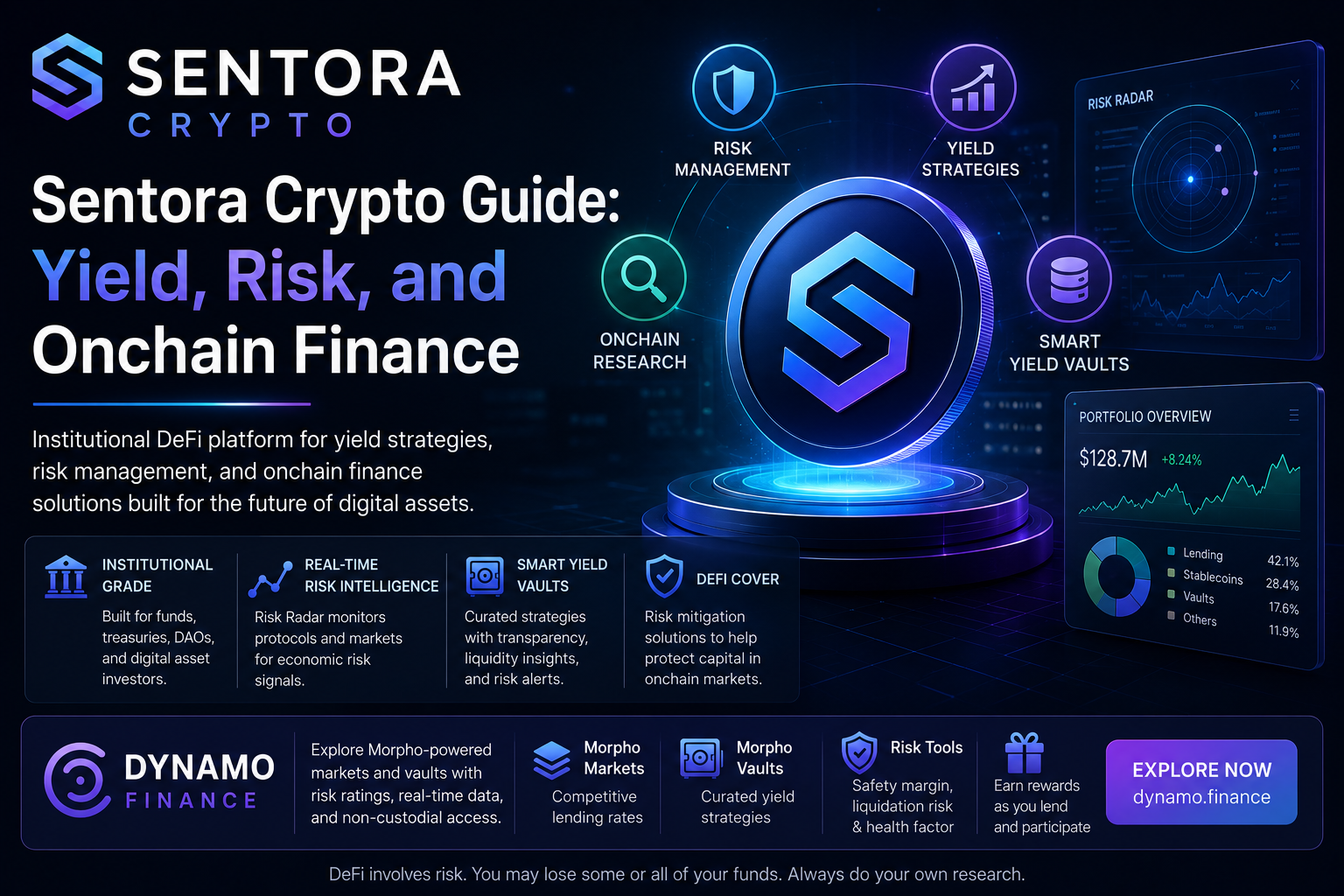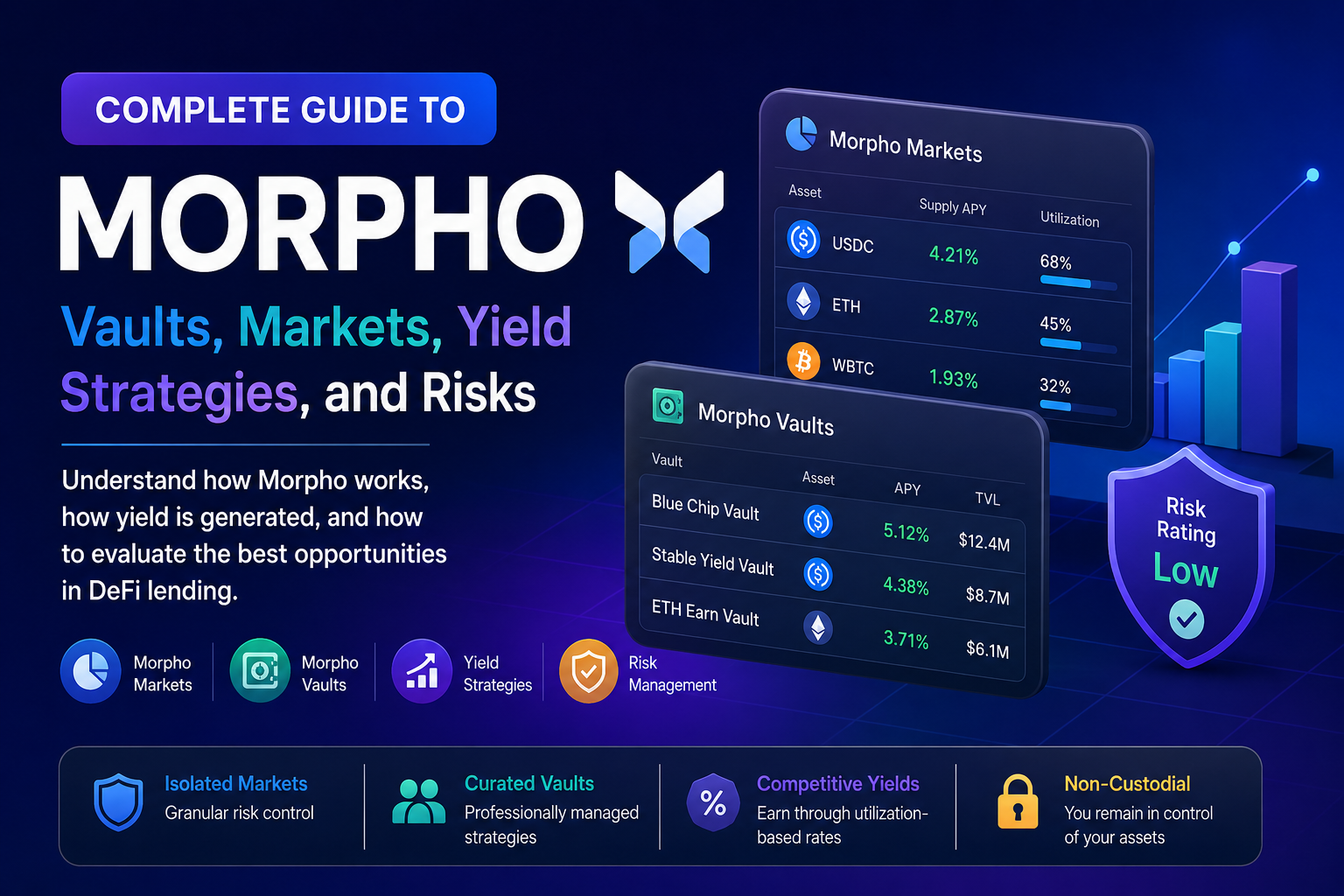

Interest rates are the heartbeat of DeFi lending. They decide what suppliers earn, what borrowers pay, how quickly capital moves between markets, and whether a lending opportunity is worth the risk. That is why more DeFi investors are searching for morpho interest rates before supplying stablecoins, borrowing against collateral, or depositing into vaults.
The opportunity is clear. Morpho markets can give lenders access to onchain yield and borrowers access to crypto-backed liquidity. The challenge is that rates are dynamic. A supply APY that looks attractive today can change tomorrow if utilization falls, new liquidity enters, or borrowers repay. A borrow APY that looks cheap today can rise if capital becomes scarce.
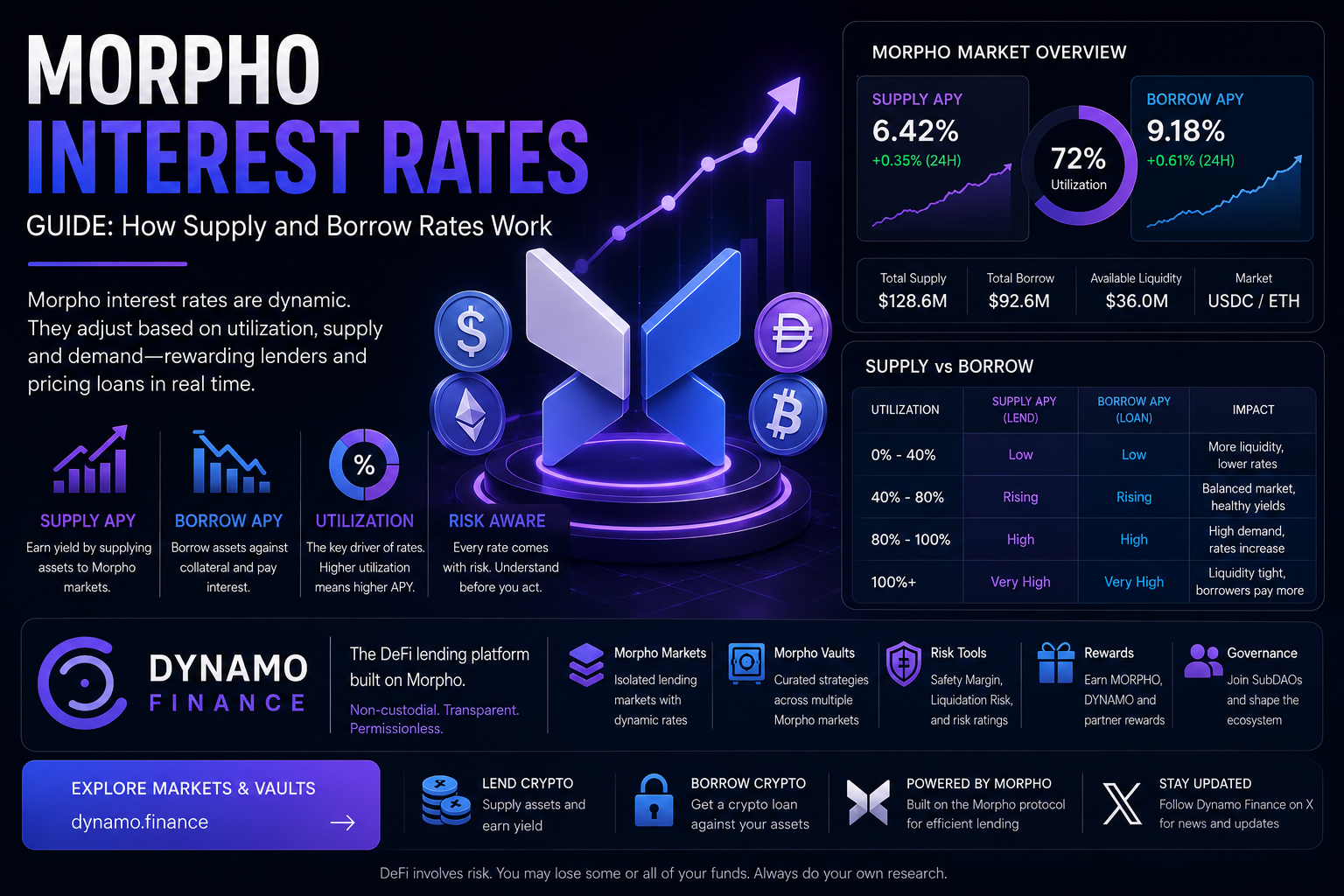
Morpho interest rates are variable lending and borrowing rates determined by each market’s interest rate model and utilization. Utilization measures how much supplied liquidity is currently borrowed. As utilization rises, borrow rates generally increase, and suppliers may earn more; as utilization falls, borrow rates generally decrease, and supplier yield may decline.
This guide explains how Morpho supply and borrow rates work, why utilization drives APY, how vault APY differs from market APY, what lenders and borrowers should watch, and how Dynamo Finance helps users compare Morpho-based markets and vaults with clearer risk context.
Key Takeaways
- Morpho interest rates are dynamic, not fixed, and they change as utilization, supply, and borrowing demand change.
- Supply APY is what lenders earn, while borrow APY is what borrowers pay to access liquidity from a specific market.
- Utilization is the most important rate driver because it measures the share of supplied assets currently being borrowed.
- High utilization can increase supplier yield, but it can also reduce available liquidity for withdrawals.
- Dynamo Finance helps users compare Morpho markets, vaults, risk ratings, utilization, APYs, Safety Margin, and Liquidation Risk data before taking action.
What Are Morpho Interest Rates?
Morpho interest rates are the market-based rates paid by borrowers and earned by suppliers in Morpho lending markets. Each market has its own loan asset, collateral asset, oracle, liquidation loan-to-value threshold, and interest rate model.
In a lending market, suppliers deposit the loan asset. Borrowers post collateral and borrow that loan asset. Borrowers pay interest, and suppliers earn yield from that interest. The rate changes as market conditions change.
This makes Morpho different from a traditional bank loan or fixed savings product. There is no single universal Morpho rate. A USDC market backed by ETH collateral may have a different APY from a USDC market backed by wstETH, cbBTC, or another collateral asset.
For investors, the practical takeaway is simple: always evaluate the specific market or vault. Protocol-level brand recognition is not enough. The actual rate depends on the exact market parameters and current supply-demand balance.
Supply APY vs. Borrow APY
Supply APY is the annualized yield suppliers earn for lending assets. Borrow APY is the annualized cost borrowers pay for borrowing assets. The two are connected, but they are not the same number.
Borrowers pay interest into the market. Suppliers receive the portion of that interest distributed across supplied liquidity. Supply APY is usually lower than borrow APY because it is adjusted by utilization and any applicable fees.
A simple way to think about it:
- Borrow APY tells borrowers, “What does this loan cost me?”
- Supply APY tells lenders, “What am I currently earning?”
- Utilization tells both sides, “How much of the market’s liquidity is being used?”
This distinction matters because a high borrow APY does not automatically mean suppliers earn the same rate. Suppliers earn based on borrower interest shared across supplied assets, adjusted by how much capital is actually borrowed.
The Formula Behind Utilization
Utilization is the core metric behind Morpho interest rates. It measures how much of the supplied liquidity is currently borrowed.
Utilization rate = Total borrowed / Total supplied × 100
If a USDC market has $10 million supplied and $7 million borrowed, utilization is 70%. That means 70% of the supplied liquidity is actively being used by borrowers, while 30% remains available for withdrawals or new borrowing.
Utilization matters because it shows whether capital is abundant or scarce. Low utilization means there is a lot of unused liquidity. High utilization means most of the available capital is borrowed.
When utilization is low, borrowing is usually cheaper and supply yield is usually lower. When utilization is high, borrowing becomes more expensive and suppliers may earn more, but liquidity becomes tighter.
How Utilization Drives Morpho Rates
Interest rate models are designed to balance lenders and borrowers. If a market has too much unused liquidity, the rate can fall to make borrowing more attractive. If a market becomes heavily borrowed, the rate can rise to attract more suppliers and encourage some borrowers to repay.
This is the self-correcting logic of DeFi lending. Rates are not set by a loan officer. They are adjusted by smart contract logic based on market conditions.
| Utilization Level | Borrower Experience | Supplier Experience | Main Risk |
|---|---|---|---|
| Low utilization | Borrowing is usually cheaper | Supply APY is usually lower | Capital may sit idle and earn less |
| Moderate utilization | Borrowing costs are more balanced | Supply APY may be healthier | Rates can move if demand changes |
| High utilization | Borrowing becomes more expensive | Supply APY may increase | Available withdrawal liquidity may be limited |
| Very high utilization | Rates can rise sharply | Yield can look attractive | Withdrawals may be harder until liquidity returns |
This is why advanced users do not evaluate Morpho interest rates by APY alone. A high supply APY may be attractive, but it may also signal that utilization is high and liquidity is scarce.
What Is the Morpho Interest Rate Model?
Each Morpho market uses an interest rate model, often shortened to IRM. The IRM defines how the borrow rate responds to utilization. Morpho’s official materials describe the protocol as IRM-agnostic, meaning markets can support approved interest rate models, while the AdaptiveCurveIRM is the key model associated with Morpho variable-rate markets.
The AdaptiveCurveIRM is designed around a target utilization level. Morpho’s materials describe a 90% target utilization for the AdaptiveCurveIRM, with rate behavior that adjusts as market utilization moves above or below that target. Readers who want the technical mechanics can review Morpho’s Interest Rate Model documentation.
The idea is simple even if the math is technical. The model tries to keep capital working efficiently. If utilization is too low, rates can adjust downward. If utilization is too high, rates can adjust upward to pull more supply into the market or push borrowers to repay.
This is one reason Morpho can support efficient lending markets. But efficient does not mean risk-free. Users still need to monitor utilization, liquidity, collateral, oracle design, liquidation thresholds, and market verification.
Why Morpho Rates Are Variable
Morpho rates are variable because DeFi lending markets are live markets. Supply and demand change continuously. Borrowers open and repay loans. Suppliers deposit and withdraw assets. Vaults allocate and rebalance. Market volatility changes demand for leverage and liquidity.
A borrower may open a position when borrow APY is low, then see the rate rise later if utilization increases. A supplier may deposit when supply APY is high, then see yield fall if new capital enters or borrowers repay.
This is not a bug. It is how variable-rate lending works. The rate responds to market conditions so liquidity can be priced dynamically.
On Dynamo, current market rates are visible through the Markets experience. Users can compare supply APY, borrow APY, and utilization before deciding whether to supply or borrow.
Do Morpho Markets Have Fixed Rates?
Morpho’s broader ecosystem includes evolving lending infrastructure, including newer fixed-rate and fixed-term concepts in Morpho V2. However, users should not assume that every interface or market offers fixed-rate borrowing.
On Dynamo, lending and borrowing rates are variable. Users should treat the displayed APY as the current market rate, not a guaranteed fixed rate for the life of the position.
This matters most for borrowers. If you borrow when rates are low and market utilization later rises, your borrow cost can increase. Borrowers should monitor positions and avoid assuming that today’s APY will stay constant.
It also matters for suppliers. A high supply APY can compress when more liquidity enters the market or borrower demand declines.
How Borrow APY Is Calculated
Borrow APY reflects the annualized cost of borrowing from a market. In Morpho’s rate model, the underlying borrow rate is produced by the IRM, and APY annualizes the rate while accounting for compounding.
The exact calculation can be technical, but the user-facing lesson is clear: borrow APY is the cost you pay while your loan remains open. If the rate changes, your debt grows at the new rate from that point forward.
Borrowers should care about borrow APY for three reasons. First, it affects total repayment cost. Second, it affects how quickly the debt balance grows. Third, rising debt can push a position closer to liquidation if collateral value does not also rise.
For a borrower using a crypto loan, borrow APY is only one part of risk. The borrower must also monitor LTV, LLTV, health factor, collateral volatility, and liquidation price.
How Supply APY Is Calculated
Supply APY reflects the annualized yield suppliers earn from borrower interest. A simplified relationship is:
Supply APY ≈ Borrow APY × Utilization × (1 – Fees)
If utilization is low, suppliers earn less because fewer borrowers are paying interest. If utilization rises, more of the supplied capital is earning interest, and supply APY can increase.
This explains why supply APY is heavily tied to utilization. A market with high borrow APY but low utilization may not produce the same supplier yield as a moderately priced market with strong utilization.
Suppliers should also check fees, incentives, rewards, and liquidity. Net yield is more important than headline APY.
Why Supply APY Can Fall After You Deposit
A common beginner mistake is assuming the displayed supply APY is locked. It is not. If you deposit into a variable-rate market, your APY can change after deposit.
Supply APY can fall for several reasons. More suppliers may enter the market, increasing total supply. Borrowers may repay, reducing utilization. A vault may allocate liquidity into the same market, diluting yield. Market demand may shift to another collateral pair.
None of this means the market is broken. It means rates are responding to supply and demand.
Before supplying, ask whether the current APY is supported by durable borrower demand or temporary market conditions. This helps avoid chasing a rate that disappears soon after entry.
Why Borrow APY Can Rise After You Borrow
Borrow APY can rise when utilization increases. This can happen if more borrowers draw liquidity, if suppliers withdraw, or if vaults reallocate capital away from the market.
For borrowers, rising APY increases the cost of the loan and causes debt to grow faster. Over time, that can increase LTV and reduce the liquidation buffer.
This is why borrowers should avoid using the maximum borrow amount. A conservative starting LTV gives the position room to absorb both collateral price volatility and interest accrual.
Borrowers using morpho defi strategies should monitor borrow APY after opening the position, not only before signing the initial transaction.
Interest Rates and Liquidity
Interest rates and liquidity are tightly connected. High utilization can increase supply APY, but it also means less capital is sitting idle. If many suppliers want to withdraw at the same time, liquidity may be constrained until borrowers repay or new suppliers enter.
This is one of the core trade-offs in DeFi lending. Suppliers want capital to be borrowed because that is how yield is generated. But they also want enough available liquidity to withdraw when needed.
A market with moderate utilization may offer a healthier balance for users who value liquidity. A market with very high utilization may be more attractive for users seeking yield but less attractive for users who need fast exits.
Before supplying, check both APY and available liquidity. Yield means less if you cannot exit when you need to.
Interest Rates and Risk
High interest rates can be a reward for supplying scarce liquidity, but they can also be a warning signal. A high supply APY may reflect strong demand, but it may also reflect riskier collateral, newer markets, low liquidity, high utilization, temporary incentives, or a sudden imbalance between supply and borrowing.
Borrowers should also read high rates carefully. A high borrow APY may indicate capital is scarce or that the market is under stress. Borrowing into that environment may be expensive and risky.
The better question is not “Is the rate high?” It is “Why is the rate high?”
A disciplined DeFi investor compares rate, utilization, liquidity, collateral quality, oracle design, LLTV, market age, and risk tier before making a decision.
How Dynamo Finance Helps Users Compare Morpho Rates
Dynamo Finance is a non-custodial, permissionless Web3 lending market built on Morpho smart contracts. It helps users supply assets, borrow against collateral, deposit into vaults, compare markets, evaluate risk, earn rewards, and participate in governance from a single interface.
Dynamo is useful for users studying morpho lending because it brings market-level information into one workflow. Users can compare supply APY, borrow APY, utilization, available liquidity, collateral asset, loan asset, oracle, and LLTV before entering a position.
Dynamo does not custody user funds. Assets are held by Morpho smart contracts, while Dynamo adds discovery, analytics, rewards, risk tooling, position management, and SubDAO governance participation.
For yield seekers and borrowers, this matters because Morpho interest rates are only meaningful in context. Dynamo helps users see that context before they supply or borrow.
Dynamo Markets: Reading Supply and Borrow APY
Morpho markets are isolated lending pools. Each market has one loan asset, one collateral asset, one oracle, and one liquidation loan-to-value threshold. That means every market has its own rate behavior.
When browsing markets, suppliers can compare supply APY and utilization to understand earning potential and liquidity risk. Borrowers can compare borrow APY and available liquidity to understand loan cost and borrowing capacity.
Users should not choose a market only because it has the highest supply APY or the lowest borrow APY. The best market is the one whose rate, collateral, liquidity, oracle, LLTV, and risk tier fit the user’s strategy.
Users who want direct market exposure can explore Dynamo markets and compare current opportunities before supplying or borrowing.
Dynamo Vaults: How Vault APY Differs From Market APY
A vault APY is different from a single market APY. A market APY reflects one market’s current supply and borrow dynamics. A vault APY is a blended rate across the markets where the vault allocates capital.
Vaults can be attractive because curators can move capital across markets as rates change. If one market’s utilization falls and yield compresses, a vault may reallocate to another market with better risk-adjusted yield.
However, vaults introduce curator and strategy risk. Users should review curator reputation, market allocation, APY stability, performance fees, TVL, liquidity, and underlying market risk before depositing.
For users researching morpho vaults, the key is to understand that vault APY is not a fixed return. It is a current estimate based on the vault’s allocations and market conditions.
Direct Markets vs. Vaults for Interest Rate Exposure
Direct market lending and vault deposits both expose users to Morpho interest rates, but they do it differently.
| Feature | Direct Morpho Market | Morpho Vault |
|---|---|---|
| Rate exposure | One market’s supply and borrow dynamics | Blended rate across multiple markets |
| User control | High control over exact market selection | Curator manages allocation |
| Rebalancing | User must move capital manually | Vault strategy can rebalance automatically or through curator action |
| Risk | Specific market risk | Curator, allocation, and underlying market risk |
| Best fit | Users who want precise control | Users who want curated yield without manual market rotation |
A direct market can be better for advanced users who want exact exposure. A vault can be better for users who want convenience and professional allocation. Many experienced DeFi investors use both depending on portfolio goals.
Interest Rates and Collateral Quality
Collateral quality affects rates indirectly. Borrowers may be willing to pay more in markets that support specific collateral assets. Suppliers may demand higher yield if the collateral is volatile, newer, less liquid, or harder to price.
A market backed by liquid, established collateral may have lower but more stable rates. A market backed by more specialized collateral may offer higher rates but require more due diligence.
Collateral quality depends on market liquidity, volatility, oracle reliability, token design, liquidation pathways, and broader market confidence. A high APY market with weak collateral may not be attractive once risk is considered.
Suppliers should always ask what protects them if borrowers cannot repay. The answer is collateral and liquidation mechanics, not APY.
Interest Rates and LLTV
LLTV stands for liquidation loan-to-value. It defines the point where a borrower’s position becomes eligible for liquidation. Higher LLTV can allow borrowers to access more liquidity from the same collateral, but it can also reduce the margin for error.
Markets with aggressive LLTV may attract borrower demand, which can influence utilization and rates. But higher borrowing capacity can also increase liquidation risk if collateral prices move quickly.
Borrowers should avoid treating LLTV as a target. It is the danger line. A safer strategy is to borrow below the maximum and leave room for collateral price swings and interest accrual.
Dynamo’s Safety Margin feature is designed around this idea. It helps borrowers set a more conservative target LTV rather than borrowing close to the liquidation threshold.
Interest Rates and Liquidation Risk
Interest rates affect liquidation risk because borrow APY increases debt over time. If collateral value stays flat but debt grows, LTV rises. If collateral value falls while debt grows, LTV can rise even faster.
That is why borrowers should monitor both collateral price and borrow APY. A position that looks safe at entry can become risky later if rates rise or collateral declines.
Dynamo’s Liquidation Risk view helps users understand health factor, price-drop tolerance, and liquidation price. This is especially useful during volatile markets, when collateral prices and utilization can move quickly.
For borrowers, the most important habit is active monitoring. Crypto backed loans are not passive products.
Interest Rates and Rewards
Some DeFi opportunities include rewards on top of base lending yield. These may include MORPHO emissions, Dynamo-specific incentives, or third-party curator rewards depending on the market, vault, and active campaign.
Rewards can improve total return, but users should separate reward-driven yield from base interest-rate yield. Base yield comes from borrowers paying interest. Rewards may be temporary, campaign-based, or subject to eligibility rules.
A market with modest base APY and strong rewards may look attractive, but returns can change when incentives end. A market with strong organic borrower demand may offer more durable yield even if rewards are lower.
When comparing opportunities, ask: What portion of the displayed return comes from interest, and what portion comes from incentives?
How to Read a Morpho Rate Before Supplying
Before supplying to a Morpho market, follow a structured process. This helps avoid chasing a rate that does not fit your liquidity needs or risk tolerance.
- Identify the loan asset you will supply.
- Review the collateral asset borrowers use in the market.
- Check supply APY and compare it with similar markets.
- Check utilization and available liquidity.
- Review the oracle and LLTV.
- Look at market TVL, total borrow, and live history.
- Check whether the market is verified.
- Review risk rating and any active rewards.
- Decide whether the yield compensates for the risk.
- Start with a position size that matches your ability to monitor the market.
This process is more reliable than sorting by supply APY alone. High yield is only useful when you understand the reason behind it.
How to Read a Morpho Rate Before Borrowing
Borrowers need a different checklist. The goal is not to earn yield; it is to access liquidity without being liquidated or overpaying for debt.
- Identify the collateral asset you will post.
- Choose the loan asset you want to borrow.
- Review current borrow APY and utilization.
- Check available liquidity to make sure the market can support your borrow size.
- Review LLTV and calculate a conservative target LTV.
- Check oracle design and collateral volatility.
- Estimate how interest accrual affects your debt over time.
- Plan what you will do if rates rise or collateral falls.
- Monitor health factor, liquidation price, and price-drop tolerance.
- Avoid borrowing the maximum simply because the market allows it.
A good borrow position starts with an exit plan. Decide in advance whether you will repay, add collateral, or reduce exposure if market conditions move against you.
Practical Example: Supplying USDC
Imagine a user has USDC and wants to earn yield. They find two Morpho markets. Market A has 4% supply APY with moderate utilization. Market B has 9% supply APY with very high utilization and more specialized collateral.
A beginner may choose Market B because the APY is higher. A more experienced user asks why the APY is higher. Is borrower demand strong and sustainable, and the collateral liquid? Is the oracle reliable? Are rewards boosting the displayed return?
Market B may still be appropriate, but perhaps only for a smaller allocation. Market A may be better for capital that needs easier access to liquidity.
The lesson is that Morpho interest rates are signals. They are not complete decisions.
Practical Example: Borrowing USDC Against ETH
Now imagine a user holds ETH and wants USDC liquidity without selling. The user finds a market where they can post ETH as collateral and borrow USDC.
The borrow APY looks reasonable, but the user should not stop there. They should check utilization, available liquidity, LLTV, liquidation price, oracle, and their target LTV.
If utilization rises after the loan is opened, borrow APY can increase, but if ETH price falls, LTV rises. If both happen at the same time, the position can become risky faster than expected.
A disciplined borrower leaves a safety buffer, monitors the loan, and avoids treating the liquidation threshold as a target.
Practical Example: Choosing Between a Vault and a Direct Market
A stablecoin holder may choose between supplying directly to one market or depositing into a vault. The direct market offers exact exposure and control. The vault offers curated allocation and possible automatic rebalancing.
If the user has time and skill to evaluate markets, direct lending can make sense. They can choose the collateral, oracle, utilization, APY, and LLTV that fit their thesis.
If the user wants less manual management, a vault may be more practical. The user should still review curator, allocation, market diversity, fees, and APY stability.
The best choice depends on the user’s goal. A direct market is a tactical choice. A vault is a strategy choice.
Common Mistakes With Morpho Interest Rates
The first mistake is assuming APY is fixed. Morpho market rates are variable and can change as utilization changes.
The second mistake is ignoring utilization. High supply APY often comes with high utilization, which can reduce available withdrawal liquidity.
The third mistake is comparing rates without comparing collateral. A higher APY may come from a riskier collateral market.
The fourth mistake is ignoring fees and rewards. Net yield after fees and incentives may differ from headline APY.
The fifth mistake is borrowing too aggressively. Low borrow APY does not protect a borrower from liquidation if collateral falls.
What Experienced DeFi Investors Look For
Experienced investors read rates as market signals. They ask what the rate says about liquidity, borrower demand, collateral risk, and current market conditions.
They also compare rate stability. A market with a slightly lower but more stable APY may be more attractive for core capital than a market with a high but unstable APY.
Experienced borrowers watch rate direction. A rising borrow APY can signal tightening liquidity. A falling borrow APY may signal lower demand or increased supply.
Most importantly, experienced users size positions based on downside. A high yield does not justify unlimited exposure, and a low borrow rate does not justify reckless leverage.
How to Build a Rate-Aware DeFi Strategy
A rate-aware strategy starts with your role. Are you supplying assets for yield, borrowing against collateral, depositing into a vault, or comparing multiple strategies?
Suppliers should prioritize APY quality, utilization, liquidity, collateral, oracle reliability, and risk tier. Borrowers should prioritize borrow APY, LTV, LLTV, health factor, available liquidity, and liquidation price.
Vault users should evaluate blended APY, curator process, allocation diversity, fees, and withdrawal liquidity. Rewards-focused users should separate base interest from temporary incentives.
The strongest strategy is not always the highest-yielding one. It is the one where the return source, liquidity, and downside risk are understood before capital is deployed.
How Dynamo Turns Rate Data Into a Workflow
Dynamo helps users move from raw rate data to better decisions. Instead of looking at APY in isolation, users can compare the full market context.
For suppliers, Dynamo surfaces supply APY, utilization, liquidity, collateral, and market details. On the other hand, for borrowers, it surfaces borrow APY, collateral requirements, LTV-related metrics, and liquidation-risk information.
For vault users, Dynamo shows curator, APY, TVL, underlying asset, market allocations, and risk context. For users who want to learn the full workflow, the Dynamo Finance protocol guide covers markets, vaults, rates, collateral, liquidations, rewards, security, and fees.
Users who want product updates, campaign information, and community news can follow Dynamo Finance on X.
External Resources for Further Research
Readers who want to go deeper into the rate mechanics should start with primary sources. Morpho’s Interest Rate Model guide explains borrow APY, supply APY, utilization, fees, and the AdaptiveCurveIRM. Morpho’s Interest Rate Model contract resources cover implementation details for developers and advanced users.
For vault context, Morpho’s article on vaults and isolated markets explains how vaults simplify lending across isolated markets. For broader protocol analytics, Morpho Network Data provides protocol-level deposits, loans, TVL, and supply data.
These sources are useful, but users should still evaluate live rates in the interface they plan to use. Rate data changes continuously.
Final Checklist Before Acting on Morpho Interest Rates
Use this checklist before supplying, borrowing, or depositing into a vault:
- Confirm whether you are using a direct market or a vault.
- Review current supply APY and borrow APY.
- Check utilization and available liquidity.
- Identify the collateral asset and loan asset.
- Review oracle, LLTV, market TVL, and total borrow.
- Check whether the displayed yield includes rewards or incentives.
- For vaults, review curator, allocation, fees, APY stability, and withdrawal liquidity.
- For borrowing, calculate a conservative target LTV and liquidation response plan.
- Use risk ratings and liquidation tools instead of relying only on APY.
- Monitor the position after entry because rates can change quickly.
Conclusion
Morpho interest rates are one of the most important signals in DeFi lending. They show how much suppliers can earn, how much borrowers pay, how heavily capital is being used, and whether liquidity is abundant or scarce.
But rates only matter in context. A high supply APY may come with high utilization and limited withdrawal liquidity. A low borrow APY may still become expensive if rates rise. A vault APY may look simple, but it reflects a blended strategy across underlying markets.
Dynamo Finance helps users evaluate that context more clearly. With Morpho-based markets, vaults, APY data, utilization, risk ratings, Safety Margin, Liquidation Risk views, rewards, and non-custodial access, Dynamo gives DeFi investors a more practical way to compare opportunities before supplying, borrowing, or depositing into vaults.
Explore Dynamo Finance to compare Morpho markets and vaults, review live rate data, and build a more disciplined approach to DeFi lending, borrowing, and onchain yield.
FAQ
What are Morpho interest rates?
Morpho interest rates are variable supply and borrow rates in Morpho lending markets. They are driven mainly by utilization, which measures how much of the supplied liquidity is currently borrowed.
How does Morpho calculate supply APY?
Supply APY is based on borrower interest distributed to suppliers. A simplified relationship is borrow APY multiplied by utilization, adjusted for fees. Higher utilization usually means more supplier yield, but less available liquidity.
Why do Morpho borrow rates change?
Morpho borrow rates change because market utilization changes. When more liquidity is borrowed or supply leaves a market, utilization rises and borrow rates can increase. When borrowing demand falls or supply grows, rates can decrease.
Are Morpho interest rates fixed?
Morpho variable-rate markets use dynamic interest rates. On Dynamo, rates are variable rather than fixed, so supply APY and borrow APY can change after a user supplies or borrows.
How does Dynamo Finance help compare Morpho rates?
Dynamo Finance helps users compare Morpho markets and vaults by showing supply APY, borrow APY, utilization, available liquidity, collateral, LLTV, risk ratings, Safety Margin, and Liquidation Risk data in one non-custodial workflow.