
DeFi investors are no longer just choosing between tokens. They are choosing between lending markets, vault curators, credit strategies, oracle designs, collateral types, and risk frameworks. That is why searches for steakhouse finance have become more common among yield seekers who want to understand how professional-grade DeFi curation works.
At first glance, Steakhouse Financial can be confusing. It is not a restaurant, not a meme coin, and not a standard lending app. It operates in the deeper infrastructure layer of DeFi, where capital allocation, stablecoin yield, vault curation, real-world asset strategies, and risk controls meet.
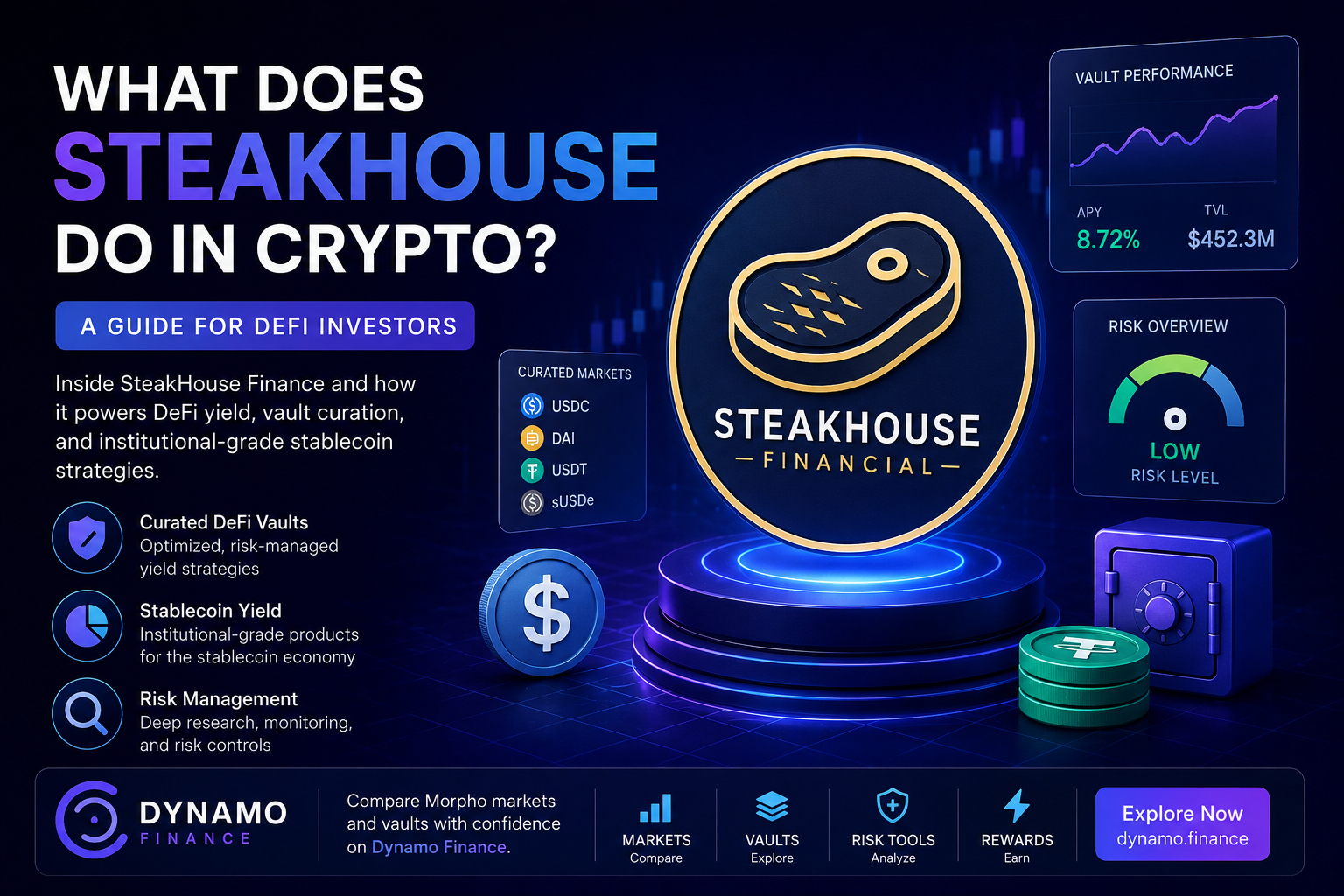
Steakhouse Financial is a DeFi advisory, research, and vault curation firm focused on institutional-grade stablecoin products, onchain yield strategies, risk management, and capital markets infrastructure across crypto-native and real-world asset markets.
This guide explains what SteakHouse does in crypto, why steakhouse financial matters to DeFi investors, how steakhouse crypto strategies connect to Morpho vaults and stablecoin lending, and how users can apply similar risk-first thinking when evaluating opportunities through Dynamo Finance.
Key Takeaways
- Steakhouse Financial is best known for DeFi vault curation, stablecoin yield products, risk management, and onchain capital allocation.
- Steakhouse crypto strategies often involve lending vaults, blue-chip collateral, tokenized credit, real-world assets, and institutional-grade risk controls.
- Vault curation matters because users are not only choosing a protocol; they are choosing how capital is allocated across underlying markets.
- Dynamo Finance helps users explore Morpho-based markets and vaults with risk ratings, liquidation-risk views, safety-margin tools, rewards, and a non-custodial workflow.
- DeFi investors should compare yield opportunities by collateral quality, liquidity, utilization, curator process, fees, and downside risk rather than headline APY alone.
What Is Steakhouse Finance in Crypto?
Steakhouse finance generally refers to Steakhouse Financial, a company that works on DeFi vault curation, stablecoin yield products, risk advisory, tokenized asset strategies, and onchain capital markets infrastructure. The company focuses heavily on the stablecoin economy, where users, institutions, protocols, and fintech platforms seek transparent onchain yield.
In simple terms, Steakhouse helps design and manage ways for capital to move into DeFi lending and yield opportunities while applying a more formal risk process. That can include choosing collateral markets, underwriting assets, setting vault controls, monitoring portfolio risk, and supporting partners that want to build stablecoin or yield products.
For DeFi investors, the important idea is curation. A lending vault is only as strong as the markets it allocates to, the collateral it accepts, the liquidity it can access, and the curator responsible for ongoing decisions. Steakhouse has become one of the best-known names in that curator layer.
This is also why the topic connects naturally to Dynamo Finance. Dynamo helps users browse Morpho-based lending opportunities, compare vaults, evaluate risk, and interact with DeFi markets from a non-custodial interface. If Steakhouse represents professional curation, Dynamo represents a user-facing workflow where investors can apply that same risk-aware mindset.
Why Steakhouse Financial Matters in DeFi
DeFi lending used to be easier to explain. Users supplied assets into large pools, borrowers posted collateral, and interest rates moved with supply and demand. Over time, the market became more specialized. Today, investors can choose between isolated lending markets, curated vaults, tokenized credit products, stablecoin yield strategies, and real-world asset exposure.
That specialization creates opportunity, but it also creates complexity. A vault can look simple on the surface, yet underneath it may allocate capital across multiple markets with different collateral types, loan assets, oracle assumptions, liquidity profiles, and liquidation thresholds.
Steakhouse Financial matters because it operates in that complexity. Its role is not merely to display yields. It focuses on the process behind yield: underwriting collateral, structuring vaults, monitoring exposures, and building products for the stablecoin economy.
This is important for beginners because DeFi yield is not magic. It usually comes from borrowers paying interest, liquidity demand, token incentives, basis opportunities, tokenized credit, or other market mechanisms. Each source of yield has a different risk profile.
What Does SteakHouse Do in Crypto?
SteakHouse does several things across the DeFi ecosystem. The company works with stablecoin yield, vault products, risk frameworks, advisory services, tokenized assets, and onchain credit infrastructure. For most DeFi investors, the most relevant area is vault curation.
A vault curator helps decide where deposited assets should be allocated. In a lending vault, this may mean selecting approved markets, setting exposure limits, monitoring borrower demand, responding to risk events, and balancing yield with liquidity.
Steakhouse also works with fintechs, exchanges, wallets, asset issuers, funds, treasuries, DAOs, and sophisticated onchain investors. That makes the company relevant not only to individual users but also to the broader institutionalization of DeFi.
Its public materials describe services such as stablecoin savings product design, curated DeFi vault integrations, treasury allocation, credit strategy underwriting, tokenized asset structuring, and onchain distribution. Readers who want a primary reference can review the Steakhouse Financial site.
Steakhouse Crypto and the Rise of Vault Curation
Vault curation has become one of the most important business models in DeFi lending. Instead of forcing every user to evaluate every market manually, a curator creates a strategy and allocates capital across selected markets.
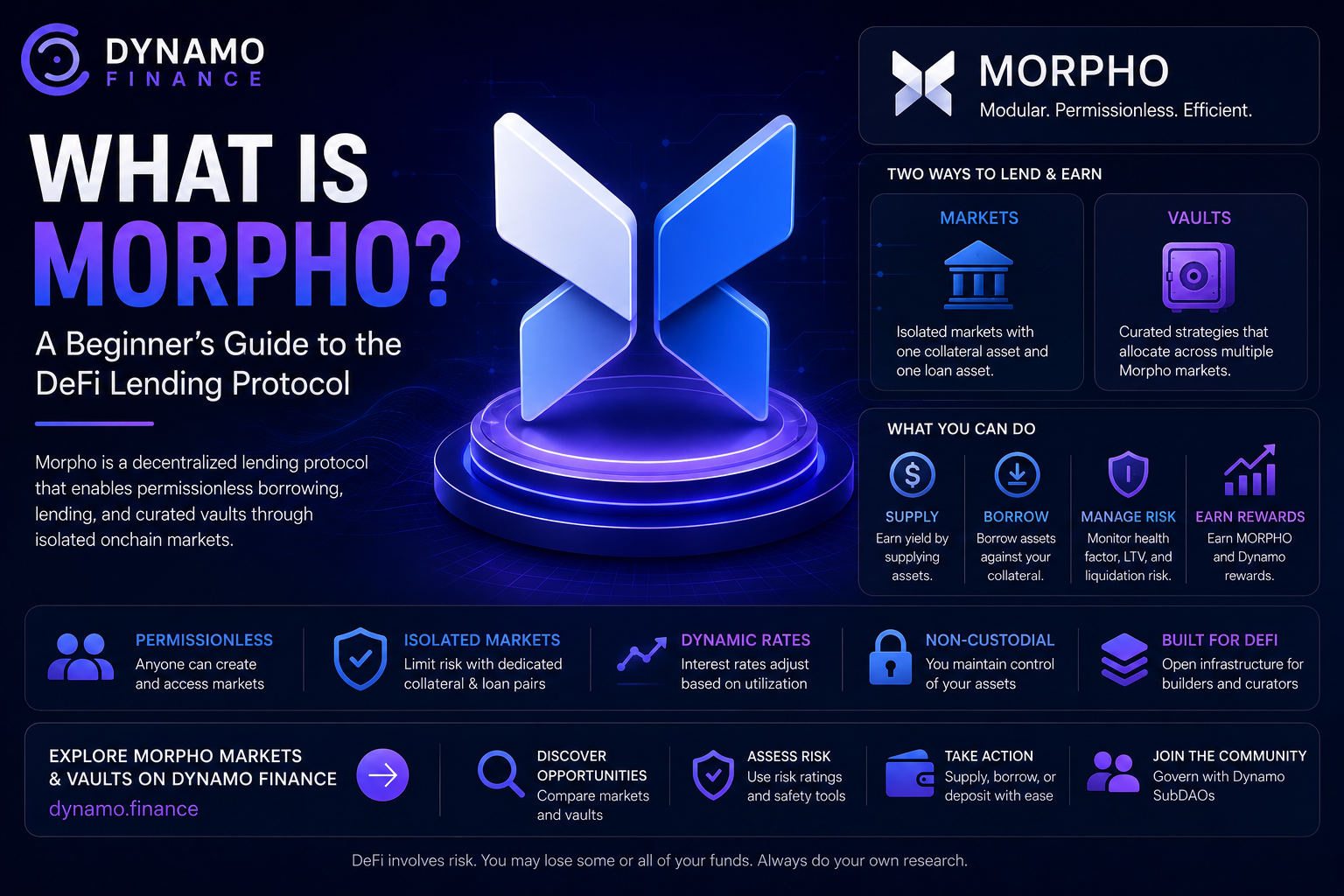
This is especially relevant in the Morpho ecosystem. Morpho markets are isolated, which means each market has its own collateral asset, loan asset, oracle, interest-rate model, and liquidation threshold. This design gives users and builders more control, but it also increases the value of good curation.
A curated vault can allocate deposits across multiple Morpho markets. The user deposits once, receives vault shares, and earns a blended yield based on how the vault deploys assets. The curator determines which markets are eligible and how capital should be distributed.
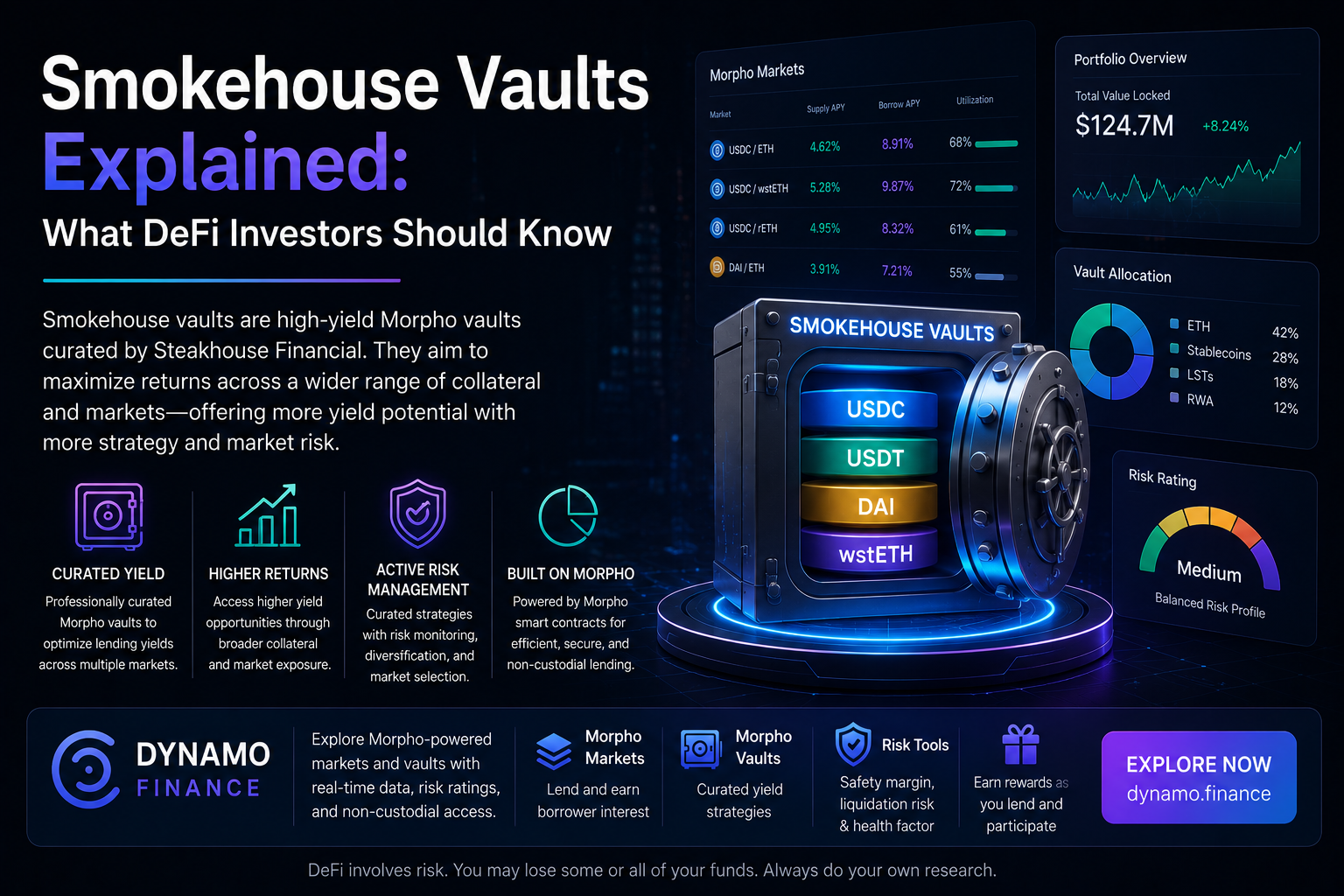
For users researching a morpho vault, Steakhouse is a useful case study. It shows why the curator behind a vault can matter as much as the protocol beneath it. Two vaults can use similar infrastructure but have very different risk profiles if their curators choose different collateral markets or allocation rules.
How a DeFi Lending Vault Works
A lending vault is a strategy container. Users deposit one asset, usually a stablecoin or major crypto asset, and the vault allocates that asset across lending markets. Borrowers pay interest in those markets, and that interest flows back to vault depositors.
The process is easier to understand in steps:
- A user deposits an asset, such as USDC, into a vault.
- The vault issues shares representing the user’s proportional claim on the vault.
- The curator allocates the vault’s liquidity across selected lending markets.
- Borrowers use that liquidity by posting collateral and paying interest.
- The vault earns yield from borrower interest and may also receive incentives where applicable.
- The curator can rebalance allocations as market conditions change.
- The user can redeem vault shares for the underlying asset, subject to available liquidity in the underlying markets.
This model makes DeFi lending more accessible, but it does not remove risk. The user still has exposure to the underlying protocol, markets, collateral, oracles, liquidity, and curator decisions.
Steakhouse Financial vs. a DeFi Protocol
Beginners often ask whether Steakhouse is a protocol. The better answer is that Steakhouse Financial is primarily a curator, advisor, and product builder in the DeFi ecosystem rather than a base lending protocol in the same sense as Morpho, Aave, or Compound.
A base lending protocol provides the smart contract infrastructure for lending and borrowing. A curator builds strategies on top of infrastructure. A user interface helps users discover and manage positions. A risk framework helps evaluate whether an opportunity is appropriate.
These roles can overlap, but they are not the same. Understanding the difference helps investors avoid a common mistake: assuming that every branded vault, app, or strategy represents the same type of risk.
| Category | Main Function | Example User Question | Key Risk |
|---|---|---|---|
| Base lending protocol | Provides smart contracts for supplying, borrowing, rates, and liquidation | How does the market execute loans? | Smart contract, oracle, market design, and liquidation risk |
| Vault curator | Selects markets, manages allocations, and monitors exposure | Who decides where the vault puts my capital? | Curator process, concentration, liquidity, and strategy risk |
| User-facing interface | Helps users browse, compare, deposit, borrow, and monitor positions | Where can I manage opportunities more clearly? | User error, incomplete due diligence, and interface dependency |
| Risk framework | Assesses collateral, liquidity, market parameters, and stress scenarios | Is this yield worth the risk? | Model limitations and changing market conditions |
This comparison matters because Steakhouse operates heavily in the curator and risk framework categories. Dynamo Finance operates as a non-custodial user-facing layer on top of Morpho smart contracts, helping users evaluate and interact with markets and vaults.
Why Stablecoins Are Central to Steakhouse Crypto
Stablecoins are one of the most important assets in DeFi because they act as the unit of account for lending, borrowing, trading, treasury management, and yield strategies. A user who holds USDC, USDT, DAI, or another stablecoin often wants productive yield without taking the same directional exposure as ETH or BTC.
Steakhouse Financial focuses heavily on the stablecoin economy. That includes stablecoin savings products, stablecoin vaults, treasury allocation, tokenized credit, and real-world asset strategies. The reason is straightforward: stablecoin capital wants yield, but stablecoin users often care deeply about liquidity and principal preservation.
A stablecoin yield vault may lend capital against blue-chip crypto collateral, tokenized credit collateral, or other approved assets. The yield may look steady, but the underlying risks differ depending on collateral quality, borrower demand, liquidity, oracle design, and market concentration.
For investors, stablecoin yield should never be treated like a bank deposit unless the product is explicitly regulated and insured as one. Onchain stablecoin yield is transparent and programmable, but it still carries DeFi, smart contract, market, and liquidity risks.
The Role of Risk Management in Steakhouse Financial’s Model
Risk management is the core reason Steakhouse Financial is relevant to DeFi investors. The firm’s risk framework focuses on areas such as market selection, vault setup, controls, collateral assessment, portfolio monitoring, and reallocation. This is the kind of process that separates professional curation from simple APY chasing.
When a curator evaluates a lending market, the APY is only one input. A serious risk process also considers collateral solvency, token liquidity, historical volatility, issuer risk, protocol dependencies, oracle infrastructure, LLTV settings, market depth, governance exposure, and the ability to respond to incidents.
That matters because DeFi losses often come from risks users overlooked. A market may appear attractive until the collateral becomes illiquid. A vault may seem diversified until one market dominates its exposure. A stablecoin strategy may seem safe until the source of yield changes.
Steakhouse’s risk materials emphasize upstream risk mitigation at the market creation and vault governance levels, along with ongoing monitoring and reallocation. That is a useful framework for any investor, even if they are not using a Steakhouse-curated product directly. A primary reference is available in the Steakhouse risk framework.
How Steakhouse Connects to Morpho
Morpho is one of the key infrastructures associated with Steakhouse’s vault curation activity. Morpho’s isolated-market design allows curators to build vaults that allocate across different markets with specific collateral, loan assets, oracles, and liquidation parameters.
Morpho has highlighted Steakhouse Financial as a curation-focused firm with deep DeFi and TradFi asset knowledge. It has also described Steakhouse’s growth as a vault curator in the Morpho ecosystem. The Morpho Steakhouse Financial case study is a useful reference for readers who want to understand the relationship between Morpho infrastructure and Steakhouse curation.
For users, the practical point is simple: Morpho provides flexible lending rails, while curators such as Steakhouse can create strategies on top of those rails. Dynamo Finance then helps users interact with morpho lending opportunities through a clearer interface, market data, vault information, and risk tooling.
This layered structure is becoming common in DeFi. Infrastructure, curation, and distribution are separating into distinct roles. That is good for specialization, but it also means investors need to know which layer they are evaluating.
How Dynamo Finance Fits Into This Conversation
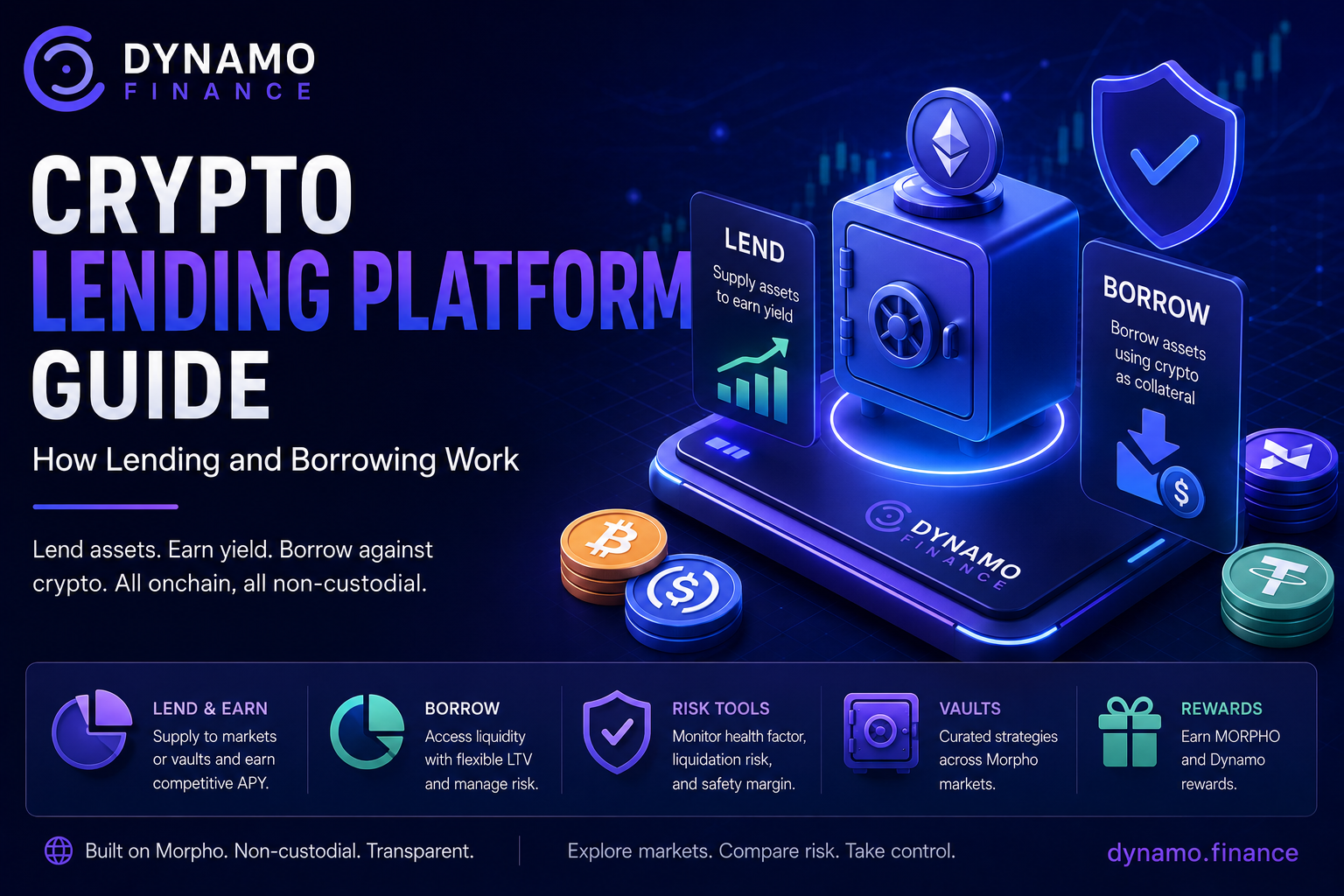
Dynamo Finance is a non-custodial, permissionless Web3 lending market built on Morpho smart contracts. It allows users to supply assets, borrow against collateral, deposit into curated vaults, and manage positions from one interface.
That makes Dynamo relevant to a discussion of Steakhouse Financial because both topics revolve around smarter DeFi allocation. Steakhouse shows why professional vault curation matters. Dynamo gives users a practical way to compare Morpho-based markets and vaults while reviewing risk data before committing capital.
Dynamo’s markets are isolated lending pools dedicated to one loan asset and one collateral asset. Users who supply the loan asset earn interest paid by borrowers. Users who borrow draw from that loan asset pool against posted collateral. Each market operates independently, which helps isolate risk.
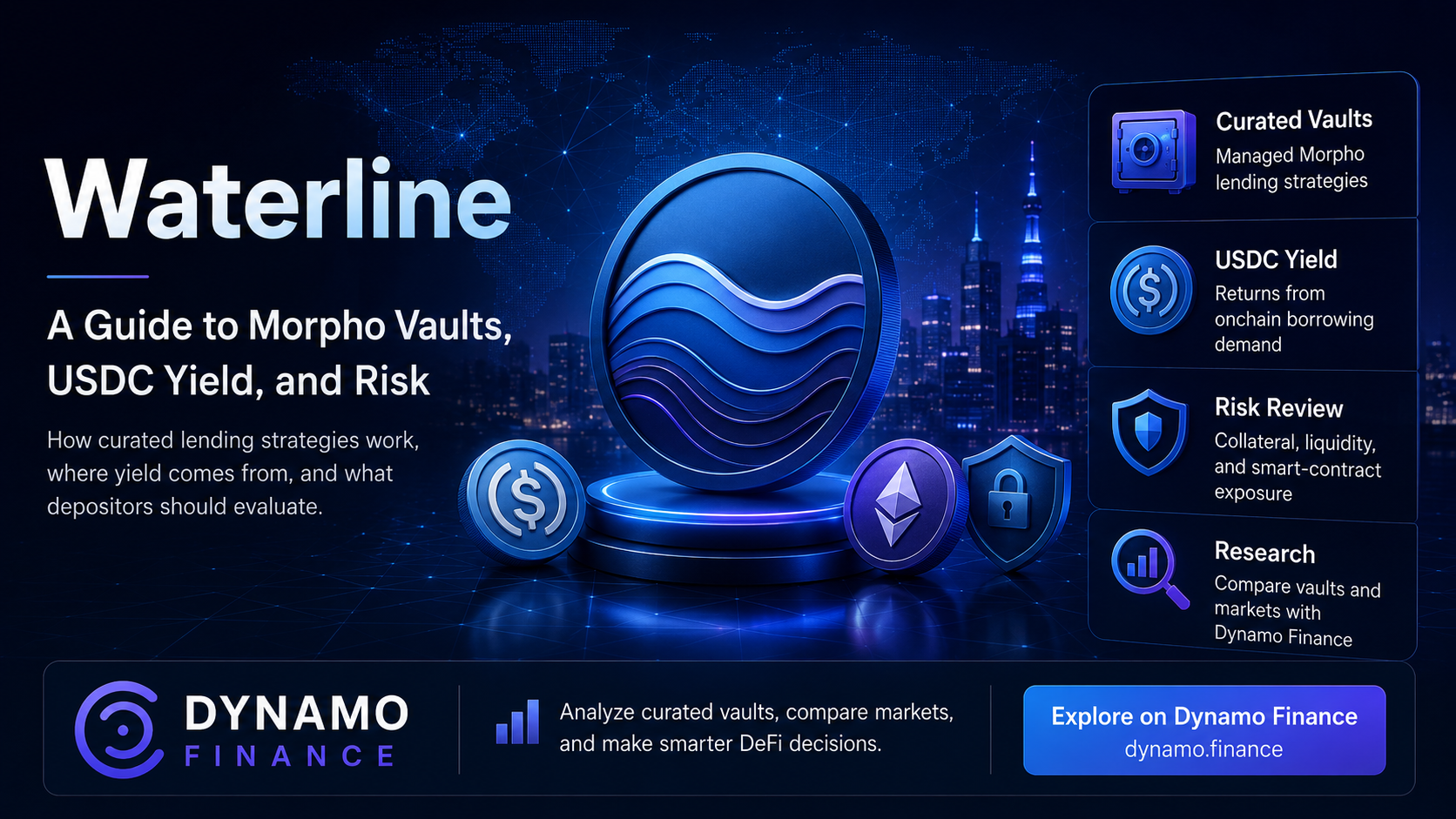
Dynamo’s vaults use the MetaMorpho vault standard, where users deposit once and a curator allocates capital across markets. Vaults can simplify yield access, but users still need to evaluate curator reputation, market diversity, APY stability, fees, underlying markets, and withdrawal liquidity.
What Dynamo Adds for DeFi Investors
Dynamo is not a custodian of user funds. User assets are held by Morpho smart contracts, while Dynamo adds a user-facing layer for discovery, analytics, risk visibility, rewards, governance participation, and position management.
This distinction matters for investors comparing a defi lending platform to a centralized yield product. In a non-custodial DeFi workflow, users retain control of their wallet and interact with smart contracts directly. There is no traditional account, email, or KYC requirement for the basic Web3 workflow.
Dynamo helps users browse live markets, review supply and borrow APYs, check utilization, inspect available liquidity, and understand market parameters such as collateral, loan asset, oracle, LLTV, and fees. That is especially useful for users who want to supply directly into specific markets rather than only using vaults.
For vault users, Dynamo helps compare curator, APY, TVL, underlying asset, market allocation, and risk tier. This supports a more thoughtful process than simply choosing the vault with the highest advertised yield.
Dynamo Risk Tools and Why They Matter
Dynamo’s risk framework is designed to give users quick but structured signals before they supply capital or borrow against collateral. Markets and vaults receive Low, Medium, or High risk tiers based on objective onchain inputs.
For markets, Dynamo considers variables such as liquidation loan-to-value, market TVL, and how long the market has been live. For vaults, it considers total supplied value, market exposure, and live history. These tiers are useful heuristics, not guarantees.
Dynamo also provides a Safety Margin feature for borrowers. Since Morpho uses LLTV rather than a traditional maximum LTV, Dynamo creates a synthetic target LTV that lets borrowers operate more conservatively than the liquidation threshold. This can help users avoid borrowing too close to the danger zone.
The liquidation-risk view shows a borrower’s health factor, price-drop tolerance, and liquidation price. These details are essential for anyone using a crypto loan strategy because liquidation risk can change quickly during market volatility.
Users can explore Dynamo’s dedicated risk tooling through the Dynamo risk dashboard.
What DeFi Investors Can Learn From Steakhouse Financial
The biggest lesson from Steakhouse Financial is that yield selection should start with risk selection. A vault’s APY tells you what the market currently pays. It does not tell you whether the underlying collateral is robust, whether liquidity is deep, whether the vault is concentrated, or whether the curator has a credible monitoring process.
This mindset is valuable on Dynamo, Morpho, or any other DeFi lending venue. Before supplying capital, investors should ask what backs the borrower, how liquid the collateral is, how the oracle works, how close borrowers can get to liquidation, and whether market utilization allows timely withdrawals.
Steakhouse also shows why real-world assets and tokenized credit are becoming important in DeFi. Stablecoin investors want yield, and not all yield must come from crypto-native leverage. Tokenized credit, treasuries, and other real-world asset strategies can broaden the opportunity set, though they introduce legal, operational, liquidity, and counterparty risks that differ from pure crypto collateral.
The lesson is not that one type of collateral is always better. The lesson is that different collateral types need different underwriting.
How to Evaluate a Steakhouse Crypto Vault
When evaluating a Steakhouse crypto vault or any similar curated DeFi vault, start with the mechanism. A vault that lends stablecoins against blue-chip crypto collateral has a different risk profile from a vault that targets tokenized credit or higher-yield long-tail assets.
Use this checklist before allocating capital:
- Identify the deposit asset and confirm whether you are comfortable holding it.
- Review the vault curator and understand the curator’s role in market selection and allocation.
- Check the underlying markets and collateral assets that generate yield.
- Compare APY with TVL, utilization, liquidity, and market age.
- Look for concentration risk in one market, one collateral type, or one borrower category.
- Understand whether yield comes from borrower interest, incentives, tokenized credit, or another source.
- Review fees, withdrawal conditions, and any liquidity limitations.
- Size the position according to your risk tolerance rather than the headline return.
This process is not only useful for Steakhouse products. It also applies when comparing vaults through Dynamo Finance, Morpho, or any crypto lending workflow.
Practical Example: Stablecoin Yield With Risk Controls
Imagine a user holds USDC and wants yield without actively trading. They see a stablecoin vault with a moderate APY and another with a much higher APY. The beginner’s instinct is to choose the higher number. The risk-aware approach starts by asking why the number is higher.
The higher-yield vault may lend against more volatile collateral, use markets with higher utilization, include newer assets, or depend on temporary incentives. It may still be a valid opportunity, but only if the user accepts those risks intentionally.
A more conservative user might prefer a vault with deeper TVL, blue-chip collateral, diversified market exposure, and a lower but steadier APY. A more advanced user might allocate a smaller portion to a higher-yield strategy while monitoring its exposures closely.
The key is matching the vault to the role it plays in the portfolio. Stablecoin yield used for treasury-like liquidity should be treated differently from a speculative high-yield allocation.
Practical Example: Borrowing Against Crypto
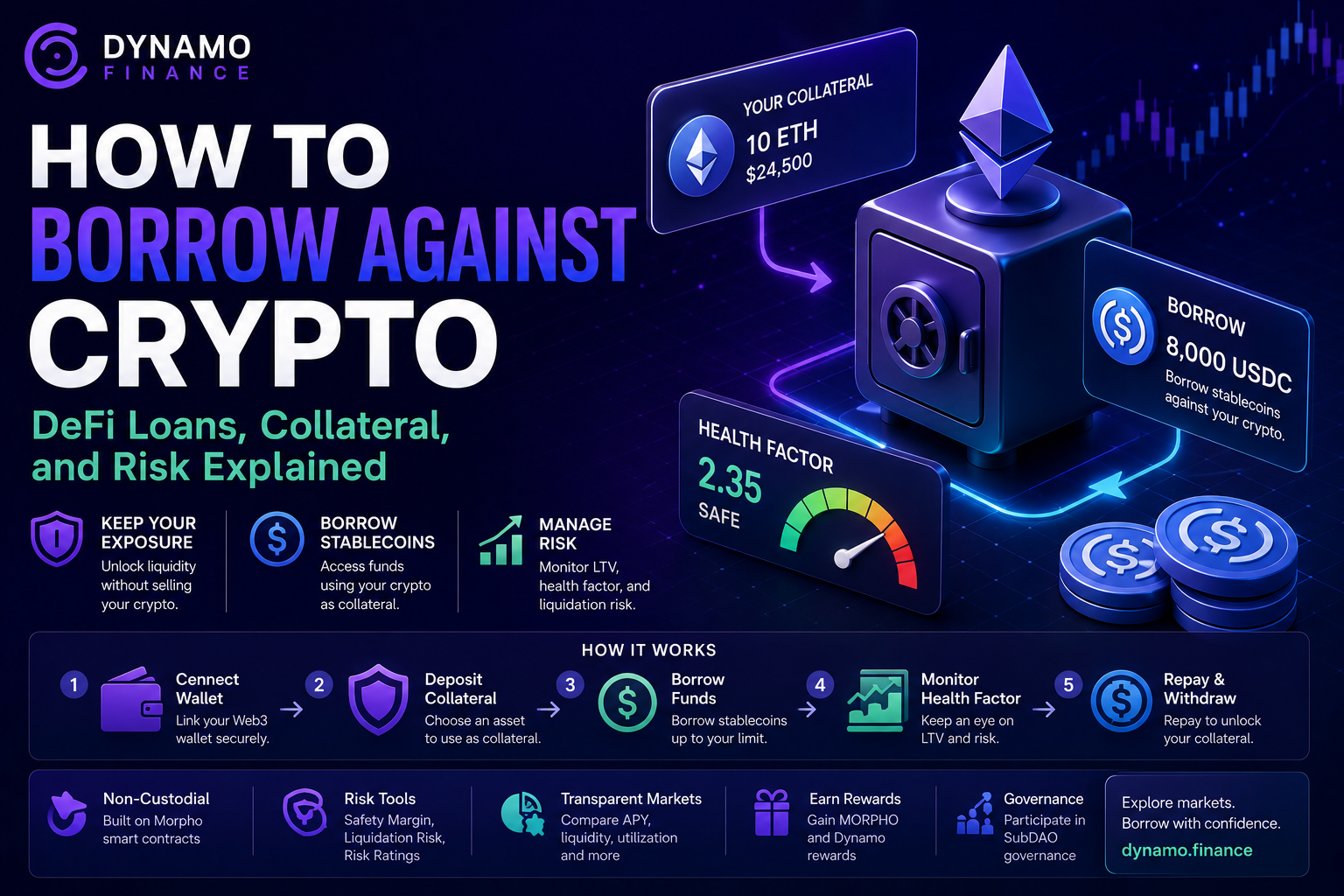
Now imagine a user holds ETH and wants liquidity without selling. They may consider borrowing USDC against ETH through a Morpho-based market on Dynamo. This can preserve ETH exposure while unlocking stablecoin liquidity, but it also creates liquidation risk.
The borrower should review the loan asset, collateral asset, borrow APY, LLTV, utilization, oracle, available liquidity, and liquidation price. Borrowing near the maximum allowed level may look efficient, but it leaves little room for market volatility.
A more disciplined borrower uses a safety buffer. If the collateral price drops, they can repay part of the loan, add collateral, or reduce risk before liquidation becomes likely. Dynamo’s Safety Margin and liquidation-risk views are designed to make that decision process easier.
This is where a professional risk mindset becomes practical. Whether you are evaluating Steakhouse vaults or using Dynamo to lend crypto and loans for cryptocurrency, the same principle applies: protect downside first, optimize yield second.
Common Risks in Curated DeFi Vaults
Curated vaults can make DeFi easier, but they are not risk-free. The curator reduces some user workload, but the user still bears exposure to the strategy. Understanding the main risks helps avoid false confidence.
- Smart contract risk: Vaults and underlying lending markets rely on code that may contain bugs or unexpected behavior.
- Oracle risk: A faulty or delayed price feed can affect collateral valuation and liquidation outcomes.
- Liquidity risk: High utilization or stressed markets can delay withdrawals or make exits less efficient.
- Collateral risk: The assets backing loans may lose value, liquidity, or market confidence.
- Curator risk: Poor market selection or slow response to changing conditions can hurt vault performance.
- Concentration risk: A vault may depend too heavily on one market, collateral type, chain, or borrower base.
- Incentive risk: APY may decline when temporary rewards end or borrower demand changes.
- Real-world asset risk: Tokenized credit or treasury strategies may introduce legal, operational, duration, and counterparty risks.
These risks can interact. For example, if collateral liquidity falls while utilization rises, withdrawals may become harder at the same time that market risk increases. That is why risk should be assessed as a system, not as isolated checklist items.
Steakhouse Financial and Real-World Assets
One reason steakhouse crypto is widely discussed is its connection to real-world asset strategies. Real-world assets, or RWAs, refer to onchain representations of offchain financial exposure such as private credit, treasury bills, funds, or other income-producing assets.
RWAs can diversify DeFi yield sources beyond crypto-native borrowing demand. For stablecoin investors, that can be attractive because traditional credit and treasury markets are large, established sources of yield. However, RWAs also introduce risks that are less familiar to crypto-native users.
These may include legal structure risk, redemption risk, custodian risk, duration risk, borrower credit risk, reporting delays, and jurisdictional complexity. Unlike a pure ETH-backed loan, an RWA strategy may depend on offchain entities, legal agreements, fund administrators, and traditional financial infrastructure.
That does not make RWAs bad. It means they require different analysis. A professional curator must understand both DeFi mechanics and traditional finance risk. This is one area where Steakhouse Financial’s combination of DeFi and TradFi experience is especially relevant.
Steakhouse, Coinbase, and Embedded DeFi Yield
One of the clearest signs of DeFi’s evolution is the rise of embedded yield products. Instead of asking users to navigate DeFi directly, exchanges and fintech apps can integrate onchain lending infrastructure behind a familiar interface.
For users, the important lesson is transparency. A simple frontend may hide complex onchain mechanics. That can improve usability, but investors should still understand where capital goes, who curates it, what collateral backs it, and what risks remain.
Dynamo takes a more DeFi-native approach by surfacing markets, vaults, risk signals, and position data directly. That makes it useful for users who want more control and transparency rather than a fully abstracted earn product.
How Dynamo and Steakhouse Differ
Dynamo Finance and Steakhouse Financial occupy different parts of the DeFi stack. Comparing them helps clarify how users should think about each one.
| Topic | Steakhouse Financial | Dynamo Finance |
|---|---|---|
| Primary role | Vault curator, risk advisor, stablecoin product builder, and onchain capital markets specialist | Non-custodial user-facing platform for Morpho-based markets, vaults, borrowing, lending, risk tools, and rewards |
| Main user value | Professional curation, underwriting, stablecoin yield design, and institutional-grade risk process | Clearer access to Morpho markets and vaults with analytics, risk ratings, liquidation tools, and position management |
| Most relevant for | Stablecoin allocators, fintech integrations, vault users, DAOs, treasuries, and institutional yield seekers | Crypto-native users, DeFi lenders, borrowers, yield seekers, and investors comparing Morpho-based opportunities |
| Core risk question | Can the curator select and manage markets responsibly? | Can the user evaluate markets and vaults with enough context before taking action? |
The two are not direct substitutes. A user can learn from Steakhouse’s curation-first approach while using Dynamo to evaluate DeFi lending opportunities more actively.
How to Compare Vault Curators
Curator reputation is important, but it should not be the only input. A famous curator can still manage a vault that does not match your risk tolerance. A newer curator can have a compelling strategy but less live history.
When comparing curators, look at mandate, market selection, risk disclosures, transparency, performance history, exposure limits, response process, and liquidity management. A curator focused on prime stablecoin yield should not be judged the same way as a curator targeting high-yield long-tail opportunities.
Also pay attention to how the curator handles changing conditions. DeFi markets are dynamic. A strong curator should have a process for monitoring collateral, responding to oracle issues, adapting to utilization changes, and communicating strategy updates.
For Dynamo users comparing morpho opportunities, this means reviewing both the vault data in the interface and the curator’s broader process where available.
Fees, Incentives, and Net Yield
APY is not the same as net return. DeFi users must consider fees, incentives, gas costs, slippage from related transactions, and the possibility that advertised yield changes after deposit.
In vault strategies, curators may charge performance fees or management fees. These fees are usually disclosed at the vault level. Users should compare net yield after fees rather than treating gross APY as final.
Dynamo’s fee model separates market-related fees, vault-level fees, and gas costs. Loan-asset deposits through the Dynamo interface may have a market deposit fee if the governance-controlled fee switch is active, while collateral asset deposits, borrowing, and vault deposits or withdrawals are handled differently according to the applicable fee rules.
Incentives also matter. MORPHO emissions, Dynamo-specific campaigns, or third-party curator rewards can increase displayed returns. These rewards may be time-limited, so users should distinguish between base lending yield and temporary incentive yield.
How Beginners Should Approach Steakhouse Finance
Beginners should not start by asking, “What is the highest APY?” A better first question is, “What am I exposed to?” That one question forces you to look beneath the surface.
Start with a small position if you are new to DeFi vaults. Use it to learn how deposits, shares, APY changes, withdrawals, and allocation updates work. Avoid allocating large amounts until you understand the vault’s mechanics and risks.
Read the risk framework for any vault curator you are considering. Look for plain explanations of collateral selection, monitoring, liquidity management, and incident response. If you cannot understand how the strategy earns yield, you probably should not deposit meaningful capital into it.
When using Dynamo, review the Dynamo Finance documentation to understand markets, vaults, interest rates, collateral, LTV, liquidations, risk ratings, rewards, and fees before interacting with the app.
What Experienced DeFi Investors Look For
Experienced investors evaluate mechanisms before returns. They want to know who pays the yield, why that yield exists, how sustainable it is, and what could break the strategy.
They also think in terms of portfolio roles. A conservative stablecoin vault may be used for liquidity management. A high-yield RWA or long-tail collateral vault may be treated as a higher-risk satellite allocation. A direct lending market may be used for specific asset exposure. A borrow position may be used for liquidity without selling collateral.
Experienced users also compare opportunity cost. Supplying USDC to one vault means not supplying it elsewhere. Borrowing against ETH means accepting liquidation risk instead of selling, hedging, or doing nothing.
This is where Dynamo’s market and vault views become valuable. A user can compare opportunities, review risk ratings, inspect parameters, and decide whether a position fits their strategy before signing a transaction.
Why This Topic Matters for the Future of DeFi
The rise of companies like Steakhouse Financial shows that DeFi is becoming more professional. Early DeFi was driven by liquidity mining, experimental protocols, and highly technical power users. The next phase is more focused on risk curation, stablecoin infrastructure, institutional integrations, tokenized credit, and embedded financial products.
This does not mean DeFi becomes risk-free or centralized. It means specialized roles become more visible. Protocols build infrastructure. Curators manage strategies. Interfaces improve access. Risk teams evaluate collateral. Fintechs distribute products. Users decide what belongs in their portfolio.
That evolution can benefit investors, but only if transparency remains strong. DeFi’s advantage is not just higher yield. It is the ability to verify positions, inspect markets, review allocations, and understand risk onchain.
Dynamo Finance fits this future by giving users a direct interface into Morpho-based lending markets and vaults, with tools designed to make risk more visible. Follow Dynamo Finance on X for product updates, market context, and community discussion.
Common Mistakes to Avoid
The first mistake is assuming that a curated vault is automatically safe. Curation can improve strategy quality, but it does not eliminate smart contract, oracle, liquidity, collateral, or market risk.
The second mistake is ignoring the source of yield. A stablecoin APY backed by deep crypto collateral differs from a yield generated by long-duration private credit or temporary incentives.
The third mistake is overlooking withdrawal liquidity. A vault may allow withdrawals in design, but actual liquidity depends on the underlying markets where capital is deployed.
The fourth mistake is failing to monitor strategy changes. Vault allocations, market utilization, rewards, and risk conditions can change after you deposit.
The fifth mistake is using DeFi loans without a liquidation plan. Borrowers should know in advance when they will repay, add collateral, or reduce exposure.
Final Checklist Before Using a Vault or Market
Before you supply assets, deposit into a vault, or borrow against collateral, use a disciplined checklist. This helps you avoid emotional decisions during periods of high APY or market hype.
- Confirm the exact asset you are depositing, lending, or borrowing.
- Understand whether you are using a direct market or a curated vault.
- Review the collateral, oracle, LLTV, utilization, liquidity, and APY.
- Check the curator, vault mandate, allocation breakdown, fees, and live history.
- Separate base yield from temporary incentives.
- Estimate how quickly you may need liquidity and whether the strategy supports that need.
- For borrow positions, define your safety buffer and liquidation-response plan.
- Start small, monitor actively, and scale only when you understand the mechanics.
Conclusion
Steakhouse finance is important because it reflects where DeFi is going: from simple yield farming toward professional vault curation, stablecoin infrastructure, tokenized credit, and risk-managed onchain capital markets.
Steakhouse Financial helps explain why the curator layer matters. In a world of isolated lending markets and increasingly diverse collateral, users need more than APY. They need underwriting, monitoring, liquidity awareness, and transparent allocation logic.
Dynamo Finance brings these lessons into a practical user workflow. By combining Morpho-based markets, vaults, risk ratings, liquidation-risk tools, safety margins, rewards, and non-custodial access, Dynamo helps DeFi investors evaluate opportunities with more context before allocating capital.
Explore Dynamo Finance to compare markets and vaults, review risk data, and build a more disciplined approach to DeFi lending and borrowing.
FAQ
What is Steakhouse Finance in crypto?
Steakhouse finance usually refers to Steakhouse Financial, a DeFi advisory, research, and vault curation firm focused on stablecoin yield, risk management, tokenized assets, and institutional-grade onchain capital allocation.
Is Steakhouse Financial a DeFi protocol?
Steakhouse Financial is better understood as a curator, advisor, and product builder rather than a base lending protocol. It creates and manages strategies that can use DeFi infrastructure such as Morpho vaults and lending markets.
What does Steakhouse crypto mean for DeFi investors?
Steakhouse crypto refers to the company’s work in DeFi vault curation, stablecoin yield, RWA strategies, and risk-managed capital allocation. For investors, it highlights the importance of curator quality and underlying market risk.
How is Steakhouse Financial connected to Morpho?
Steakhouse Financial is known as a major curator in the Morpho ecosystem. It has built vault strategies that allocate capital across Morpho lending markets, where users can earn yield from borrower interest and related opportunities.
How does Dynamo Finance relate to Steakhouse finance?
Dynamo Finance is not Steakhouse Financial. The connection is educational and strategic: Steakhouse shows why vault curation and risk frameworks matter, while Dynamo gives users a non-custodial interface for exploring Morpho-based markets, vaults, risk ratings, borrowing tools, and yield opportunities.